Category Archives: Travel

Florida 2012: Coastal Dune Lakes


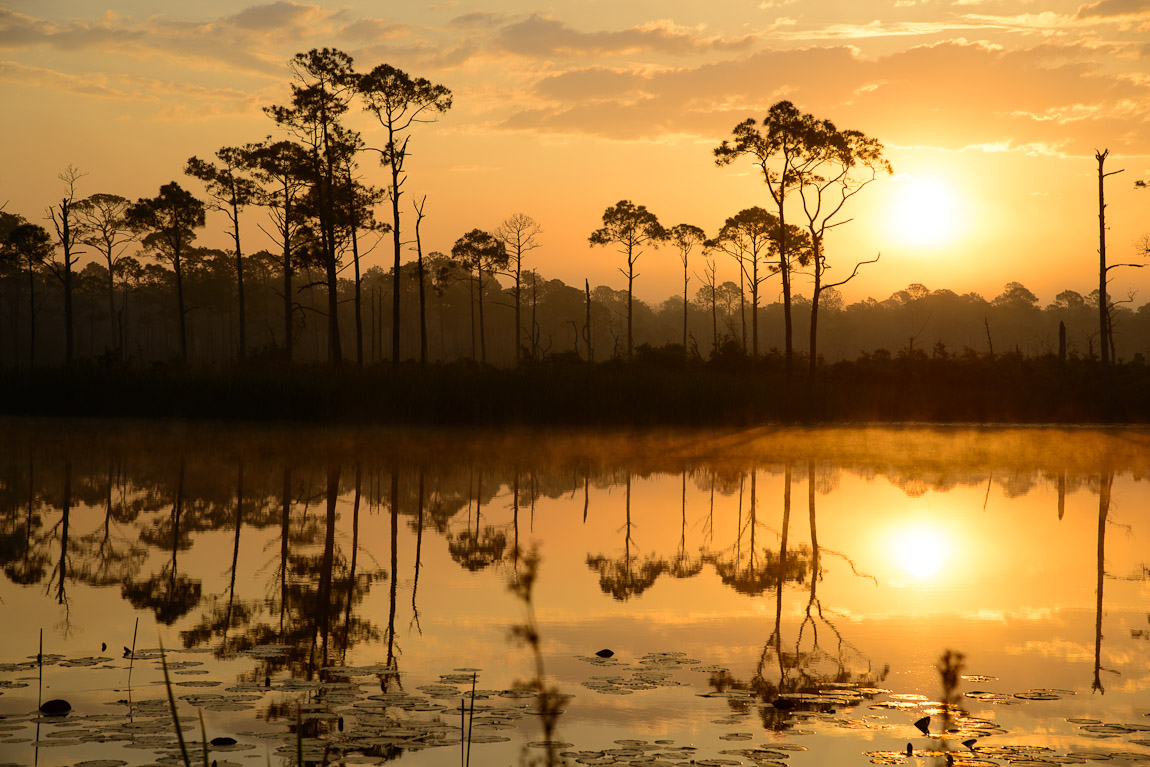
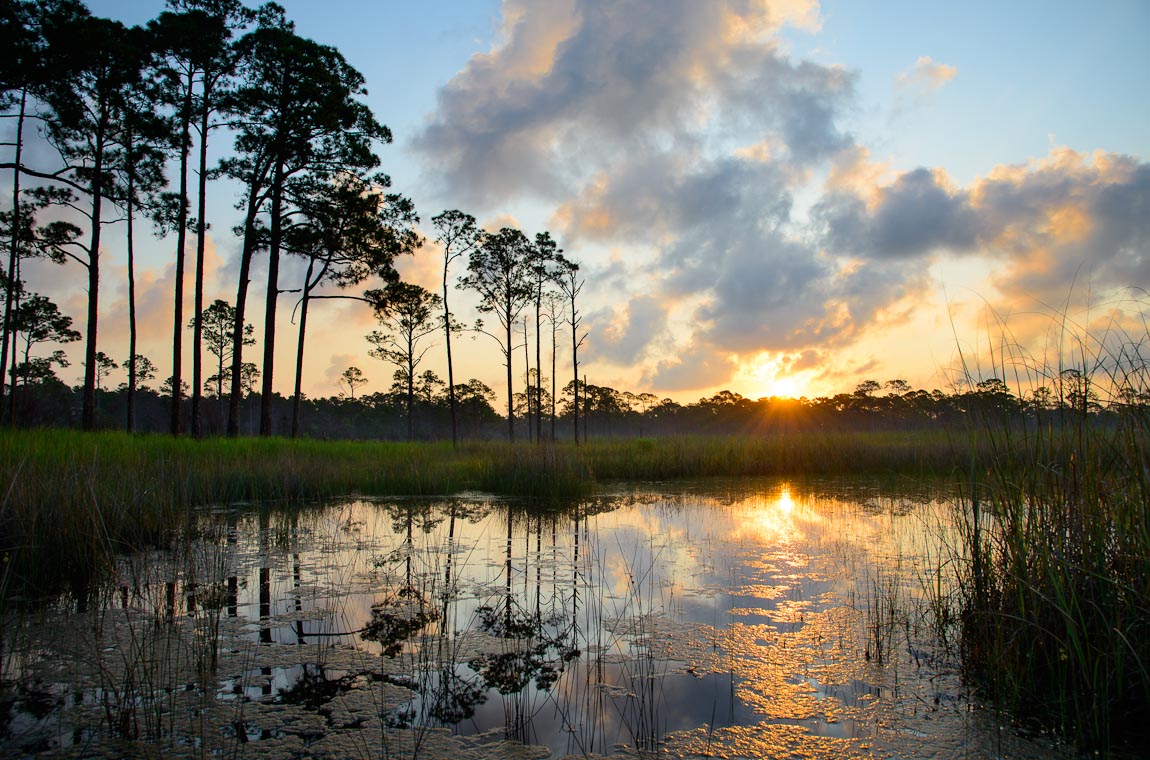
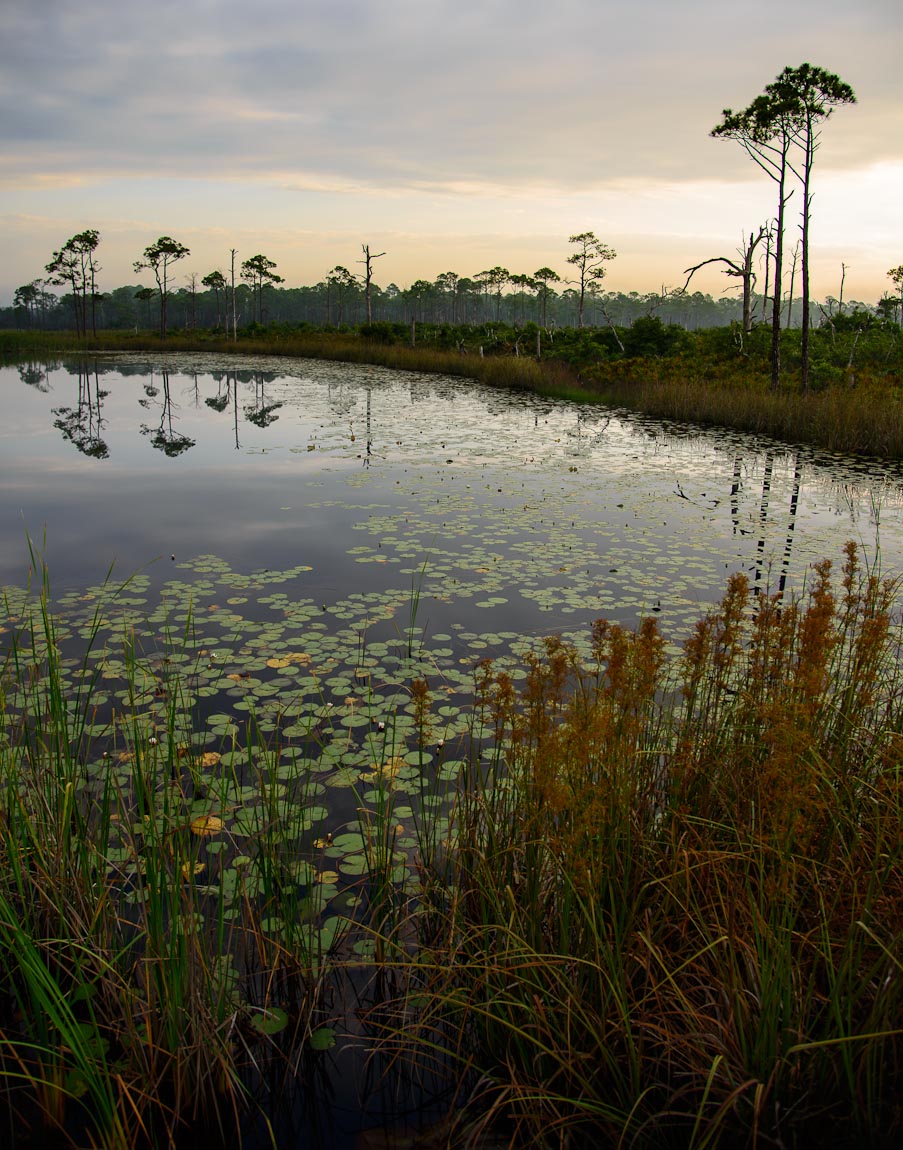
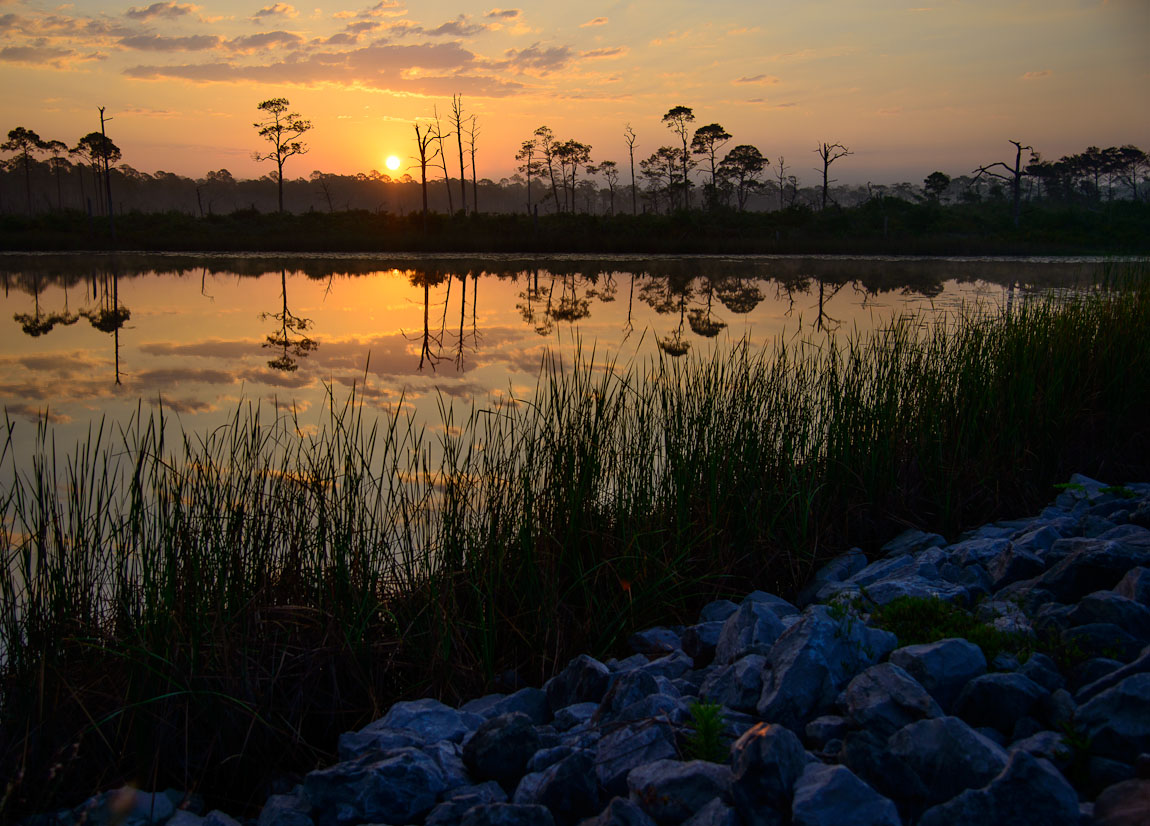
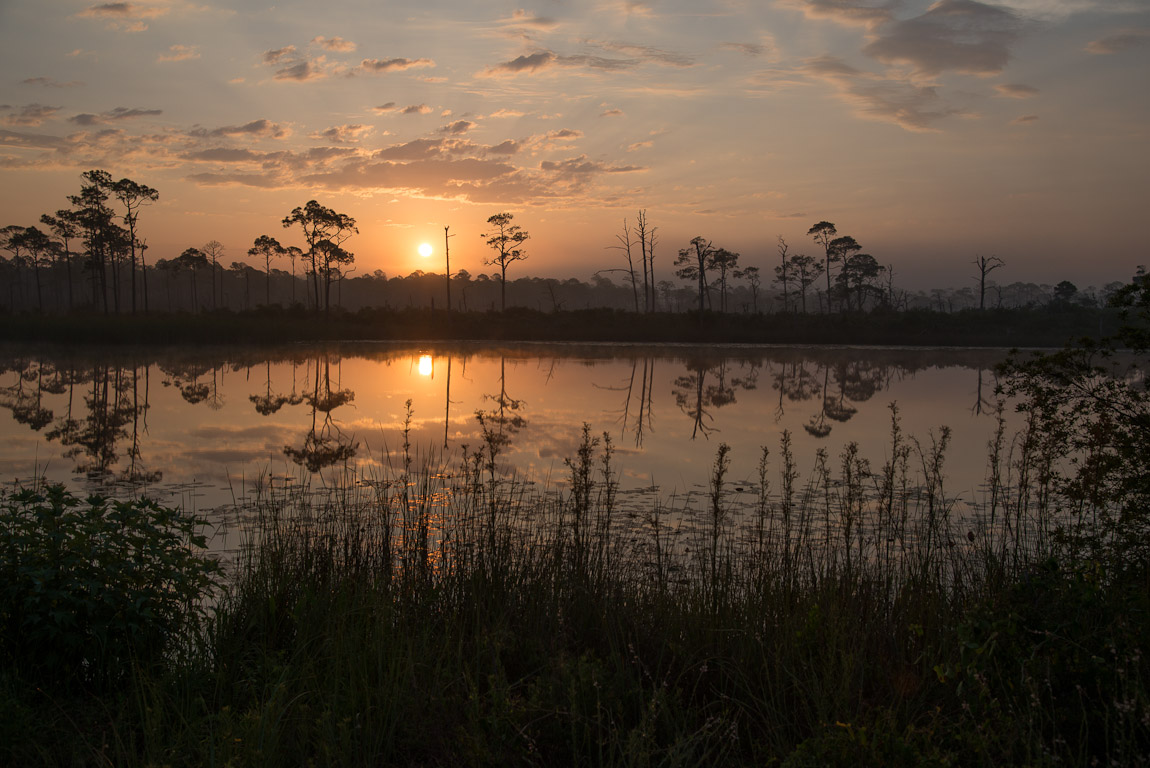
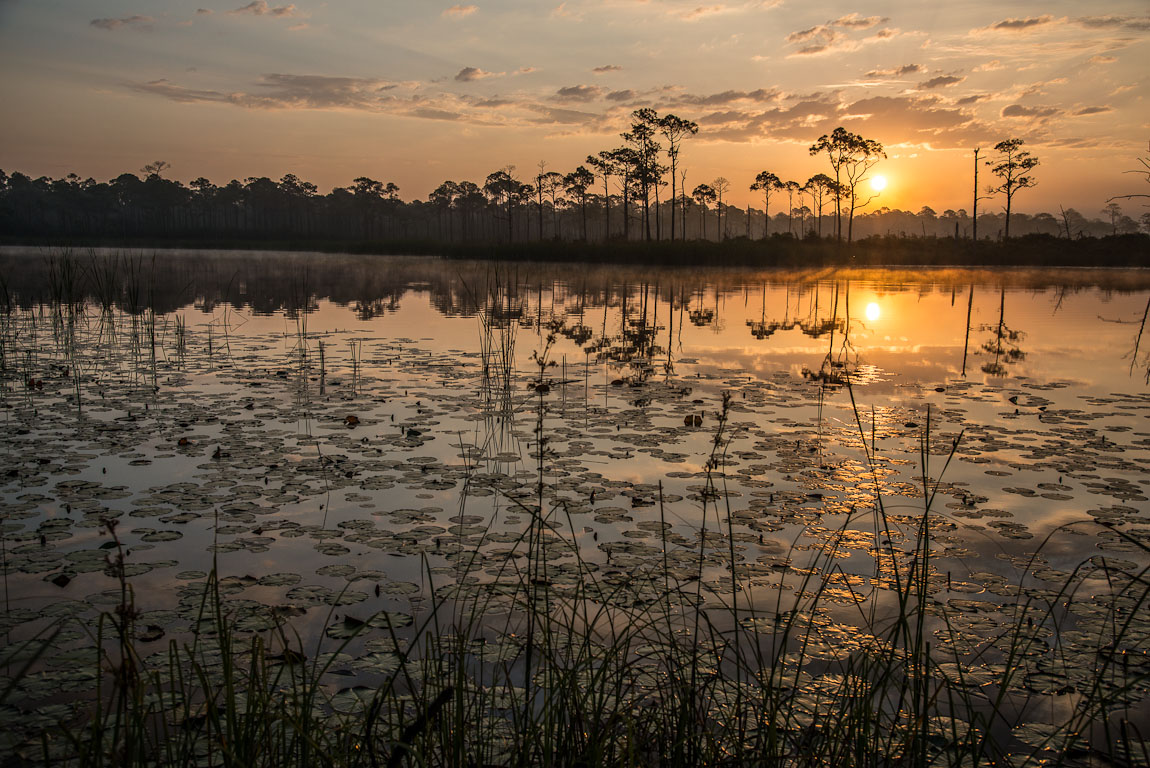
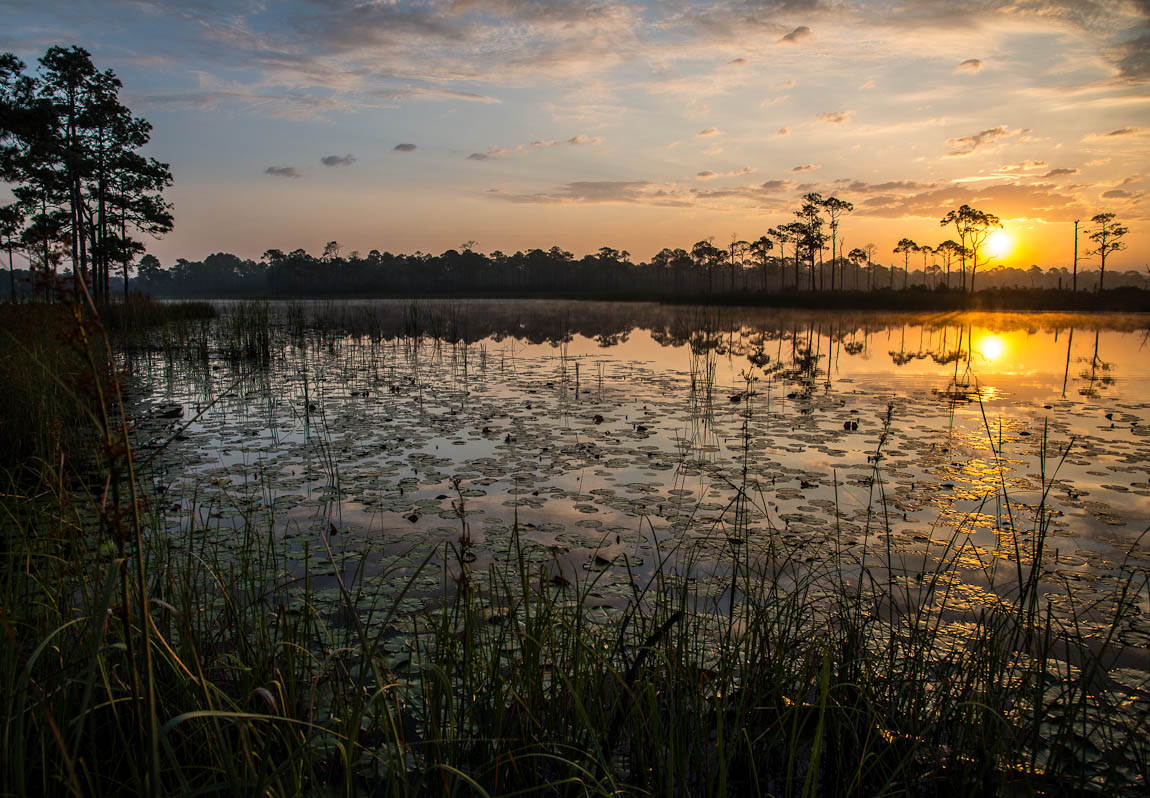
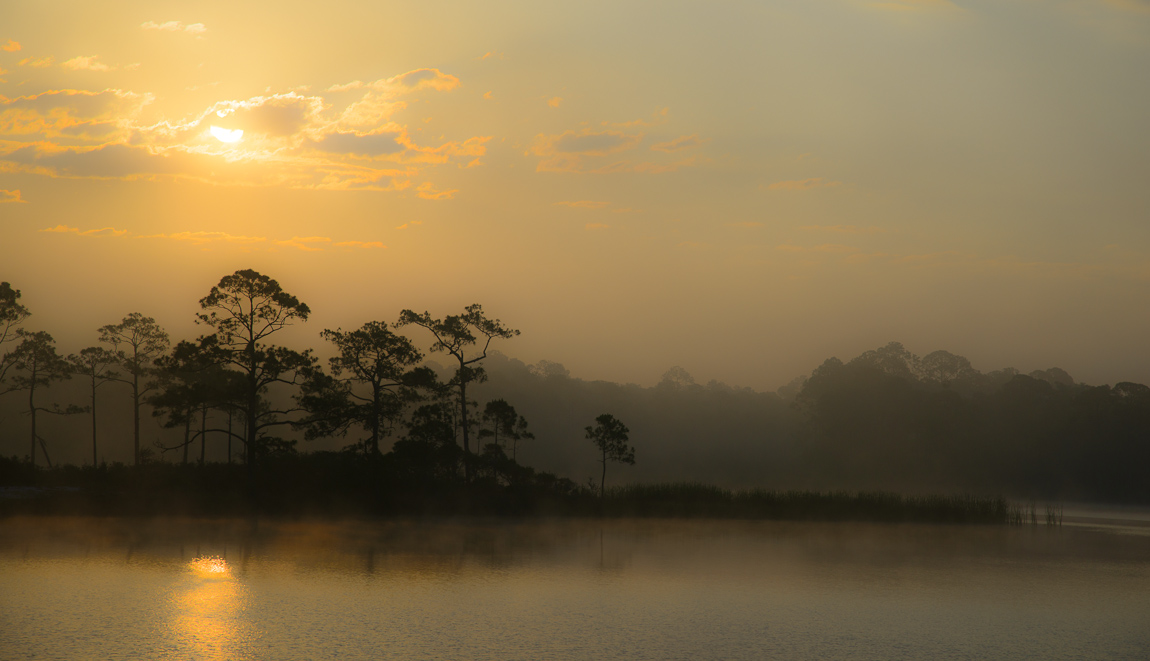
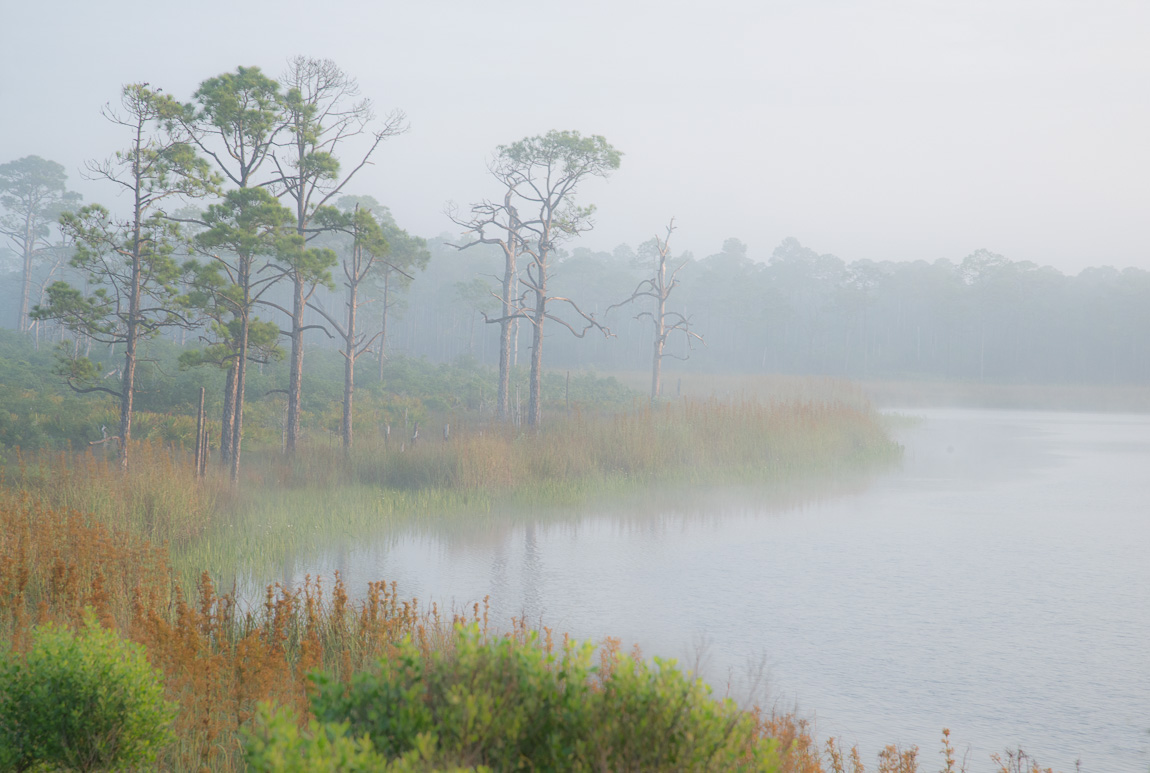
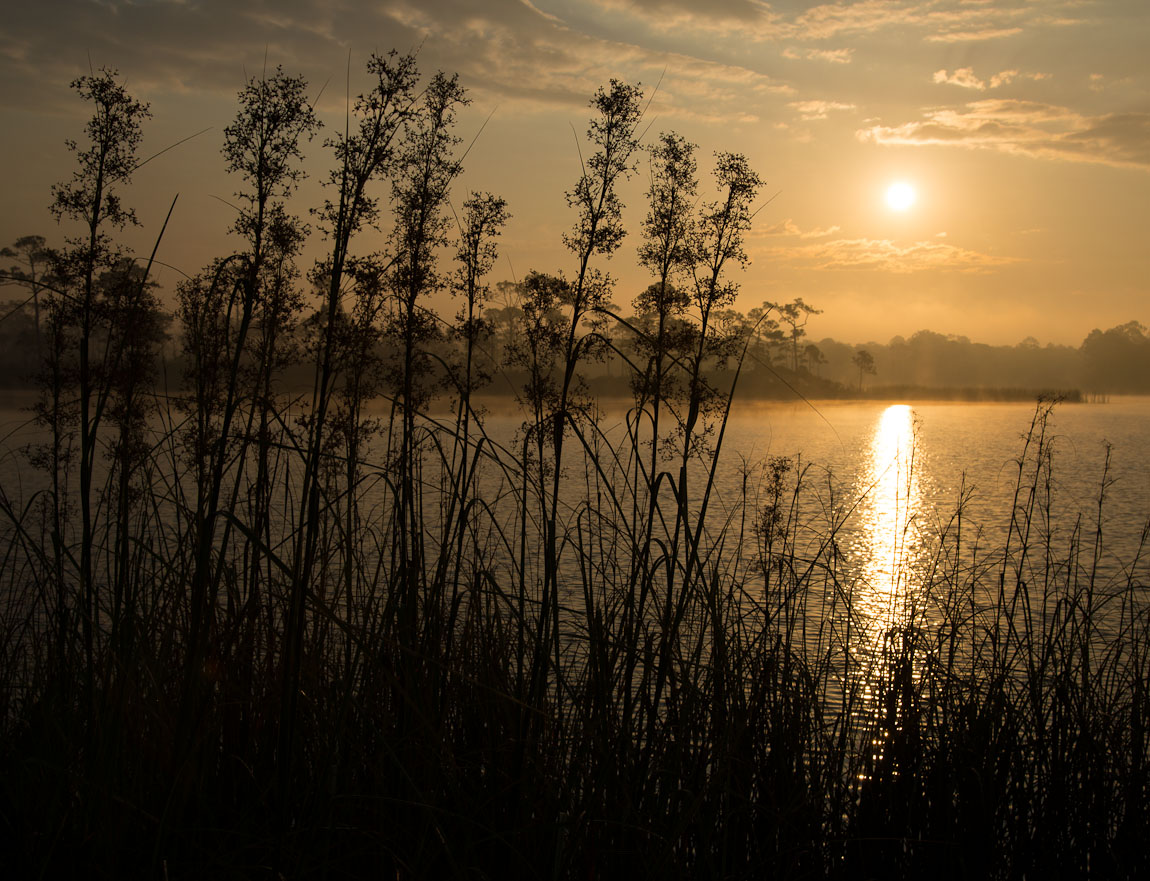
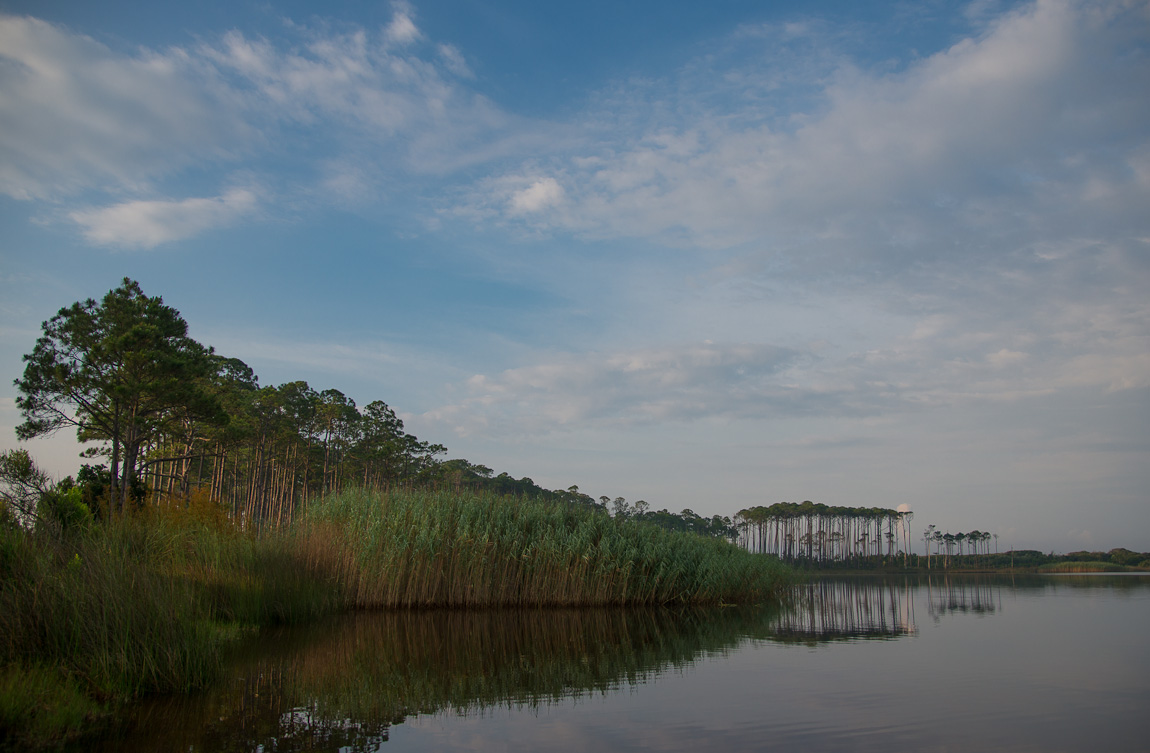
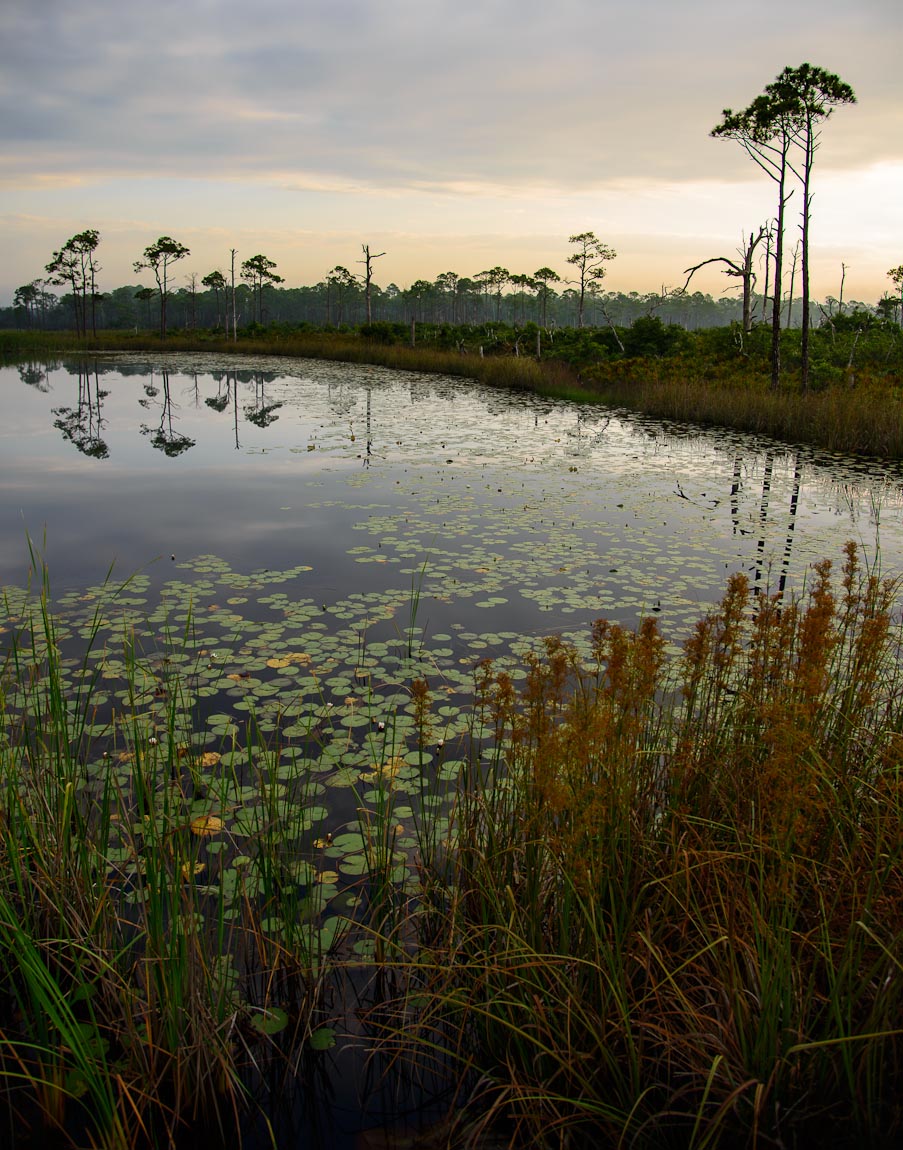
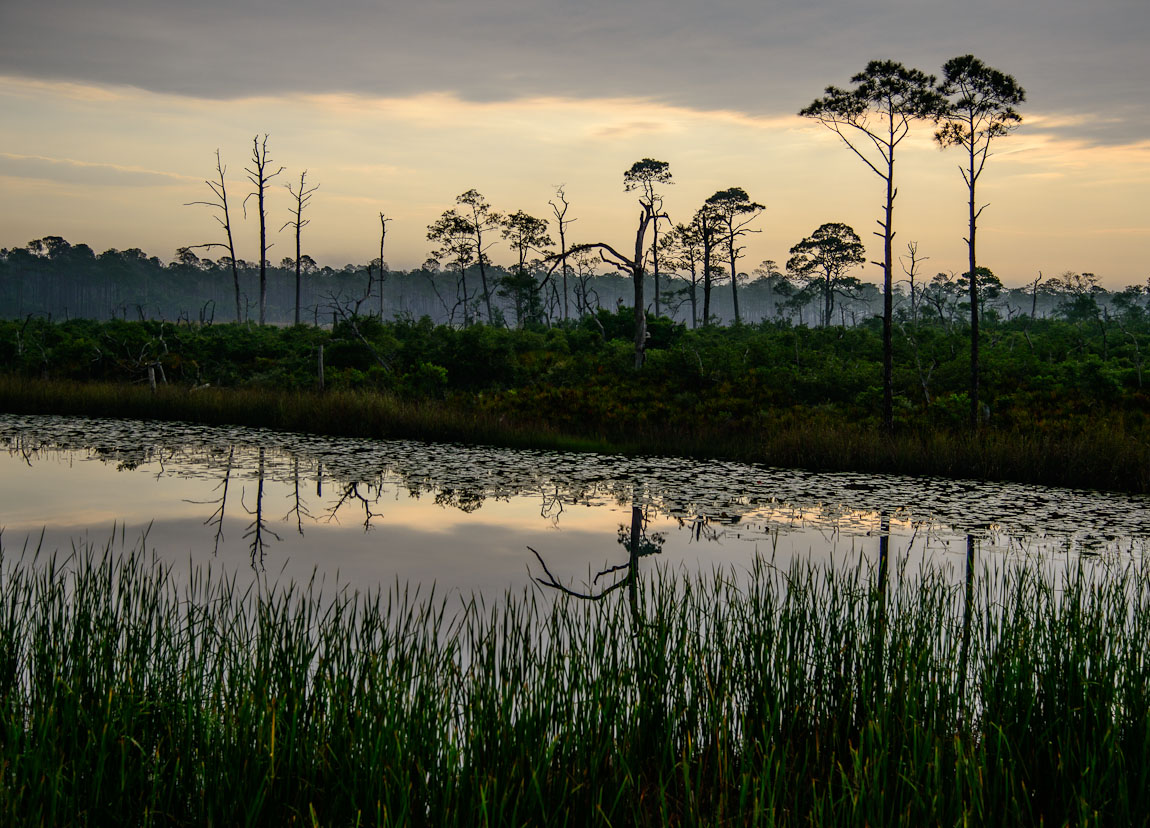
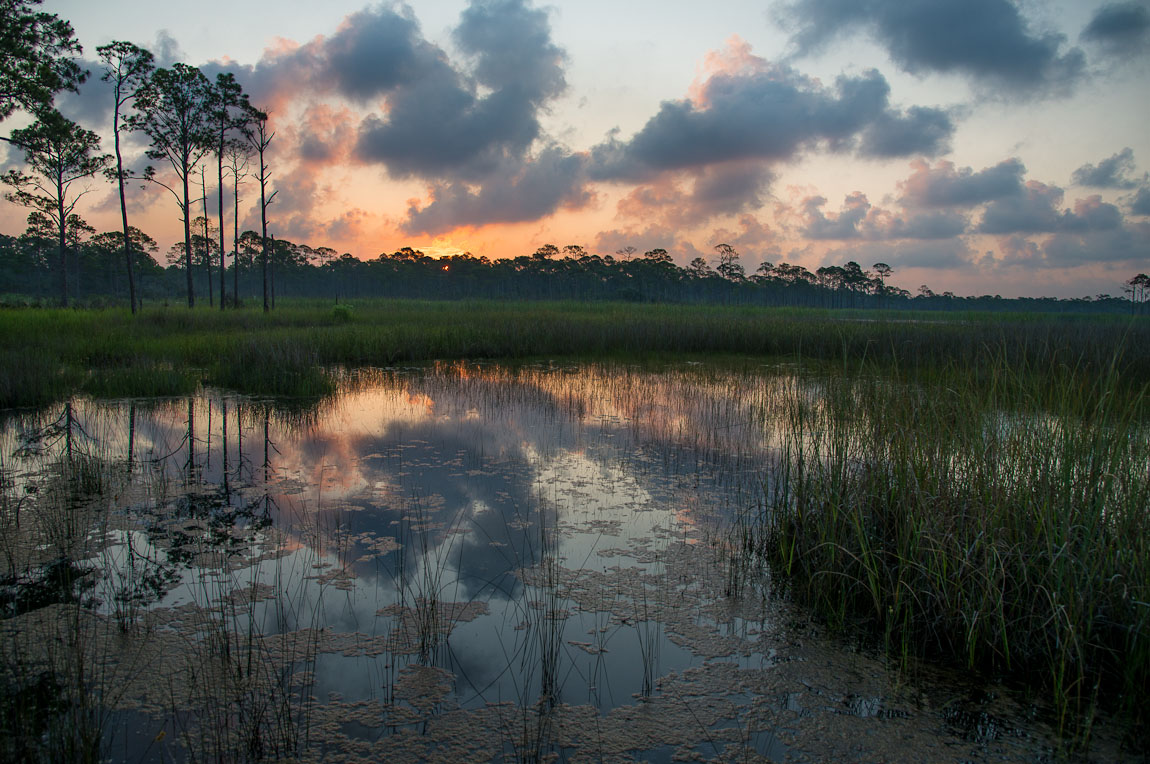
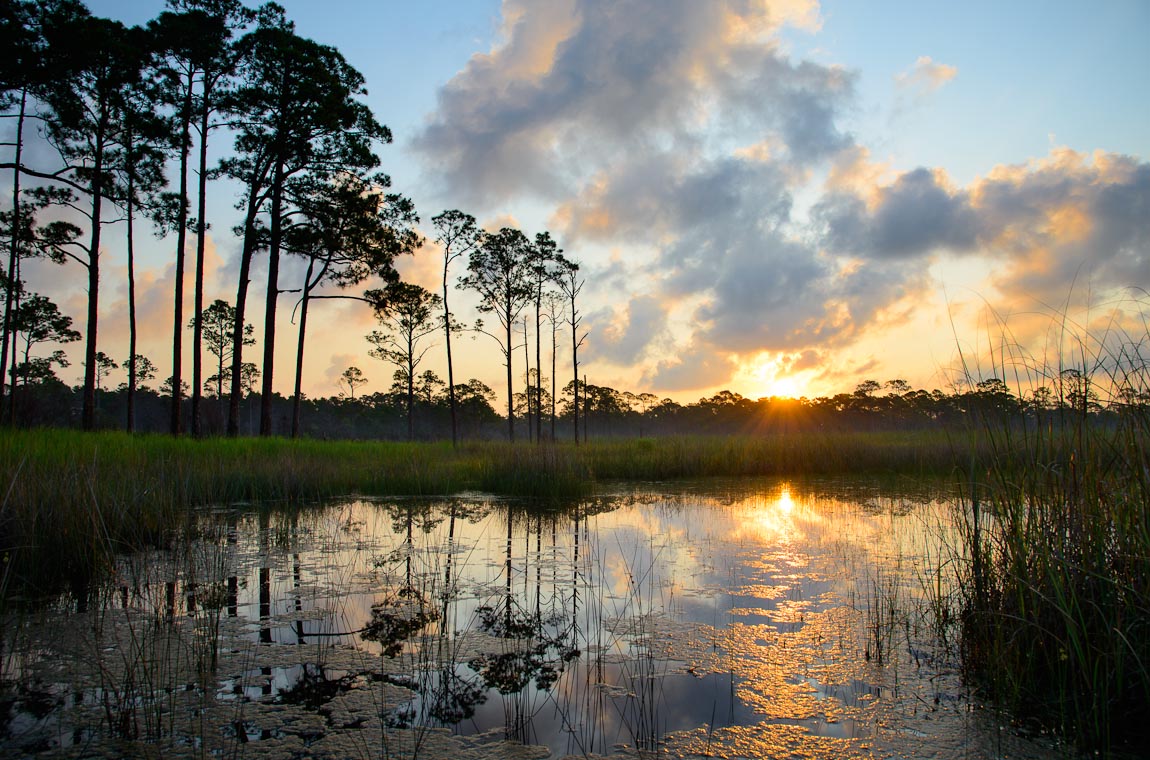
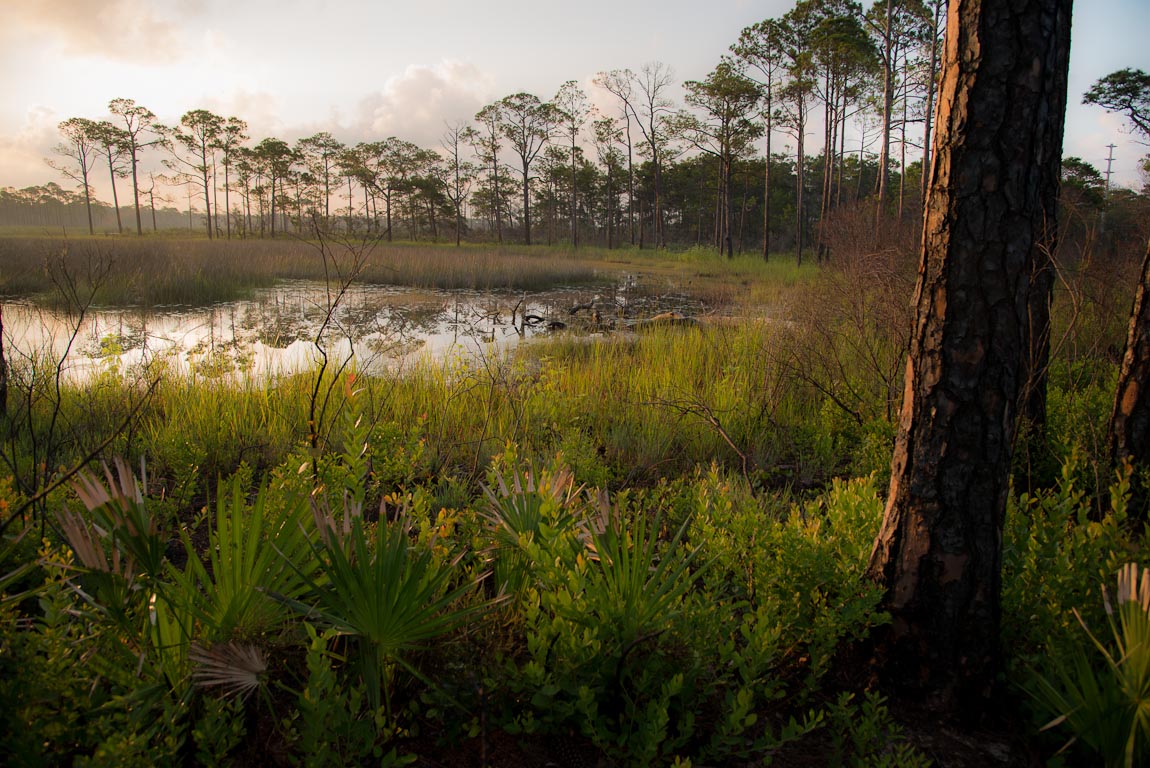
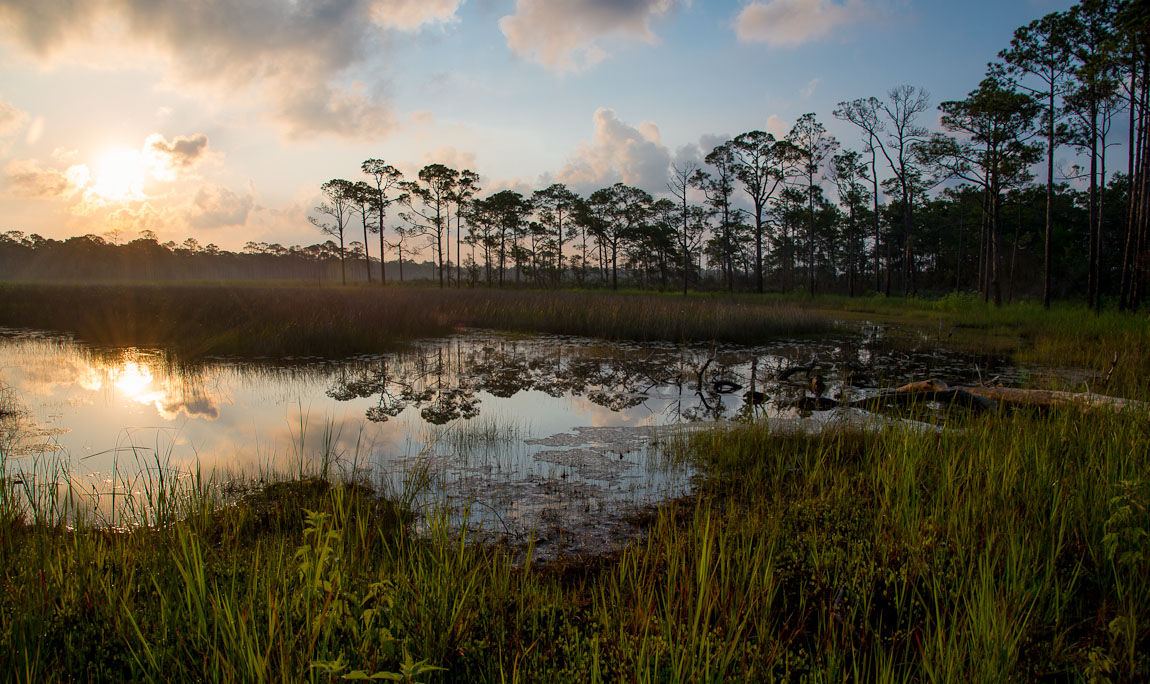
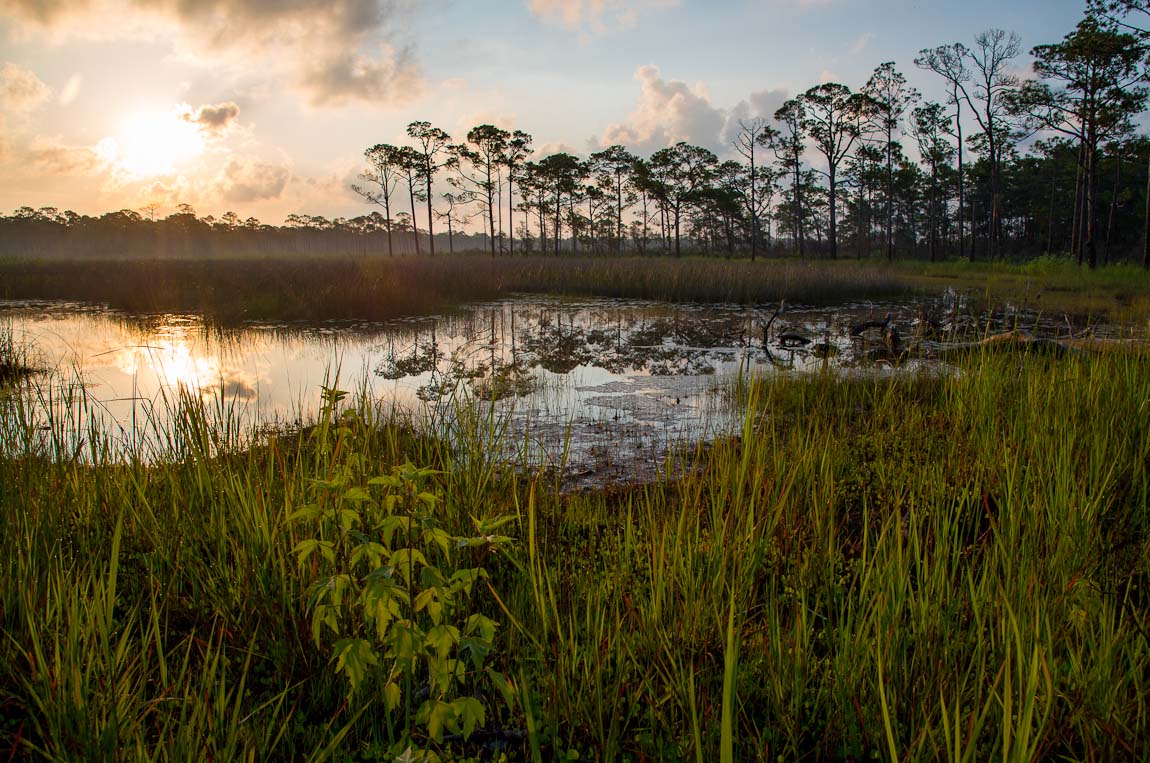
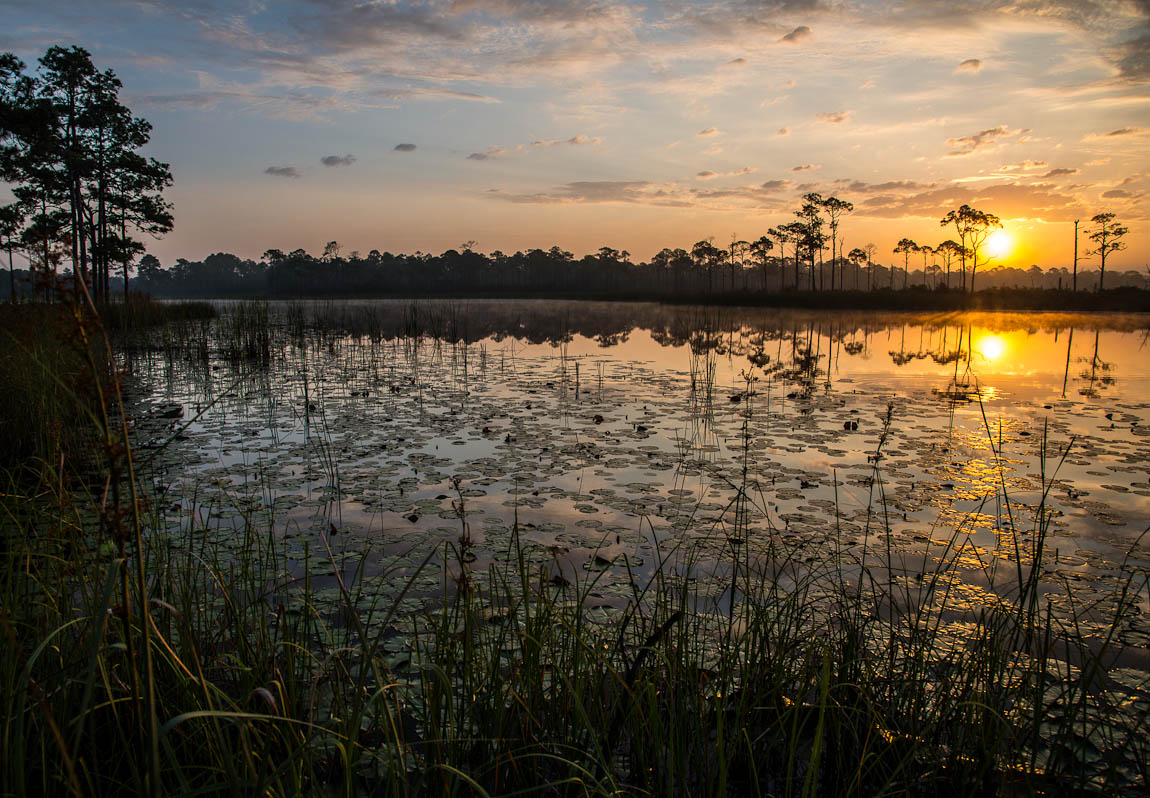
Right behind some of the stunning beaches of Florida’s Walton County are some small lakes called “coastal dune lakes.”  Apparently, this type of lake –- created by natural coastal sand dunes that act as dams to hold back freshwater streams – exists in only a handful of places in the world.  They have partial and intermittent connections to the Gulf, so they’re a mix of salt and fresh water.  Surrounding the Florida lakes (and covering thousands of square miles of the panhandle) are tall, spindly “tropical” pine trees (slash and longleaf pines).  Around the lakeshore and in just the right light, they somehow look like a taller, watery version of the African acacia trees on the Serengeti.

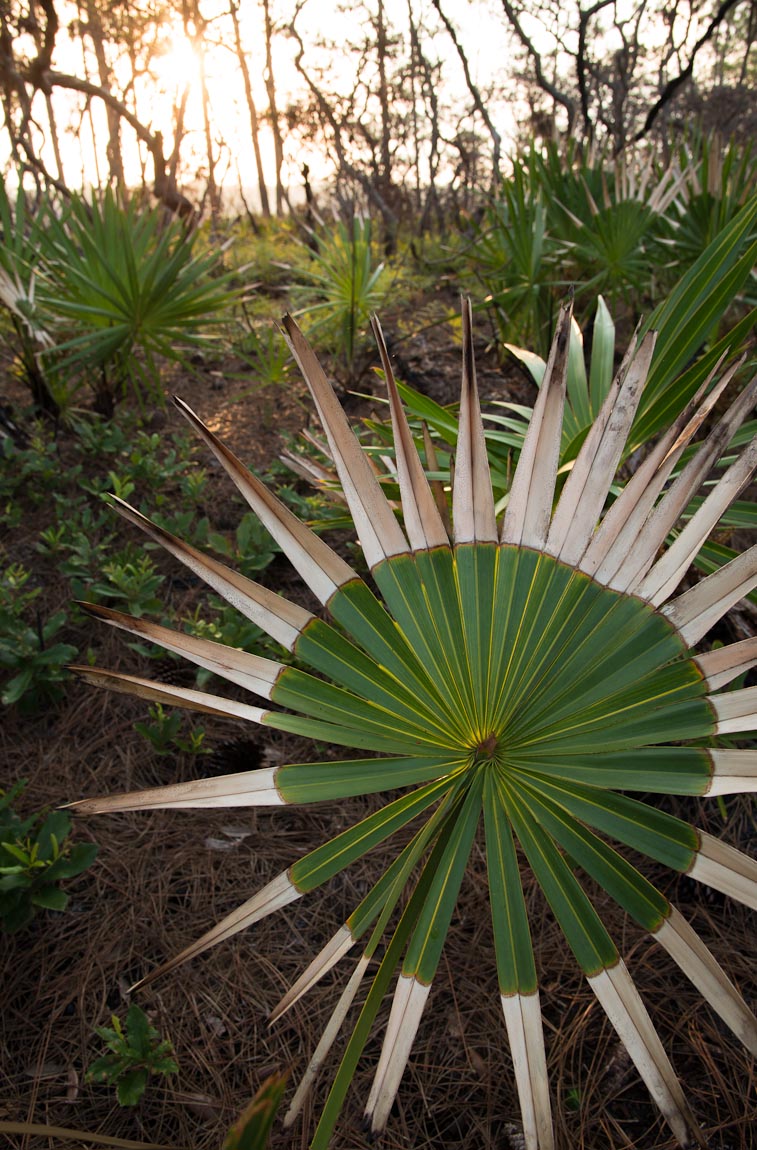
Last week, I found myself wandering around some of these lakes a couple of mornings in the twilight before a 5:45a.m. sunrise (I’m great fun to vacation with!).  Yes, my feet did get wet.  I kept wishing for a boat or fisherman or animal of some sort (or even one of my still-sleeping nieces) to provide a real focal point for these pictures, but alas I had to make do with the striking views of the lakes, trees and morning sky.

_JC81085.jpg_JC81095.jpg_JC81108.jpg_JC81116.jpg_JC81128.jpg_JC81142.jpg_JC81170.jpg_JC81200.jpg_JC81214.jpg_JC81316.jpg_JC81345.jpg_JC81367.jpg_JC81463.jpg_JC81522.jpg_JC81618.jpg_JC81638.jpg_JC81643.jpg_JC81677.jpg

Tropical Beast — St. Croix Ironman 70.3

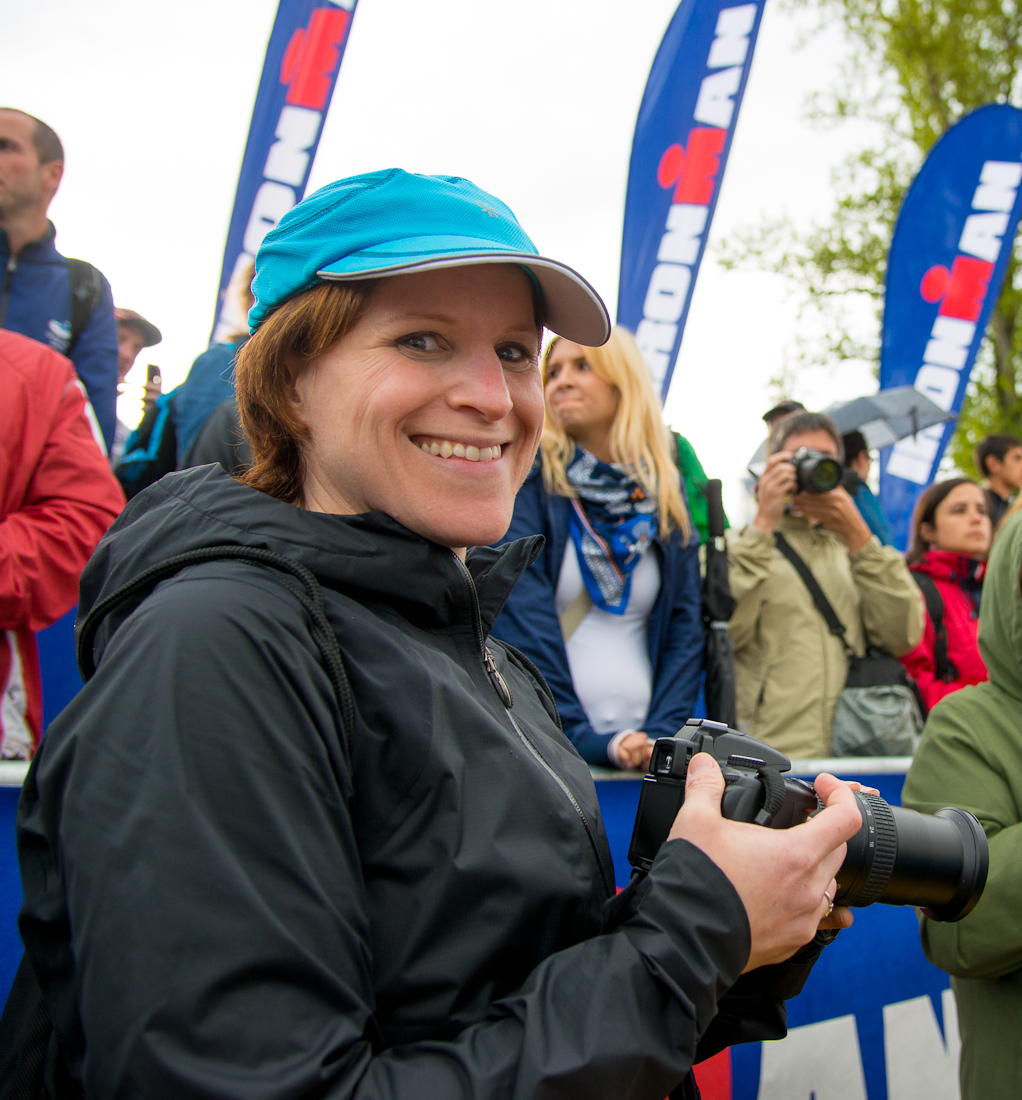
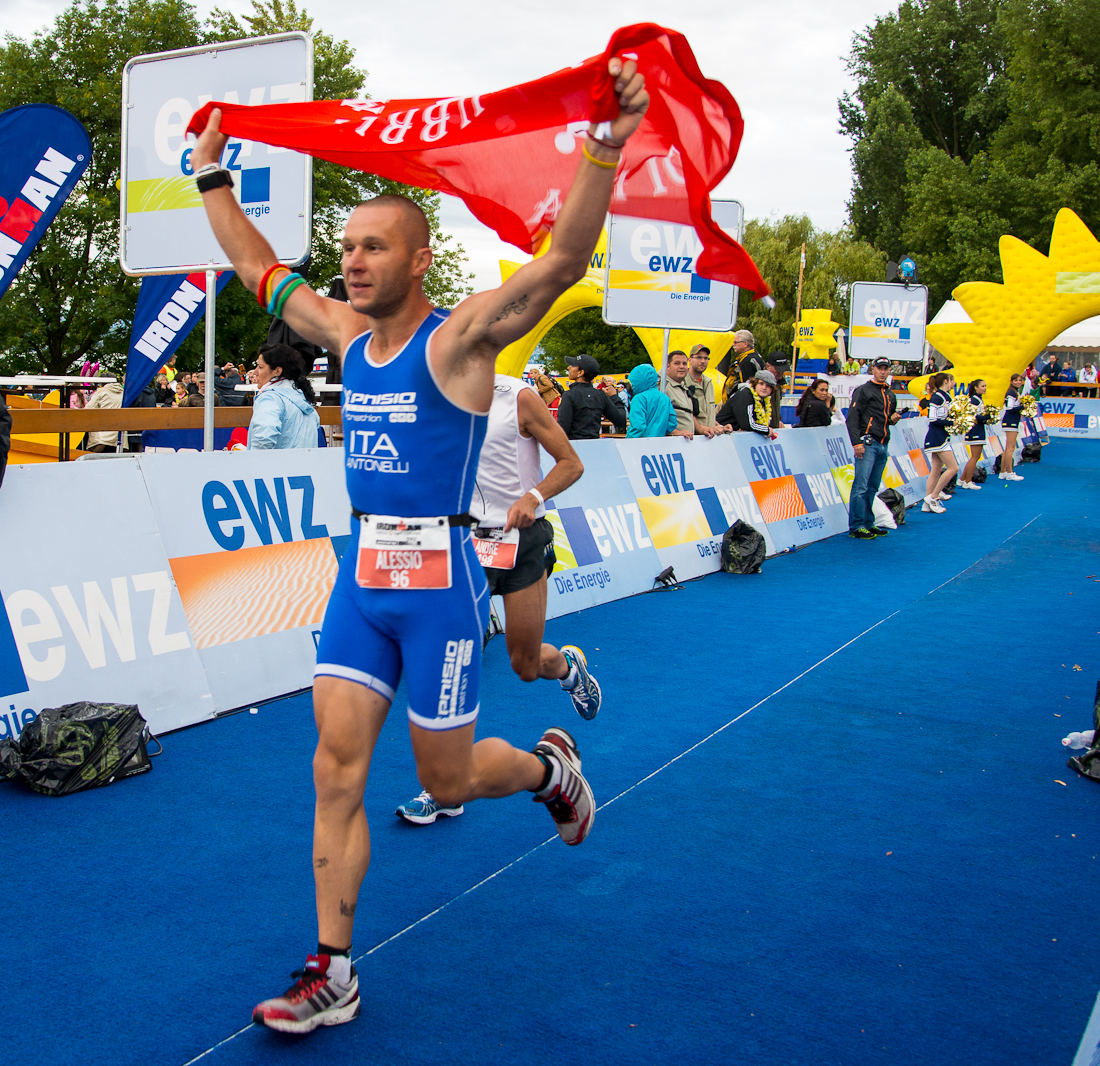
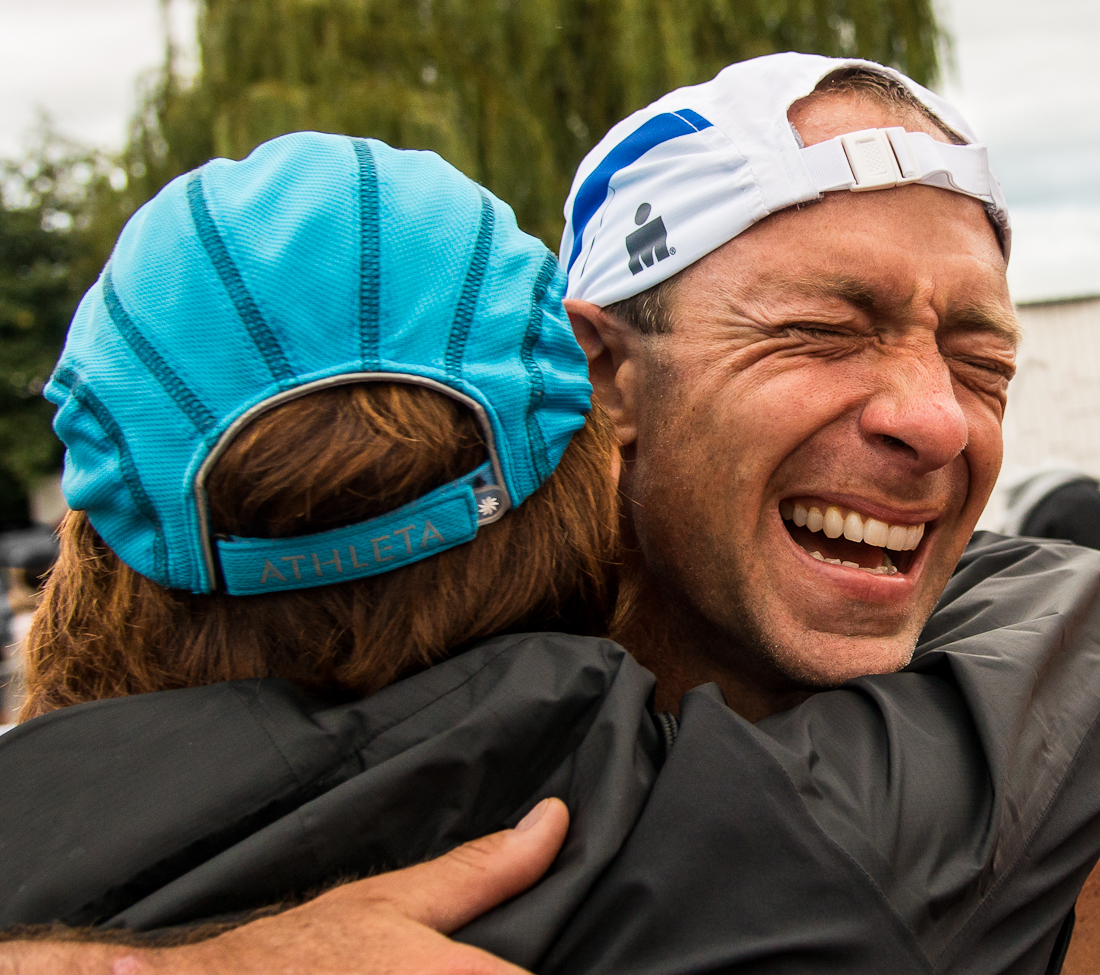
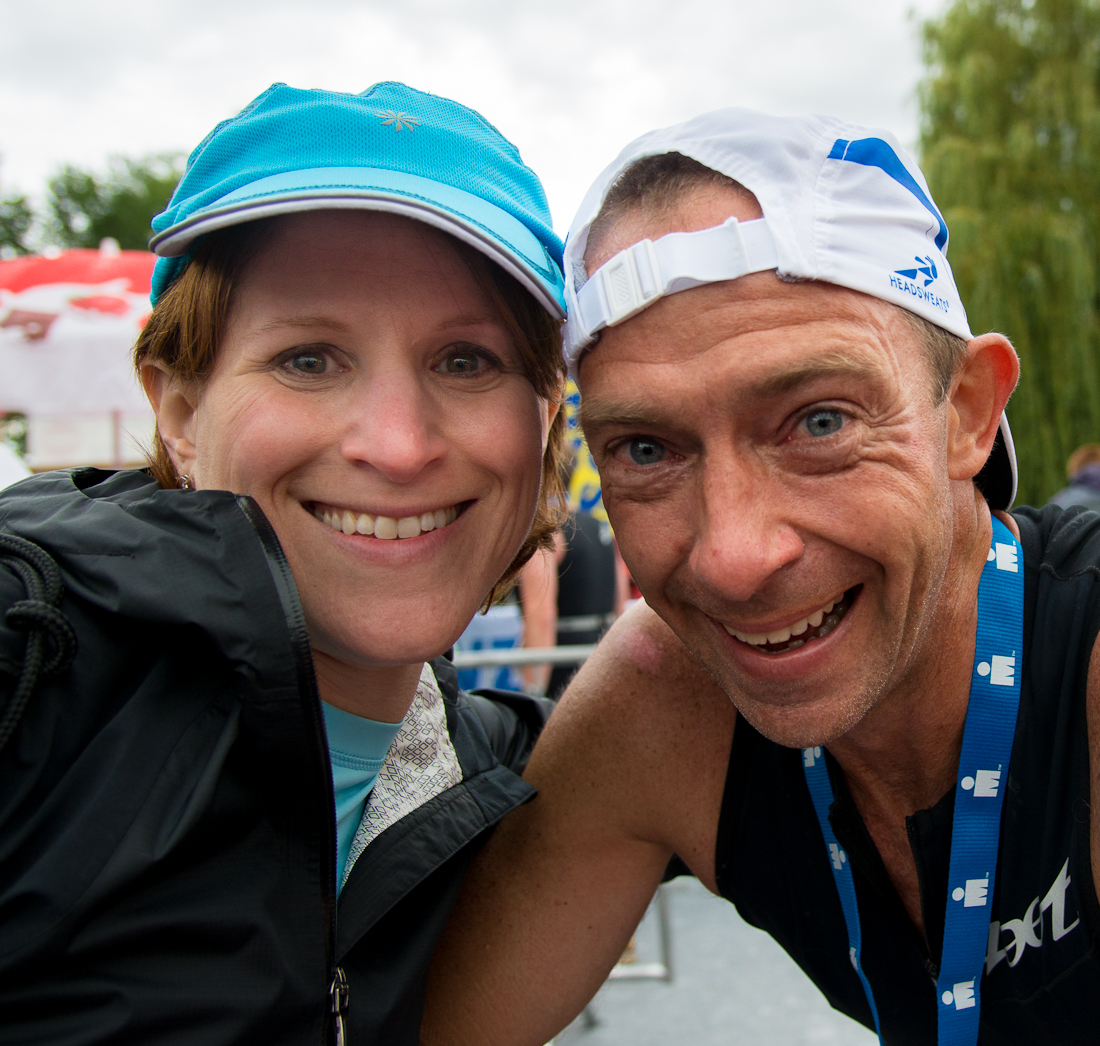
These are just pocket camera shots.  Obviously I’m not the photographer in several of them.


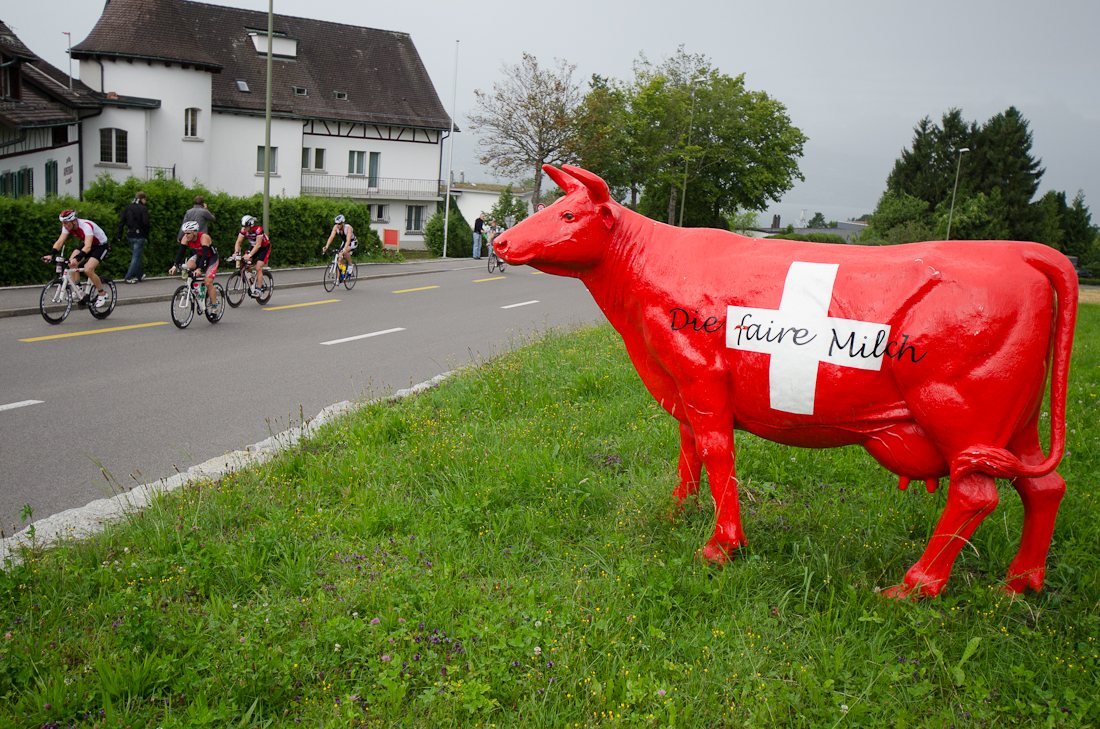
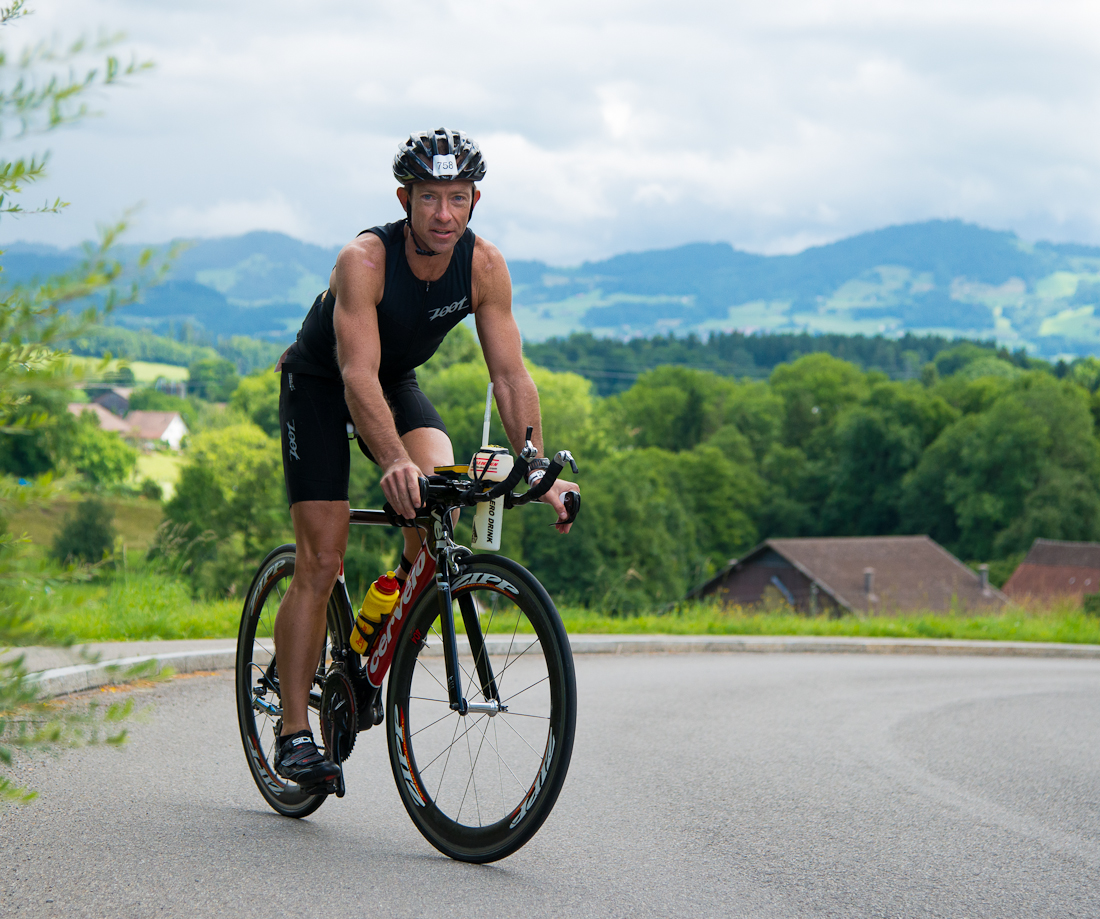
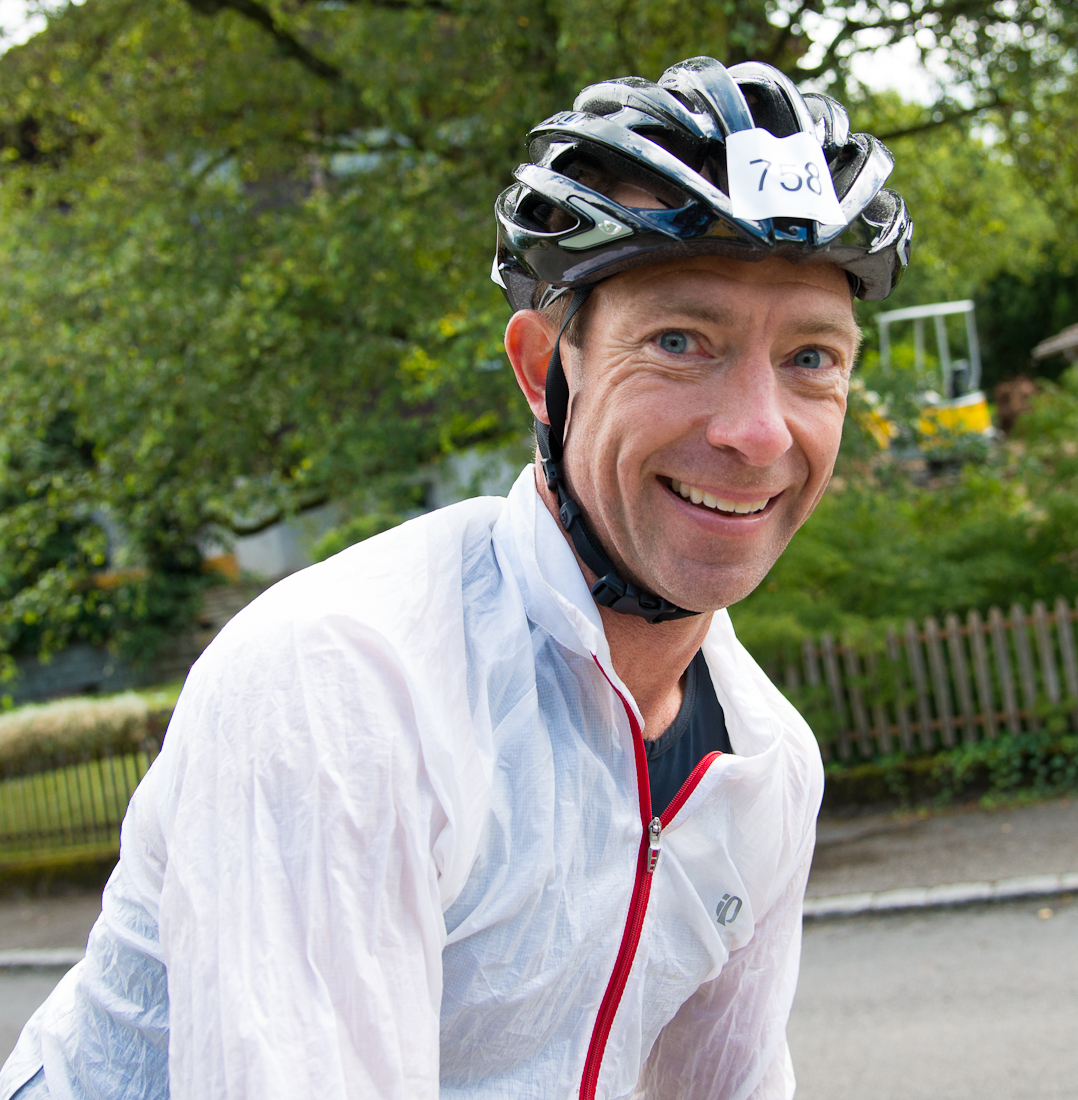
About twenty miles into the bike course of the St. Croix Ironman 70.3, there’s a hill called the “Beast.”  It lasts less than a mile, but the average grade is about 15%.  That means you climb the equivalent of a 50-story building (on a bicycle) in the nine-or-so minutes it takes someone like me to ride up.  The Beast gets a lot of attention, but that’s just nine minutes out of your six-hour day, and just a small fraction of the hills you have to scale on bike and on foot.  Thankfully, they haven’t figured out how to inject nasty hills into the swim course.

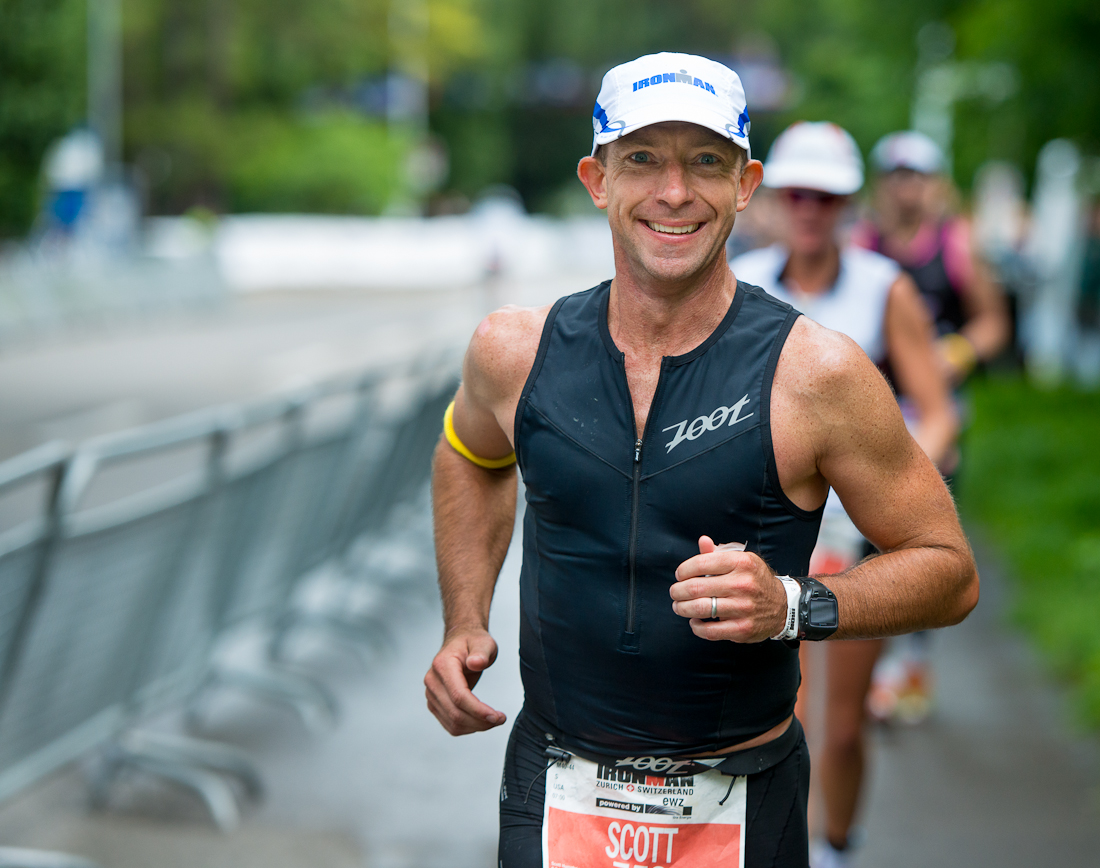
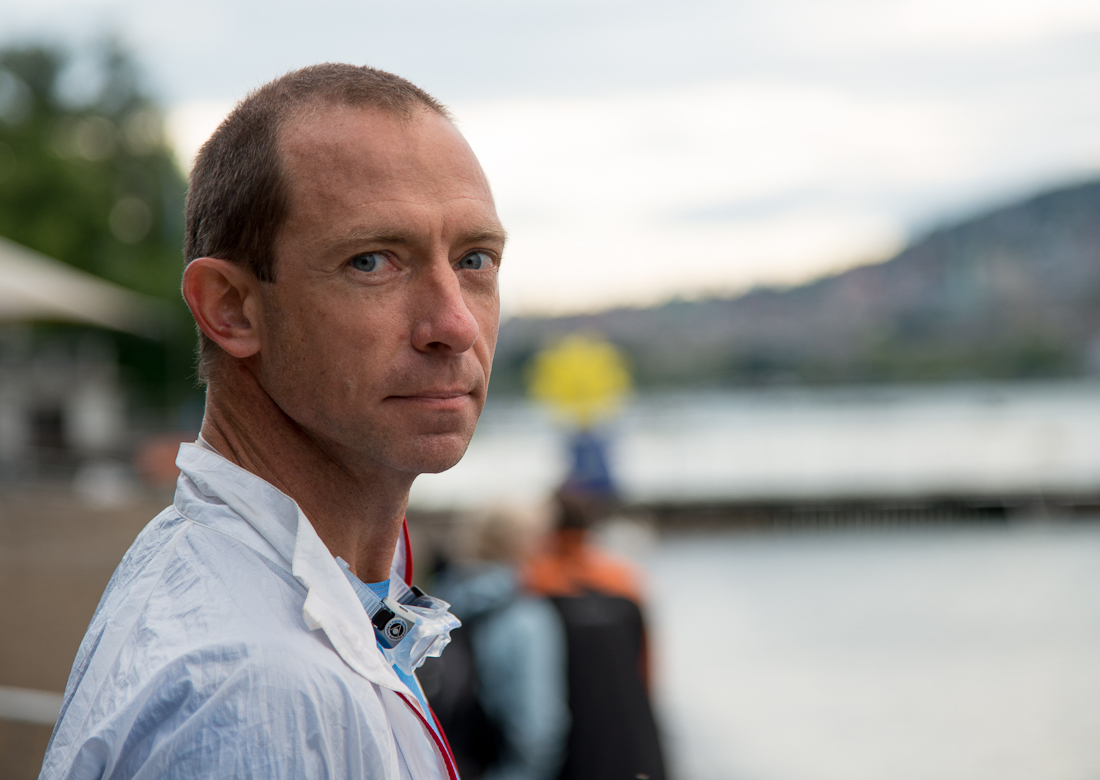
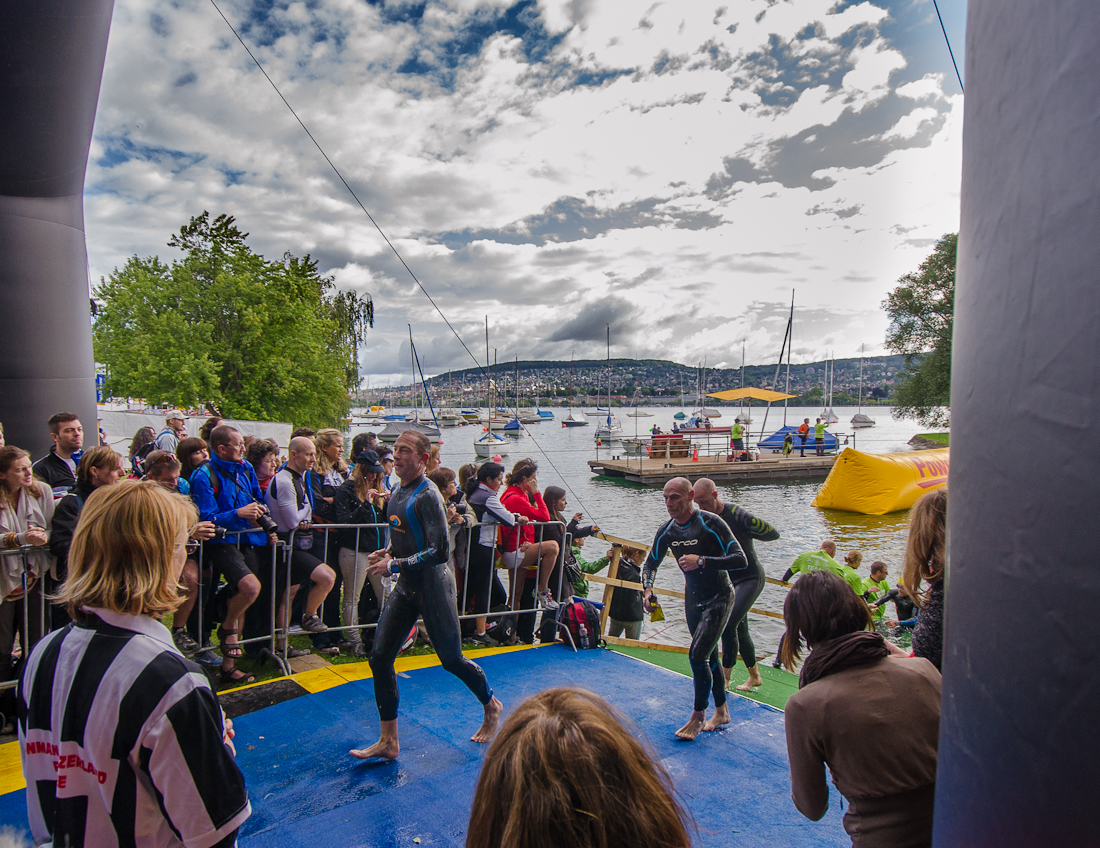
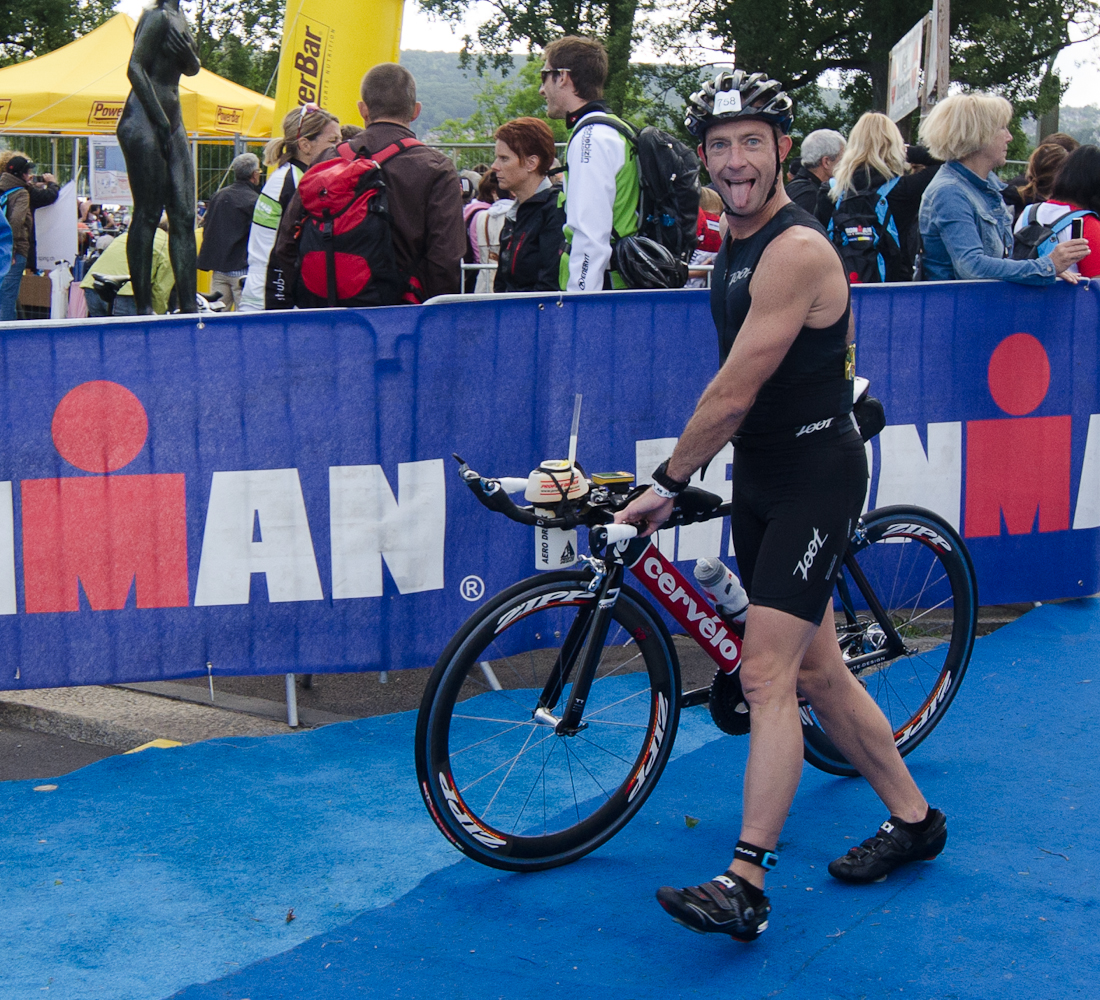
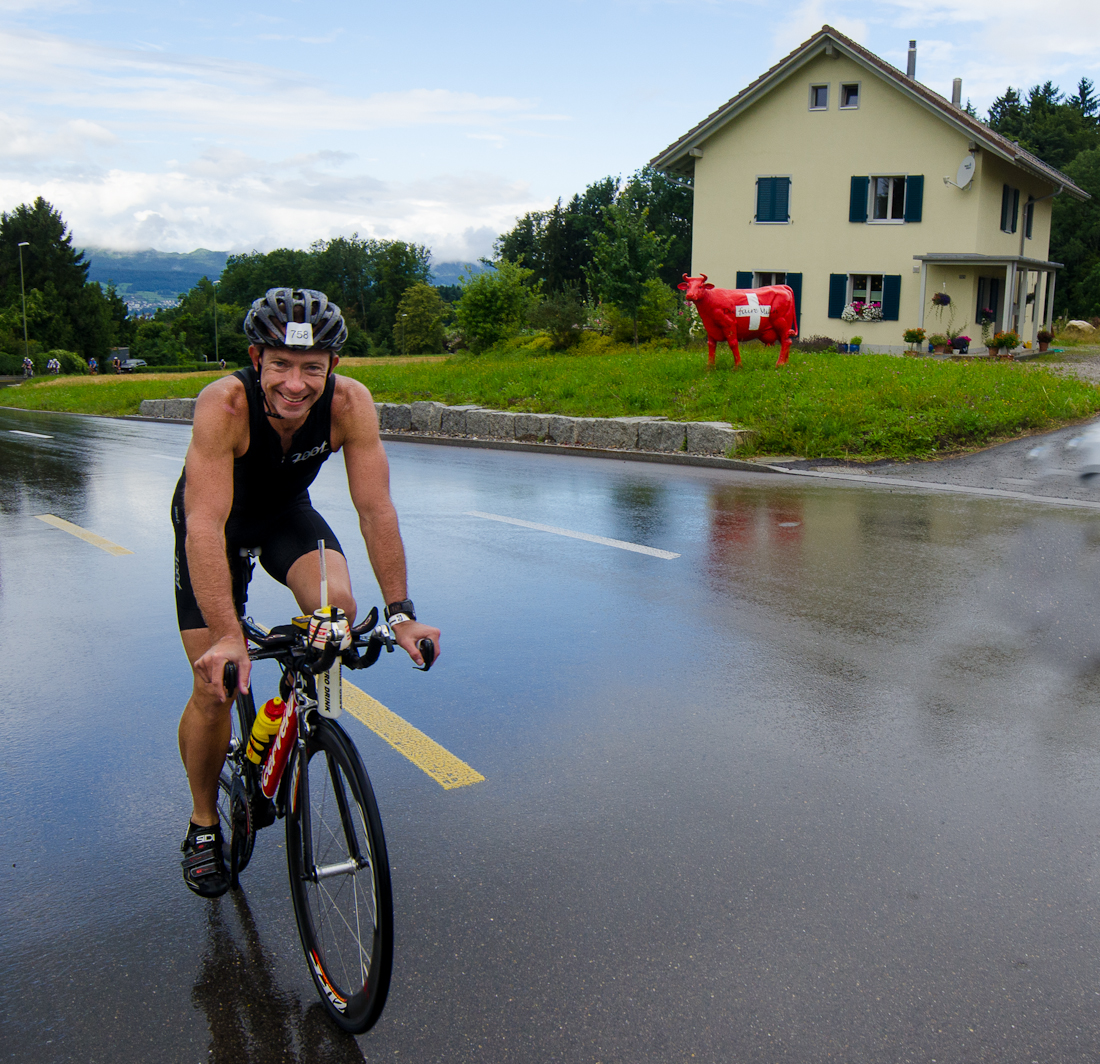
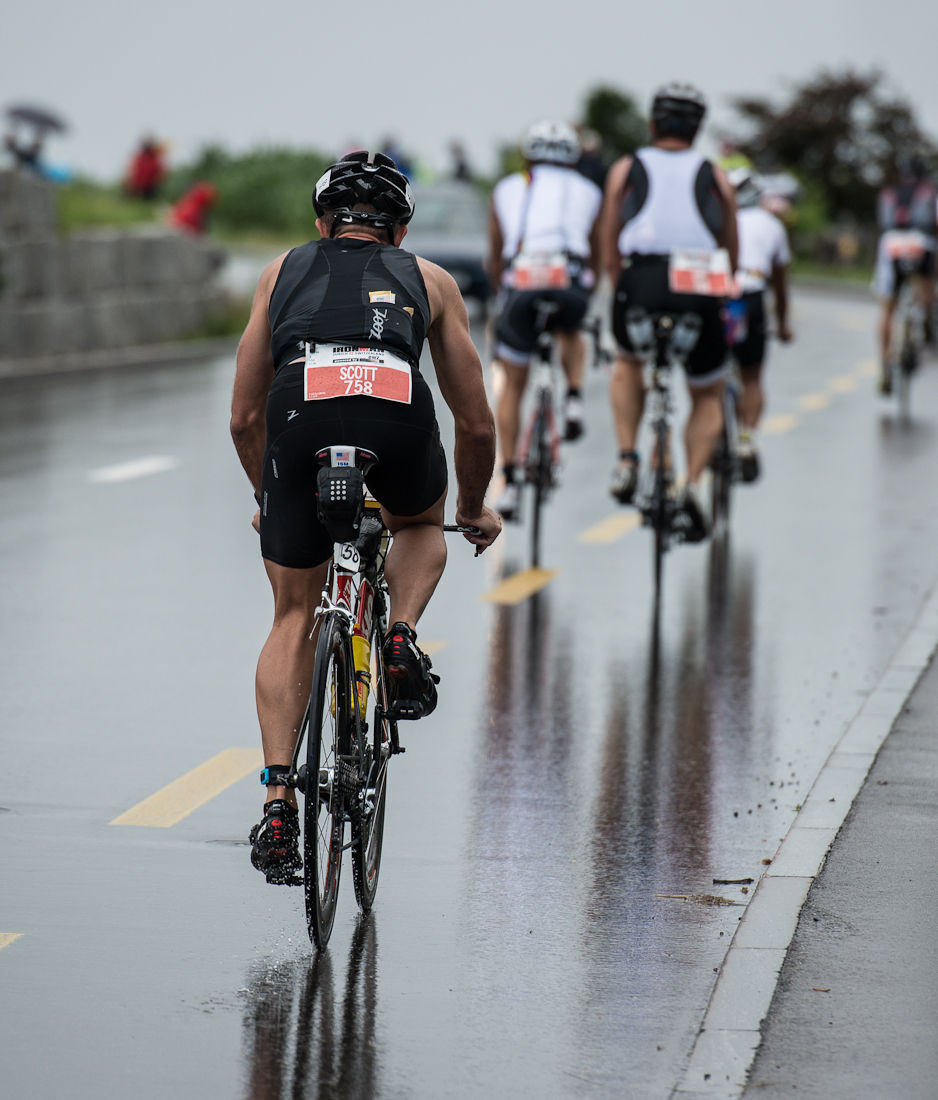
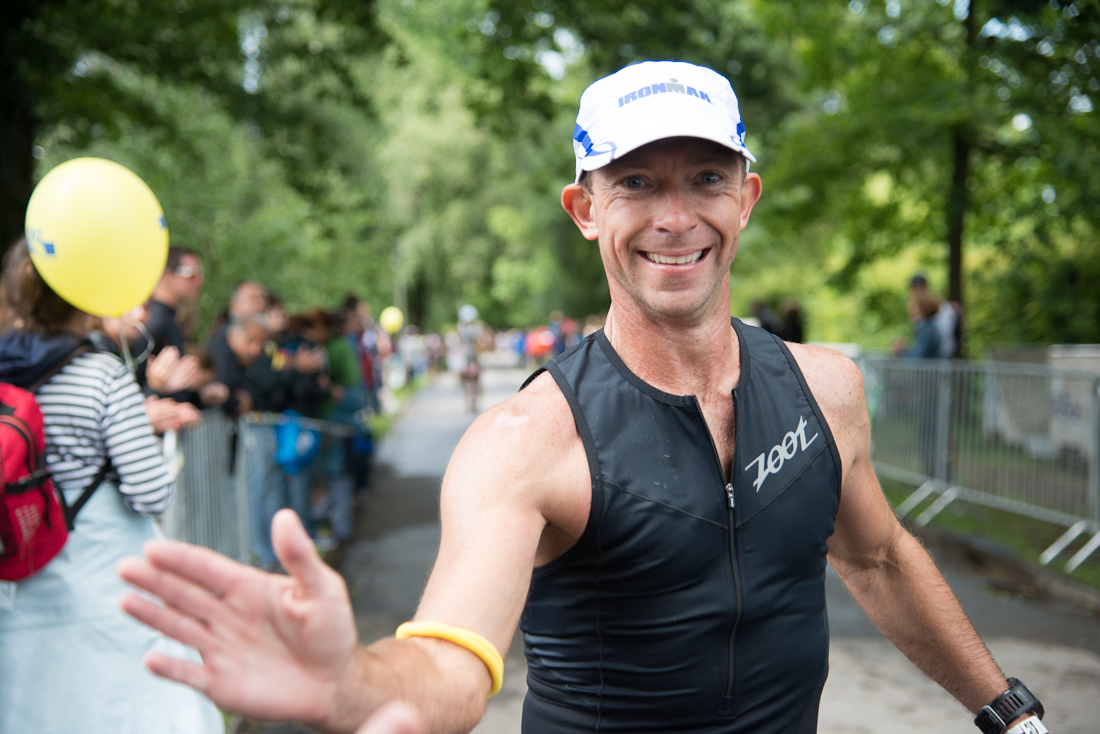
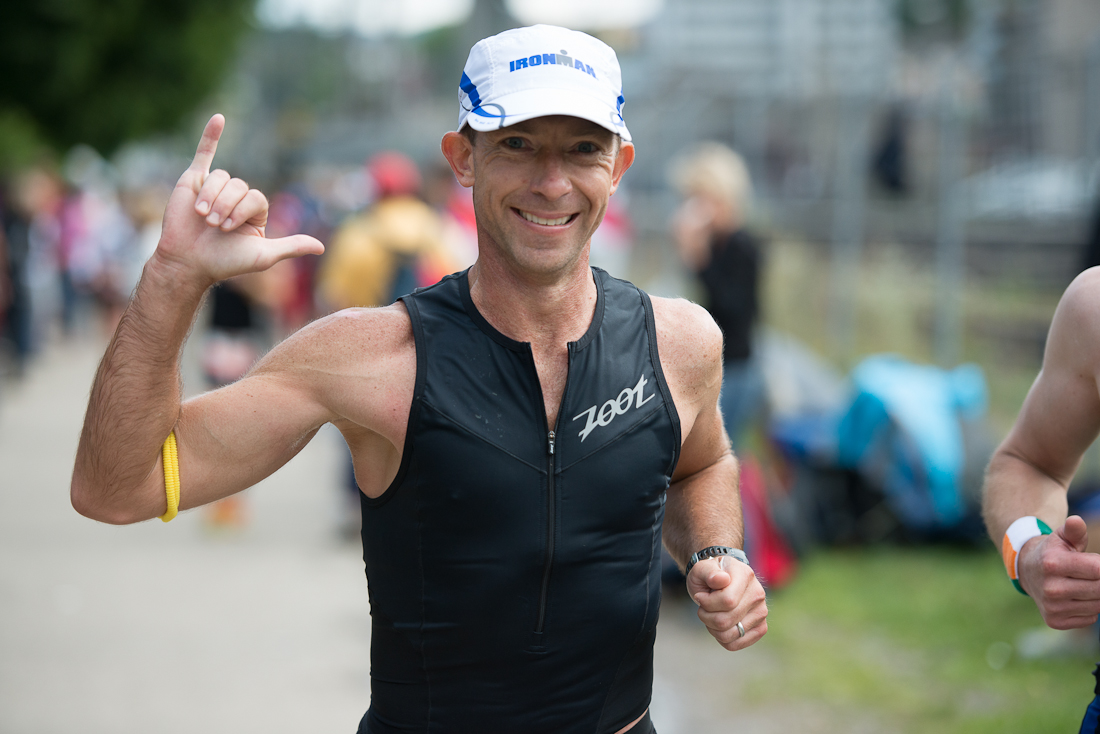
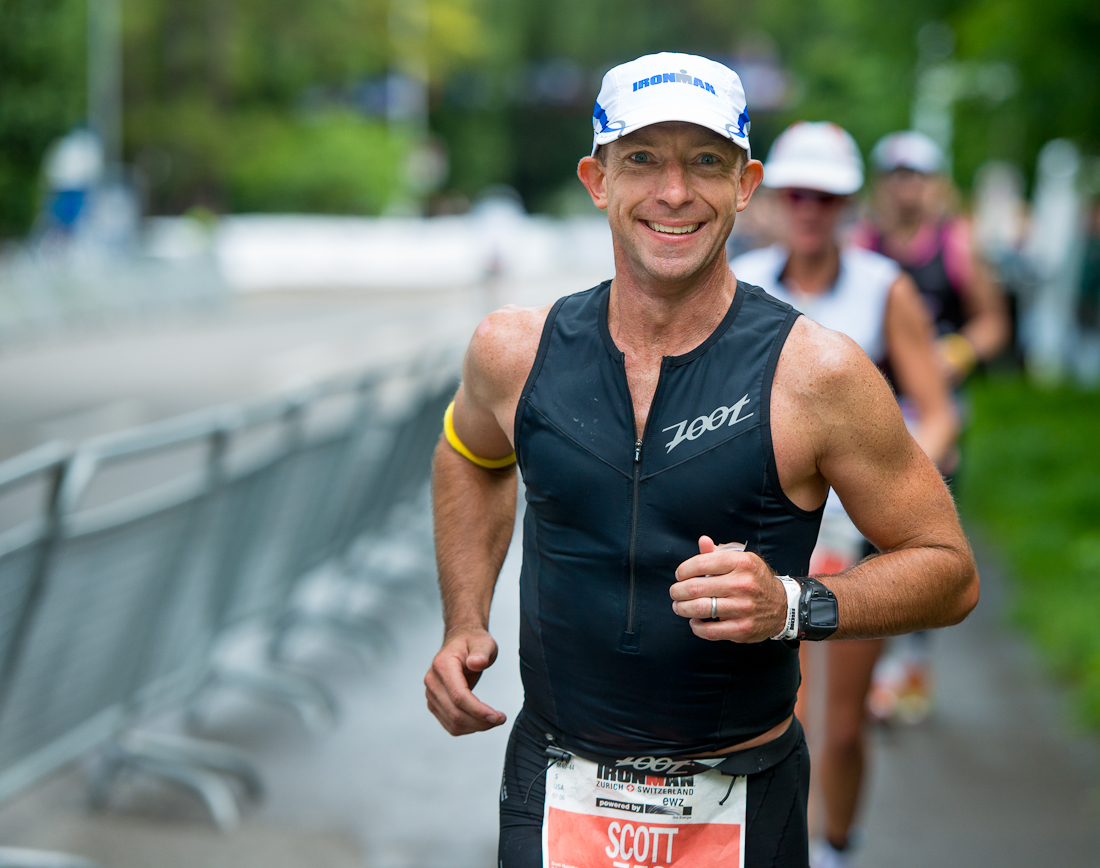
The 70.3 in the race name means it’s a “half” Ironman – which is a 1.2 mile swim, a 56 mile bike ride, and a 13.1 mile run.  Scott Humphries, Shane Merz and I just finished the race Sunday.  The three of us have done “full” Ironman events (twice as long), so a little laziness and arrogance may have slipped into our training for this shorter race.  These are not good training strategies, so we were appropriately punished by the otherwise-lovely St. Croix terrain.  In a six-plus-hour event, Scott wound up beating me by 36 seconds!  I should’ve spent less time in the Porta-potties (or maybe more time training in the pool last month), I guess.  Shane was not too far back (he later confessed that he’d accidentally done the entire bike ride with his bike shorts on backward!?! Ouch.).  We all finished and had a fine time doing so.

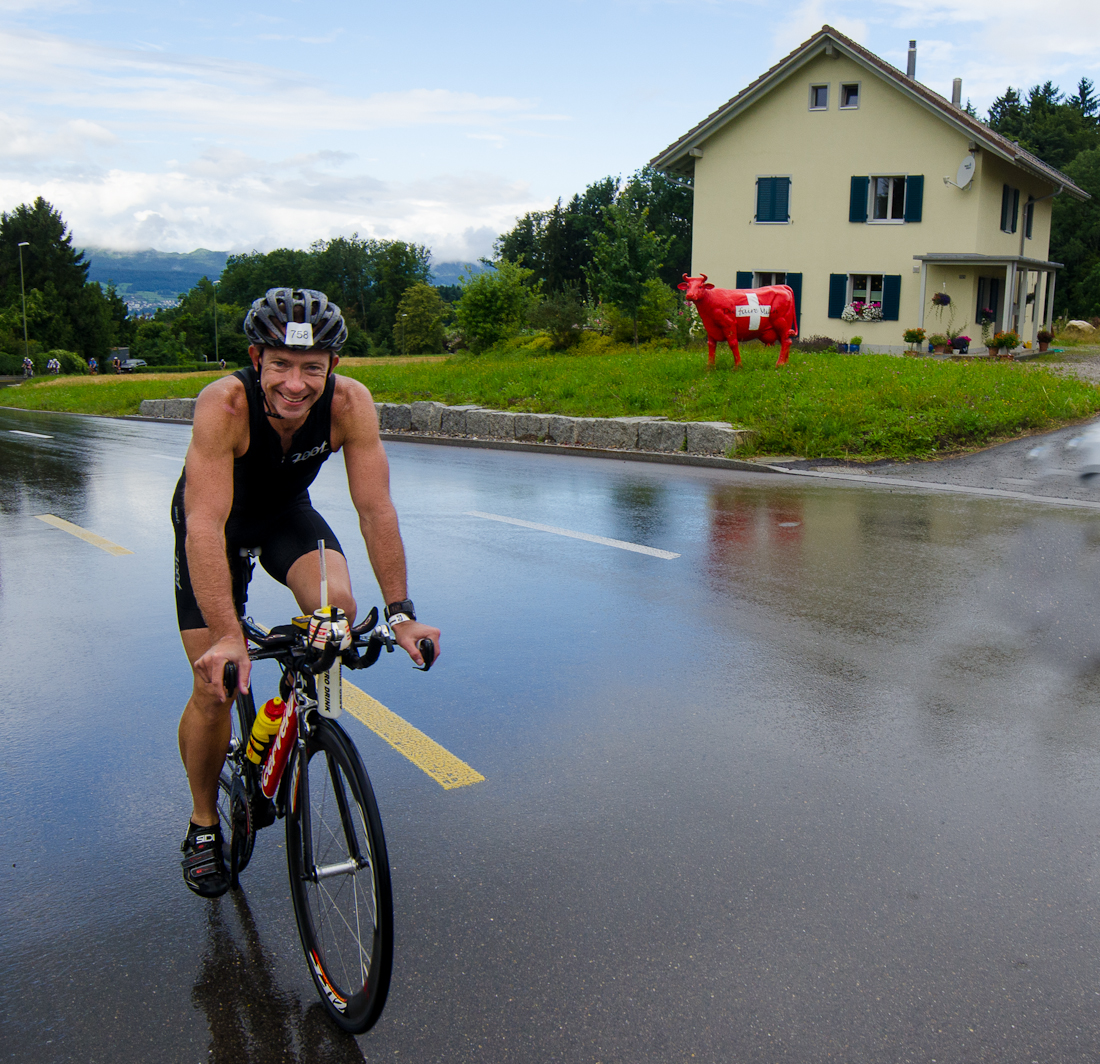
It rained much of the early morning, so the twisty bike descents were wet and scary and a few places had six inches or more of running water on the road.  Triathlon bikes were not designed for any of that, so there was some nervous riding.  The consolation was that the sun was not beating down on us as we’d expected.

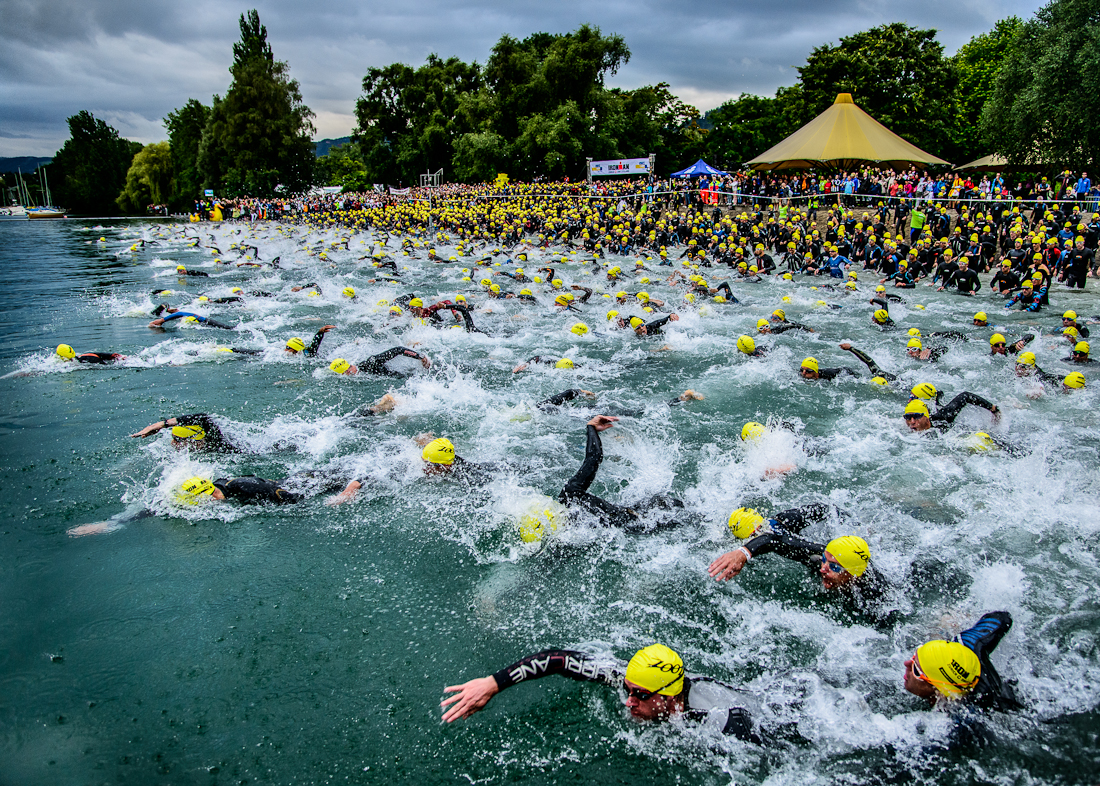
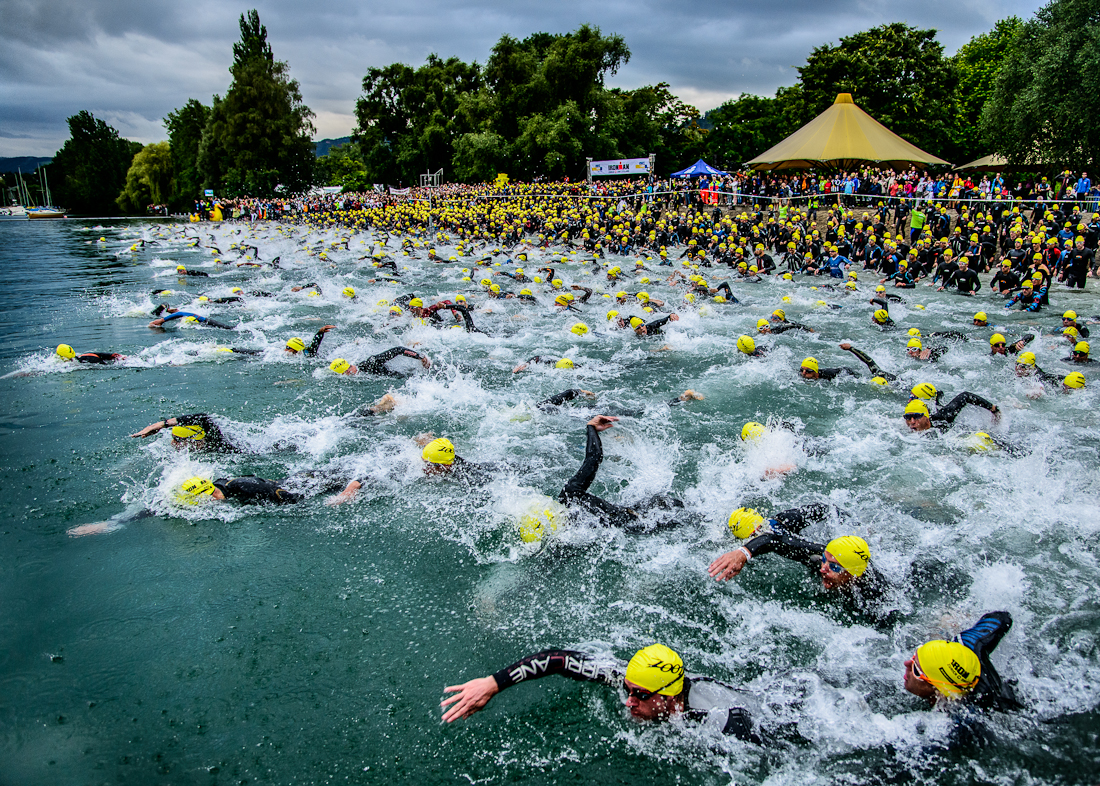
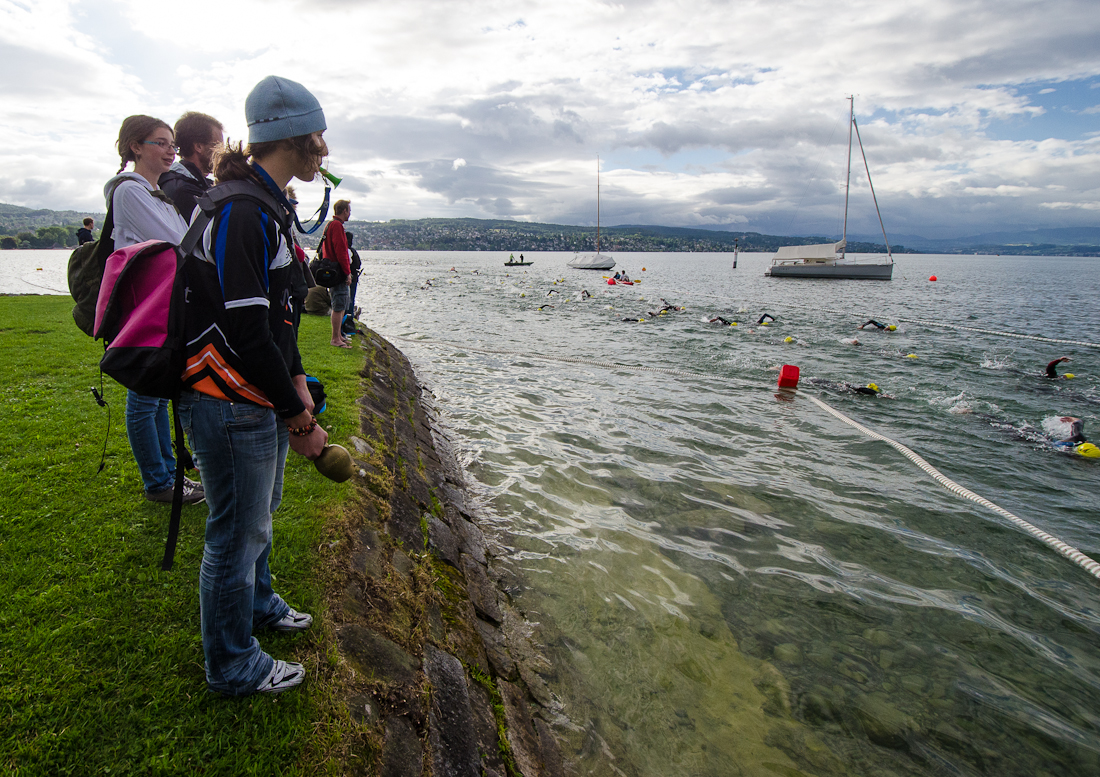
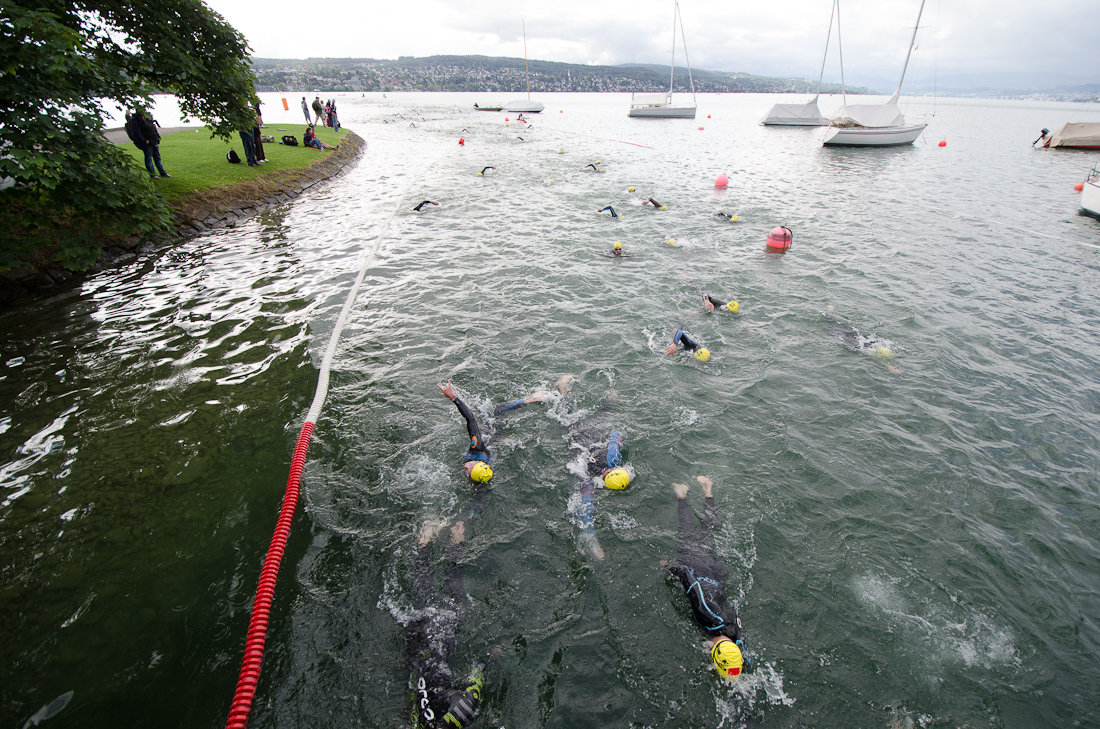
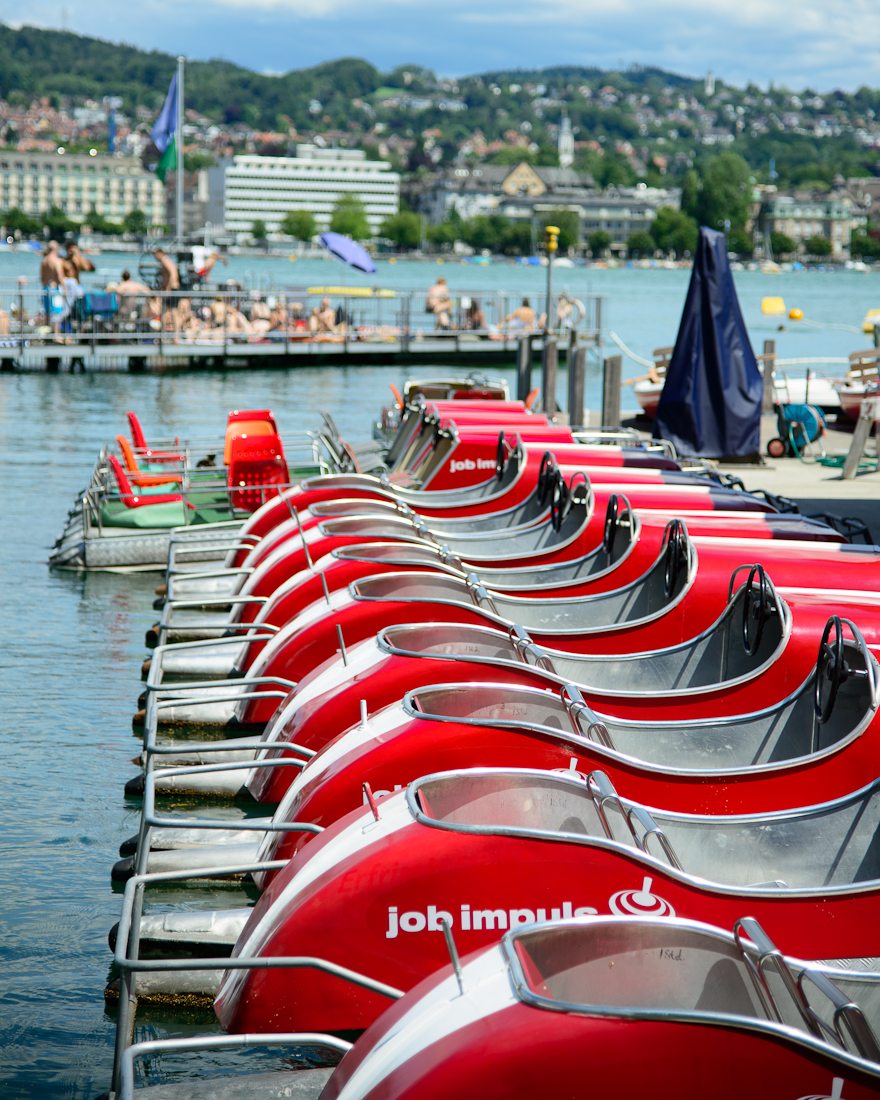
The event is centered in Christensted in St. Croix – the southernmost of the Virgin Islands.  The swim start is unique here:  it starts on the beach of a tiny island (pictured above in daylight) in the bay – and you have to swim out to that island (just at sunrise) before the race even starts.  It sounds odd, but as the race director said, “If you have a problem with that, you’re in the wrong race.”

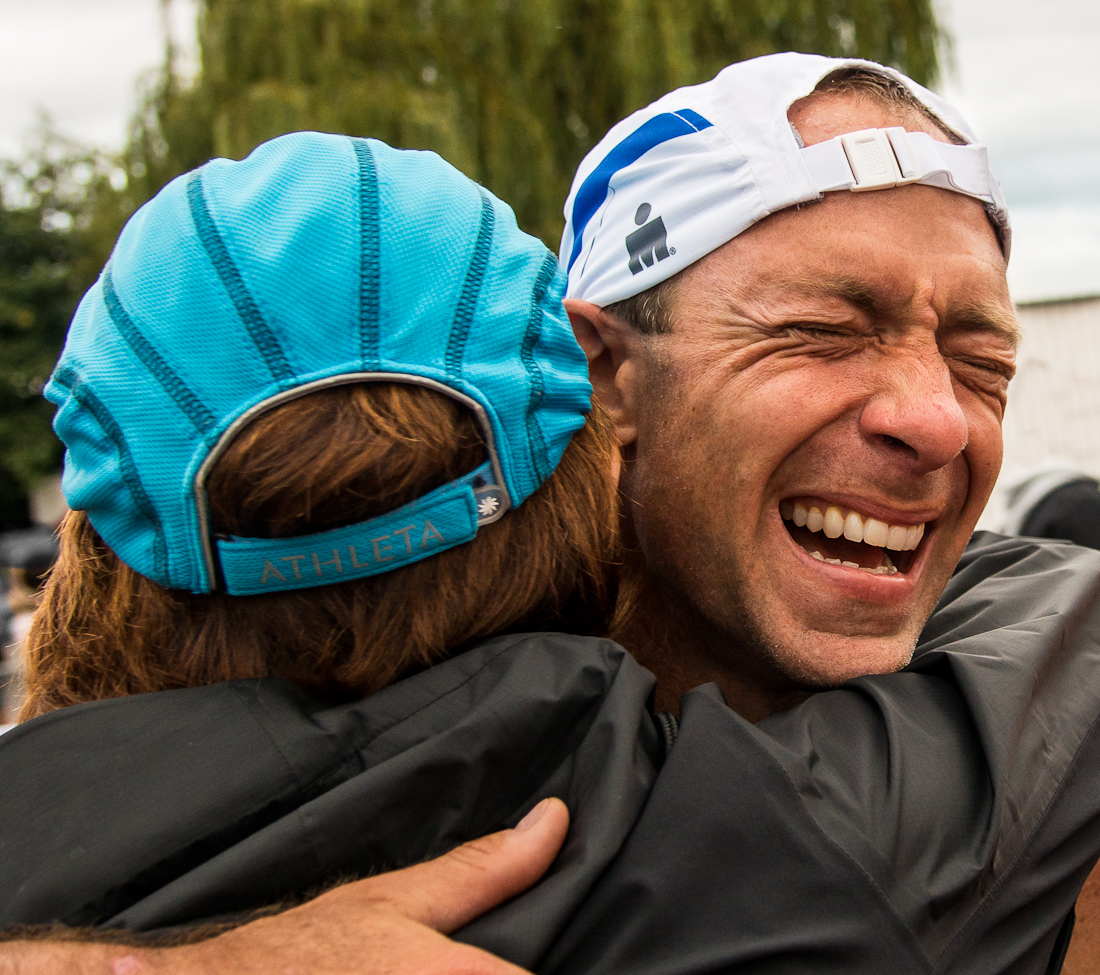
Lance Armstrong was competing in the pro division.  He’d started his career as a triathlete and did this very race 24 years ago.  This time, all eyes were on #7 in the yellow swim cap.  Standing on the beach at the swim start was the last time we saw him, of course.  Obviously he finished miles (hours) ahead of us, though he came in third behind Andy Potts of the USA and Frenchman Stephan Poulat.  After they finished but while the race continued for hundreds of us mere mortals, Lance’s police-escorted SUV came right down the middle of the otherwise-closed-to-traffic run course, whisking him back to his hotel.  Meanwhile winner Andy Potts was hanging out in the finish area taking pictures and shaking hands.  That’s him in red giving me the “thumbs up” after the race.  Unlike Lance, Andy schlepped his own gear like the rest of us.  Lance no-showed the awards ceremony.  I think I became an Andy Potts fan yesterday.

Earlier in the week, we’d met Lance’s two pilots (he travels in a Gulfstream 4, yellow stripes, tail # N7LA) and spent a couple of days hanging out with them.  Super-nice guys.  To Scott and I (both small-plane pilots ourselves), Lance’s pilots may be bigger celebrities than Lance himself.  What a fine gig if you’re a commercial pilot:  St. Croix this month, Hawaii the next, France the next, maybe Aspen after that . . . .  Apparently, though, they were bored enough to hang out with us – and nice enough to email us after the race (from 41,000 feet in the air) to see how we did.

Special thanks to Scott’s and Shane’s understanding wives for tolerating this “guys’ trip” to the Caribbean.  Given the constant rains (it’s still raining now), you should be glad you didn’t come this time.  Scott’s next athletic stop is Ironman Switzerland in July.  Then he, Shane and I do the Leadville 100 (Colorado mountain bike race) in August.  Each will be twice as hard as yesterday’s outing, so we’ve all got some work to do.

Cuba (Part 10) One Last Look

Here’s the last installment of pictures from my March trip to Cuba.  The series started here.  The trip offered lots of photographic variety — including dancing showgirls, boxers in training, school kids, cigar moguls, classic cars, Havana street life and more — so take a look at all the posts.  The trip was also fascinating and educational for me personally; I hope my eagerness to share what I learned didn’t get too long-winded.  Thanks for looking.

As I mentioned earlier, Havana has plenty of sights to see.   A prior post had my attempts at decent pictures from Revolution Square, the current center of federal government buildings.   The Capitolio (pictured in three shots below) is the former center of government.  It looks just like the U.S. Capitol building in Washington.  Built in the 1920s, it was originally the home of the Cuban legislature.  When Castro took over, he disbanded both their houses of Congress and did away with representative government — thus freeing the Capitolio up for other purposes!

_JJC5373.jpg_JJC5385.jpg_JJC5527.jpg_JJC5559.jpg_JJC5585.jpg_JJC1820.jpg_JJC1821.jpg_JJC1833.jpg_JJC2164.jpg

Our group had some nice opportunities to get on rooftops and other high places just at sunrise or sunset, which is a simple recipe for good pictures.  A few of the pictures you see are from a hotel on Park Central; one is from the tower of the original Bacardi building; a handful are from the lighthouse at “Morro Castle,” which is actually a 400-year-old fortress that guards the entrance to the port of Havana.

On the last night of my trip, we went to a rooftop party.  The event included the opportunity to watch a drums-and-dancing Santeria ritual.  Santeria is a form of religion that mixes Catholicism with African “animist” beliefs.  I cannot pretend to understand or explain it, but these dancing performances are fairly common and open to the public.  The dancers and the folks wearing white are part of that.  The finale of that evening was those pigeons.  (See the picture at the top of this post).  There was a pigeon coop (and a pigeon-keeper) on the roof, and just at sun set he let 30 or so of them out for their evening exercise.  They kept returning to the roof; he kept shooing them away to fly around some more, giving me several chances to try to get the “perfect” picture.  It was a nice, peaceful wind-down of a sometimes-overwhelming couple of weeks in Cuba.

_JJC2564.jpg_JJC2268.jpg_JJC2328.jpg_JJC2371.jpg_JJC2420.jpg_JJC2459.jpg_JJC2525.jpg_JJC2530.jpg_JJC2540.jpg

* * * * *

Finally, here (below) is one of the last pictures I took in Cuba.  I know it doesn’t look like much.  I took it with a tiny pocket camera in the cab on the way to the airport.  Normally, I had always tried to use one of the privately-owned taxis rather than the government-owned taxis, but in the scramble to get out of my hotel and out to the airport, I didn’t seem to have a choice.  My reflex was to be unhappy and uncomfortable in the government-run cab, but of course it wasn’t Castro at the wheel; it was just an ordinary Cuban guy doing his job.  The driver was a nice guy who found out I was headed for Miami and quickly told me he had family that had moved to America long ago.  He seemed to envy their fate, but Cubans are generally not allowed to travel freely, so he said that he’d never been allowed to go visit.  At about that point, I noticed his personal keychain — the stars and stripes of an American flag on a heart-shaped medallion.  That’s a “sneaked” picture of his keychain (and his knee and steering wheel) in the picture below, taken from my backseat vantage point.  Seeing his keychain — attached to the keys of his Communist-government taxicab — was a fitting finale to my Cuba experience and another reminder that I’m lucky to live where I do.
If you happen to get a chance to go to Cuba in the next few years, go.  You’ll need a sense of adventure and an open mind.  You’ll stumble into things you never expected and things you’d never encounter at home — some good; some bad.  The overlay of a Communist, socialist system in what’s otherwise a peaceful tropical world is fascinating and eye-opening.  Parts of it you’ll love, and the other parts will make you appreciate your own country.  As the Castros age, Cuba is changing fast.  Maybe I’ll get to go again and see some of that change take place.  Hasta la proxima!

Cuba (Part 9) El Bloqueo

A brief, mostly-nonphotographic post before I finish the Cuba photography series.  It’s impossible to spend a couple of weeks thinking about Cuba in the year 2012 without some focus on the 50-year-old American trade and travel embargo.

The most popular and controversial topic in American-Cuban relations is of course the U.S. “embargo.”  American laws put in place mostly by President Kennedy still bar much trade and travel with Cuba.  The Cubans call it “El Bloqueo” (“the blockade”).  Castro complains about it regularly, using it to demonize the U.S.A. and to justify his own harsh policies.  As you leave the Havana Airport, the Cuban government has a big billboard that says, “Bloqueo.  El genocidio mas largo de la historia,” which means “The longest genocide in history.”  The second “o” in Bloqueo is a noose.  Though this is obviously ridiculous hyperbole, a lot of the world has taken Castro’s side – criticizing America for keeping the embargo in place.  Even the Pope recently popped off about it, feeding Castro’s Communist propaganda machine by criticizing the American laws as “unfairly burdening” Cubans.

The U.S. (including our current President) has consistently said the embargo will remain in place until the Castro regime yields to a democratic system.  There is much legitimate debate about its effectiveness, its rationale, its continued relevance and its potential counter-productive effects, but at this point we are at least standing behind our word on this.

Importantly, whatever you think about the continuing rationale for a 50-year-old embargo, it is not to blame for Cuba’s economic woes.  In the 21st century, it should be painfully obvious that the sources of Cuba’s problems are its socialist economic policies and its un-democratic political system.  As The Economist recently reported, “The American embargo is an irritant, but the economy’s central failing is that Fidel’s paternalistic state did away with any incentive to work, or any sanction for not doing so.”  (Let this be a lesson to us here, too.)

Remember:  Cuba can and does trade freely with every other country on earth, and the U.S. actually does provide much-needed food to Cuba (we’re already its biggest source of food).  So scapegoating America for Cuba’s situation is mostly a Castro-regime P.R. strategy (for which many America-bashers and socialism sympathizers have gladly fallen).  It’s not as though Cuba has lots of surplus goods to sell the U.S. – or lots of money with which to buy American goods.  The reason Cuban people do without lots of basic items is because their government jobs pay them almost nothing, and their government-run stores won’t sell many foreign goods anyway.  Otherwise, Cubans would be buying Chinese-made goods just like we do.  Cuba already has a tourist industry servicing Canadians and Germans and Brits.  If American tourists were allowed to go, they’d soon learn that the Cuban-government-operated hotel facilities did not compare favorably against the many other options in the Caribbean.  It’s Cuba’s own Communist/socialist policies that prevent, e.g., Spanish-based Iberostar Hotels or Canada-based Four Seasons Group from opening hotels and resorts there.  Unless Cuba changes its own policies – including allowing foreign investors to own and develop resorts, factories, stores and commercial farms — removing “El Bloqueo” wouldn’t make much difference.

The best argument for lifting the blockade may be simply that its continuation gives Castro and other eager America-bashers a convenient, misleading scapegoat for Cuba’s socialism-induced economic quagmire.  But compromising one’s plans and principles because one’s foes have condemned them seems to be a ludicrous foundation for foreign policy.  Of course Cuba is no longer the security threat it was in the 1960s, but the leadership and the political and economic systems in place there haven’t really changed.  Lifting the embargo might help make Cuba’s Communist Socialist system a bit more palatable to its citizens, but that may actually prolong the regime’s existence.  Changing Cuba is going to be Cuba’s responsibility; we just need to make it very clear that we’ll gladly change our policy when they change theirs.

Cuba (Part 8) Olympic Spirit

 Part of a series from my recent trip to Cuba.  Part 1 is here.


One quick stop on our Tour de Cuba was at a Havana boxing arena where some of Cuba’s Olympic boxers train.  Despite its tiny size, Cuba has won more boxing medals in the Olympics than any country other than ours.  The folks in these pictures, though, are just boxers-in-training, not Olympic champions.  Like so many places we saw in Cuba, the facilities were tattered, rusting, flaking and crumbling, but that didn’t seem to slow these guys down.  The guy seated ringside (below) was the coach.  I declined the suggestion to join them for some sparring practice.