Category Archives: Photography

Completed Passes

In the Alps, there are lots of very-long tunnels and lots of very-high mountain passes.  Sometimes you get to choose between the two.  Tunnels usually make lousy pictures.  And sometimes you learn a thing or two by taking the high road.


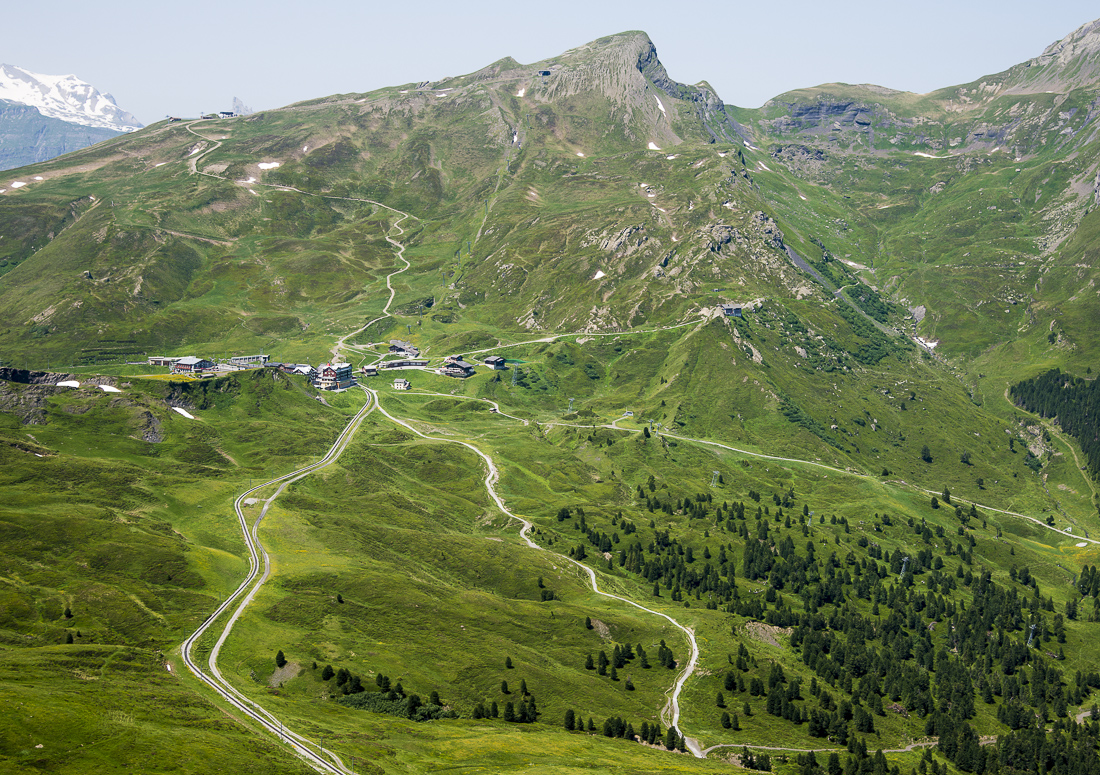
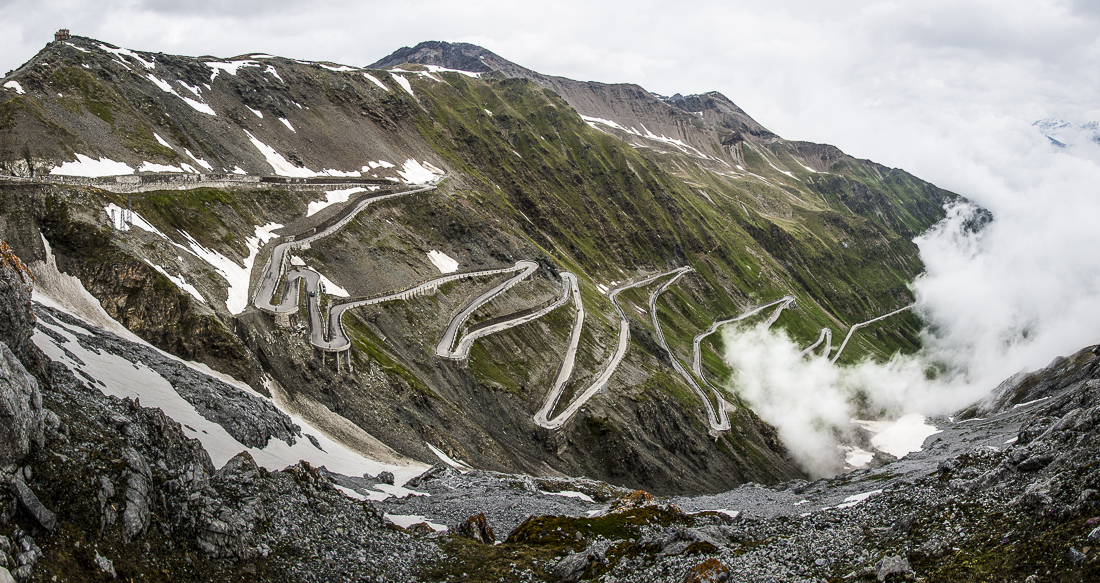
The winding road you see in the picture just above is Stelvio Pass — where you leave the Tirol (i.e., Italy’s piece of the Tirolian Alps) and enter Lombardy (the Italian Lakes Region). The picture shows — above those clouds — only the last dozen or so of the 48 switchbacks it takes to get to the top.  You become incredulous that it can just keep going on and on.  Making things a little more interesting, I wound up following a Rolls Royce convertible — circa 1930 — most of the way up the pass.  Its drivers were wearing hooded fur coats and having even more fun than I was, though my Volvo handled the climb better than their 80-year-old Rolls.

In Tirol, they speak German; in Lombardy, they speak Italian like the rest of Italy. The underlying history is that the pass (or, rather, the nearly impassable mountain) was the 19th century border between the Tirol region of Austria-Hungarian Empire (to the east) and the Kingdom of Italy (to the west). It’s easier to defend a border if nobody can realistically cross it anyway. The now-Italian Tirol region was promised (and given) to Italy in exchange for their agreement to fight against the Germans and Austria-Hungarians in World War I, and Stelvio pass was the site of some nasty hillside battles.  The pass persists as a literal ‘language barrier,’ helping to keep the German-speakers to the east separated from the Italian-speakers to the west.

To help assimilate the former Austrians into the Italian way of life, the government gave new parallel Italian-sounding names to all the towns.  Apparently this largely consisted of changing the Ks to Cs, then adding a vowel to the end of every word.  Who knew it really was that easy to translate into Italian?!  Kastelruth is now Castelrotto.  Bruneck is now Brunico (Be sure sure to roll the R).

* * *

A few miles further up the road, after you head north into Switzerland, the Autostrada goes through the ten-mile-long St. Gotthard road tunnel.  It’s cool to know you’re five miles inside a tunnel with a mile or so of granite on top of you, but inside it really just looks like a tunnel.  So this time I opted for the road (less traveled) over the top instead:  a series of three mountain passes took me north and west toward Interlaken.

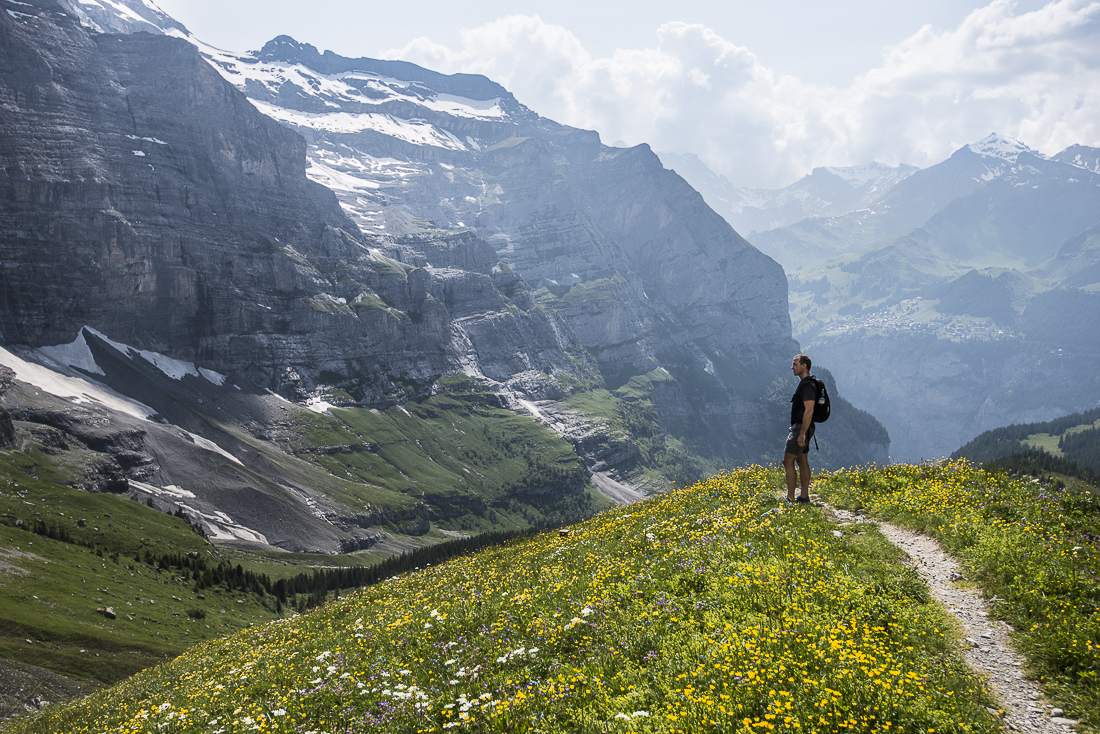
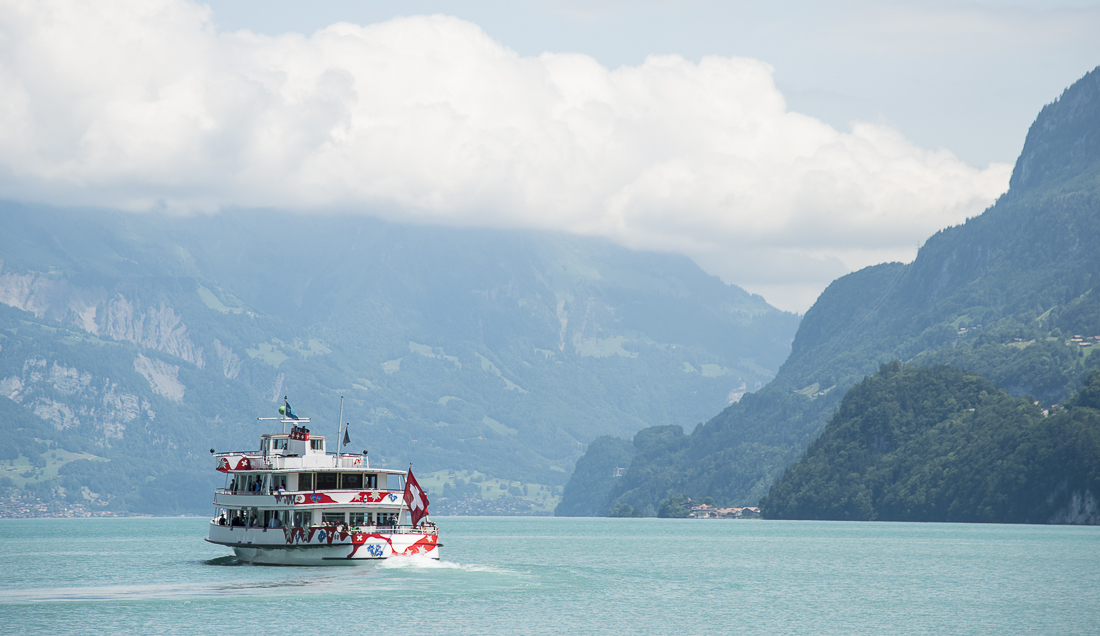
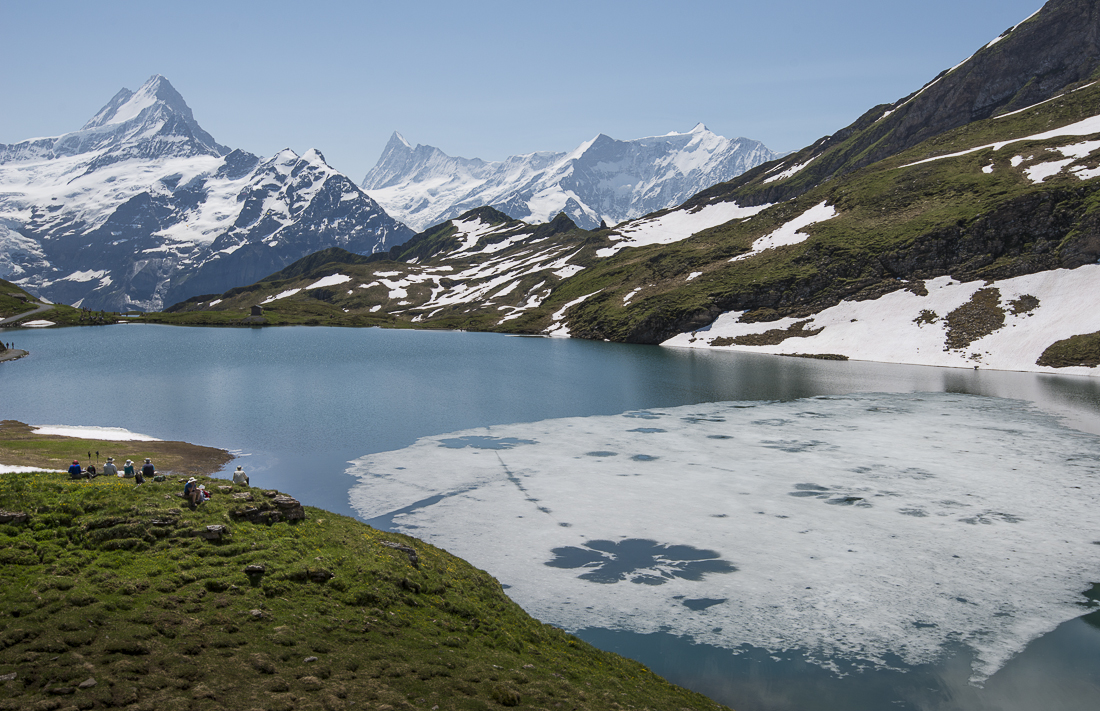
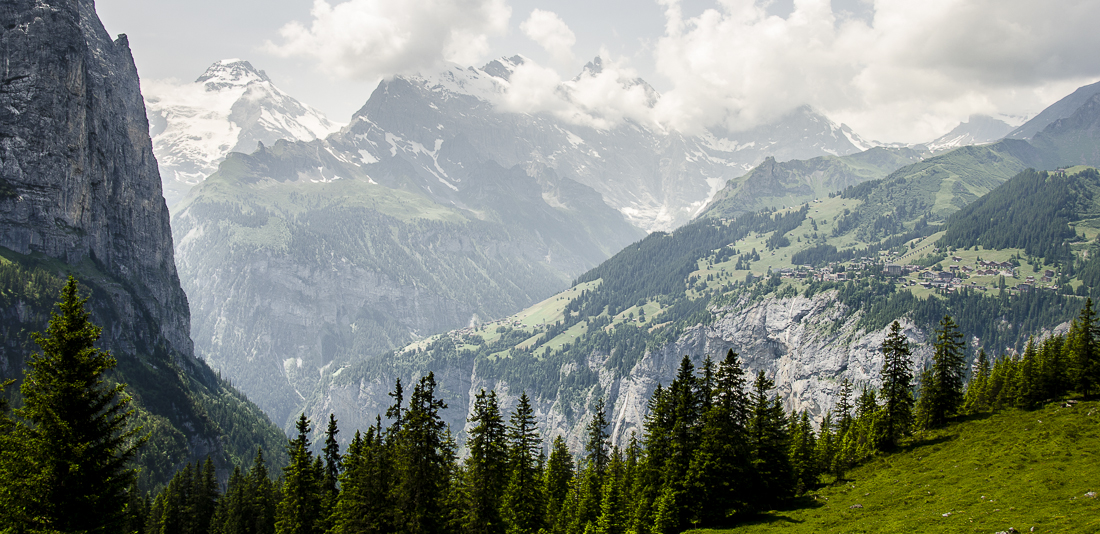
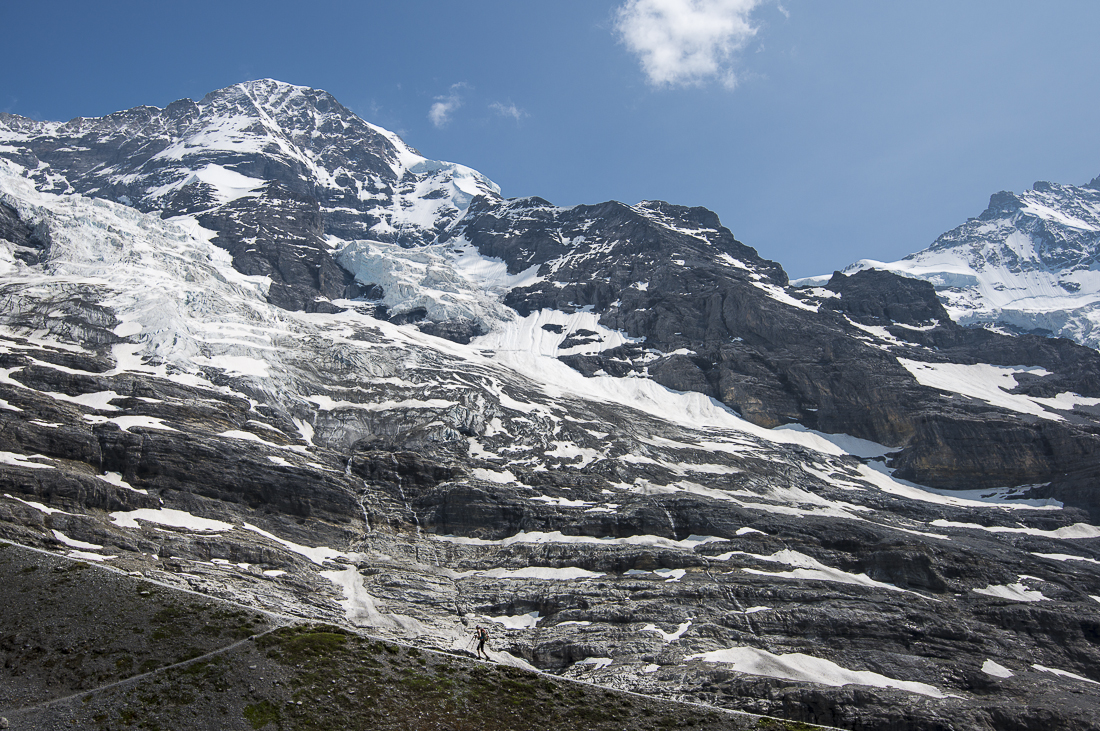
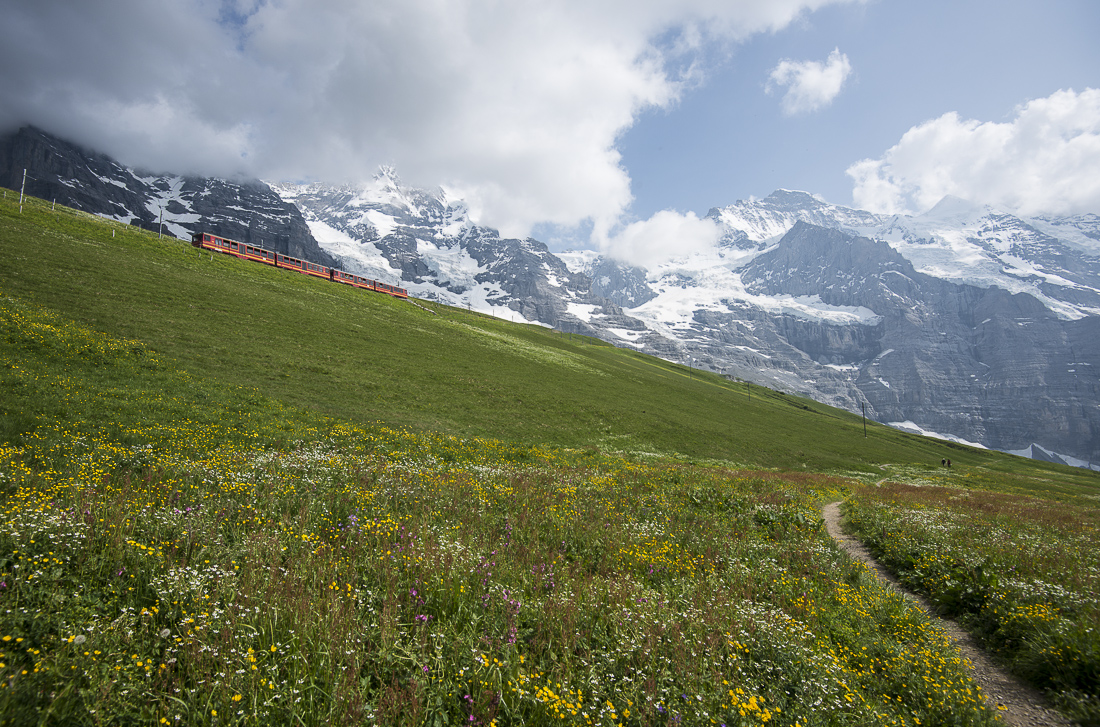
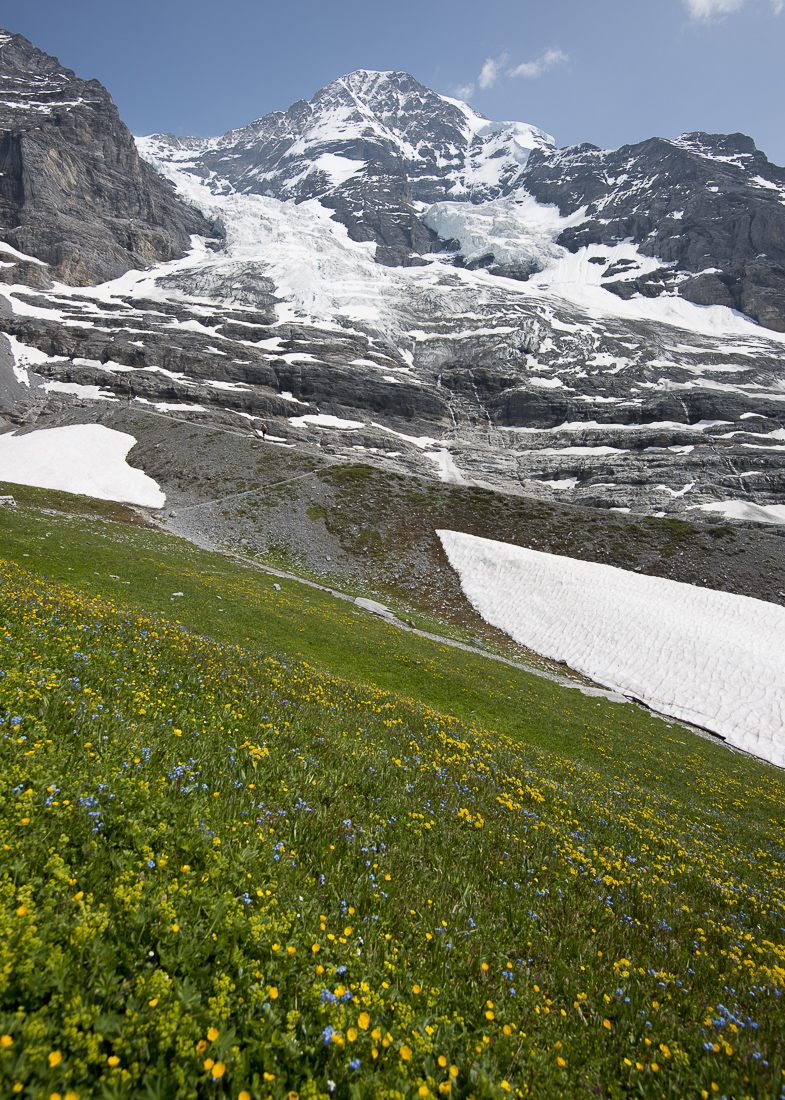
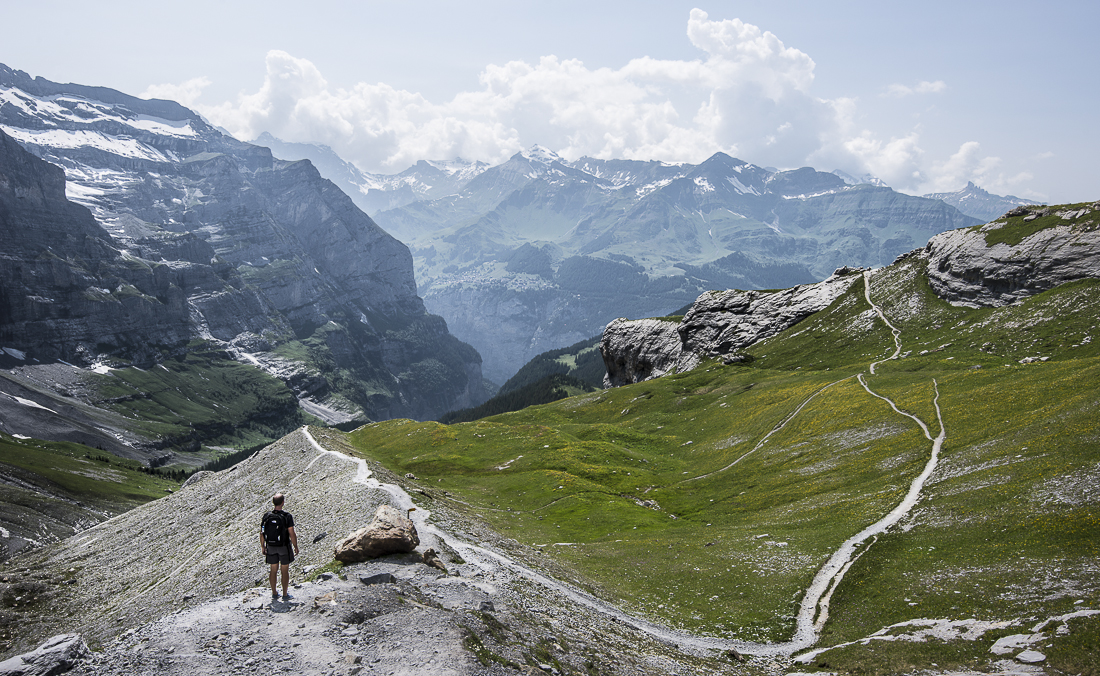
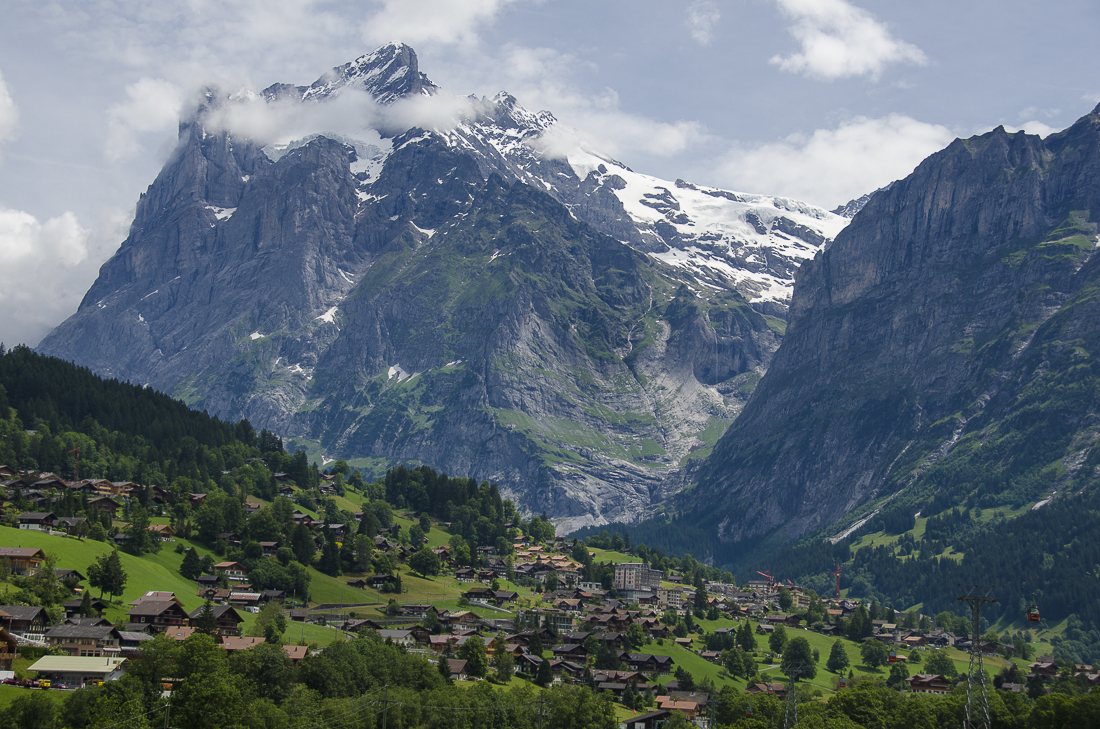
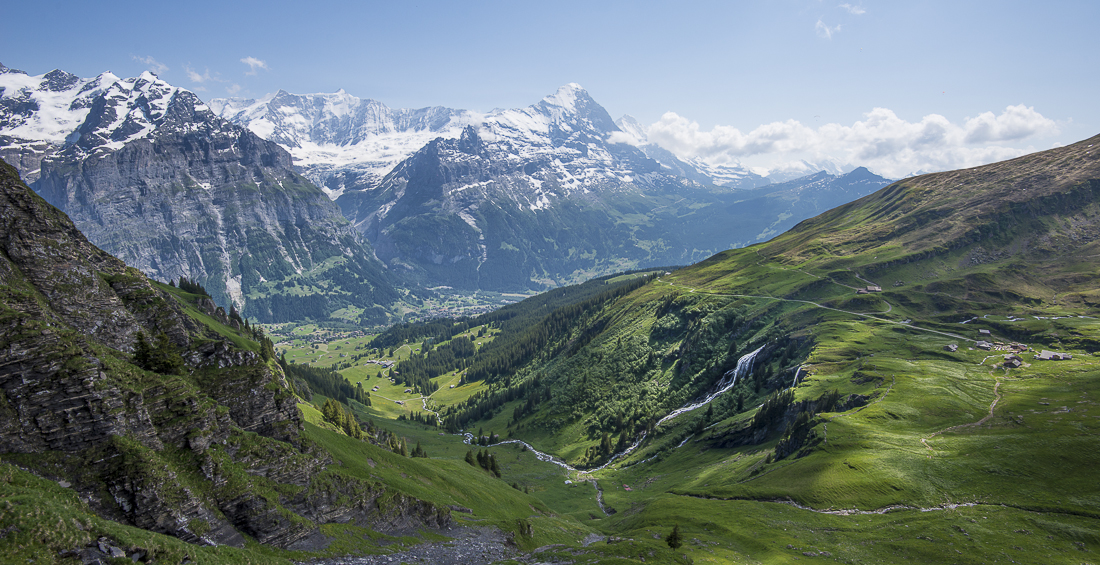
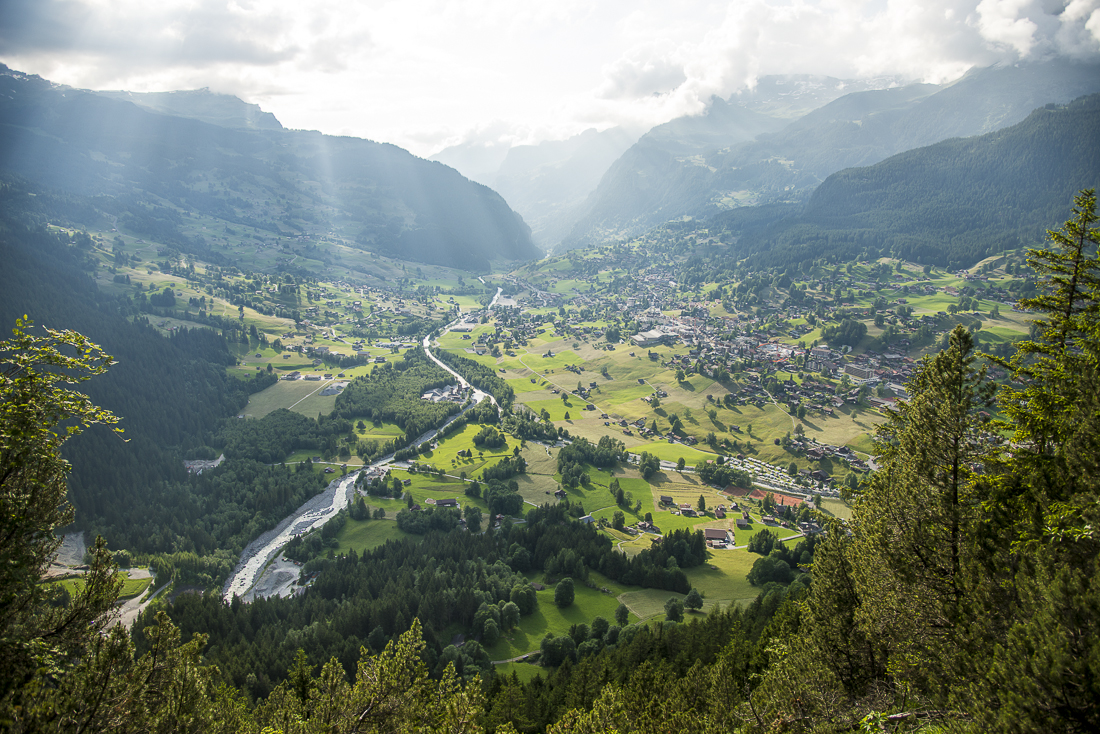
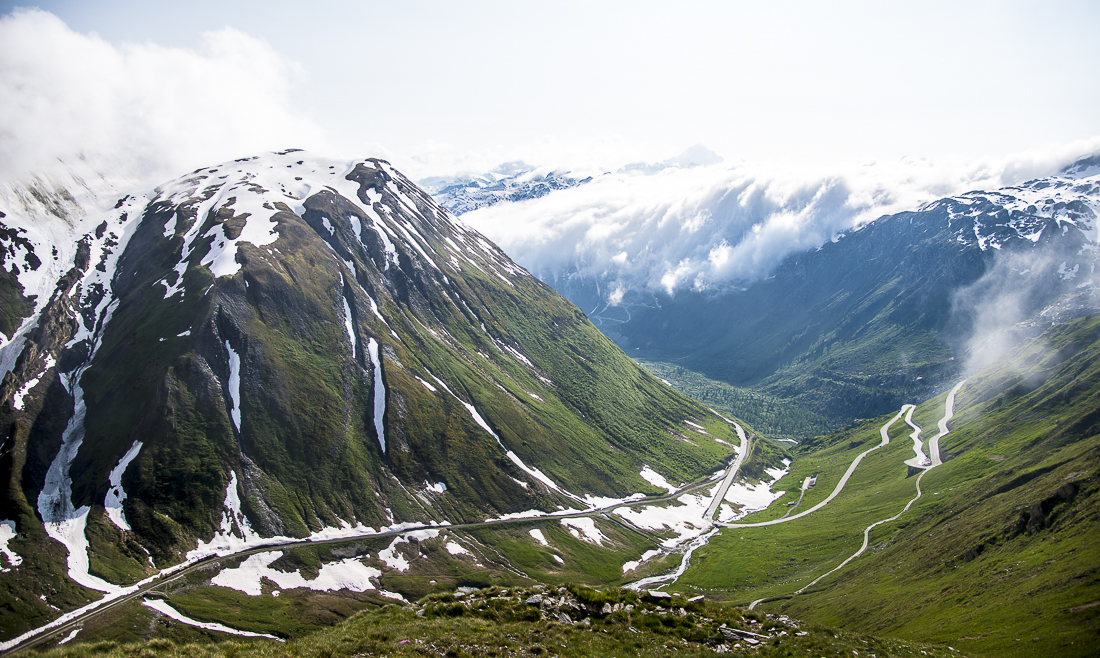
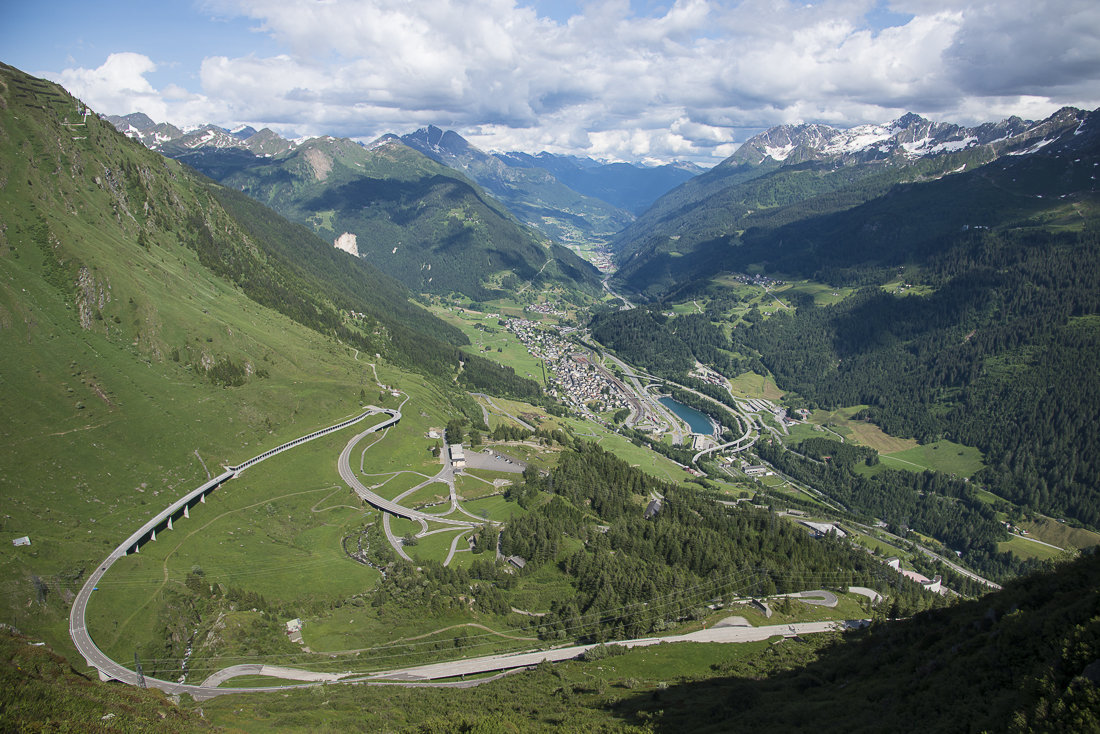
The first seemed impressive enough, with a nice view back down the valley to the town of Airolo (the picture just above).  The view from the second pass (pictures at the top and bottom of this post) was a little more surreal, with those clouds pouring down into the valley like a waterfall and disappearing as their altitude dropped.  There are no pictures from the third pass — which was essentially inside that waterfall of clouds — I drove those switchbacks with about 50 feet of visibility.  Certainly more exciting than the tunnel.

Operating post-camera-theft, I was (temporarily) working with just one camera and one lens, which was not my favorite ultra-wide angle.  The Stelvio Pass picture with all the switchbacks is a computer ‘stitched’ panarama, made from about five original photos. 

Scheisse! Stahlen sie meine Kamera!*

You live and learn.  For example, just a  week or so ago, I didn’t even know there WAS a German-speaking region of Italy (just south of the Austrian border).  But now I’ve had the pleasure of explaining (in English) to a mostly-German-speaking Italian police officer how my American passport and my (Japanese) cameras had been stolen from my Swiss rental car.


First, I’d like to say that the Dolomites of northeastern Italy are a lovely place, full of rich history and beautiful scenery, and that the people of that region were all extremely friendly and helpful.  Except for the couple of  #%$@* assholes who broke the window out of my rental car while I was hiking and stole a camera bag holding one of my two primary cameras and four of my best lenses.  Two small consolations:  I had one camera and lens with me when the break-in happened, and the Volvo station wagon I’d rented did just fine crossing the Alps with a cardboard-and-duct-tape rear window and a back seat full of glass.

The ensuing days, of course, have included a few hours at the U.S. embassy in Bern for a new passport, an expensive trip to a Swiss camera store to bring my photography back to up to speed, and a couple of hours at the Zurich airport awkwardly swapping my rental car for a ‘fresh’ one with no broken windows.  Fortunately, I had double-backed-up all but the last round of pictures (and stored the backup elsewhere), so I didn’t lose many pictures.  Of course I had all the pictures from the hike itself, too.  Adding insult to injury, however, my pictures (an upcoming post) from the hike weren’t really all that good.

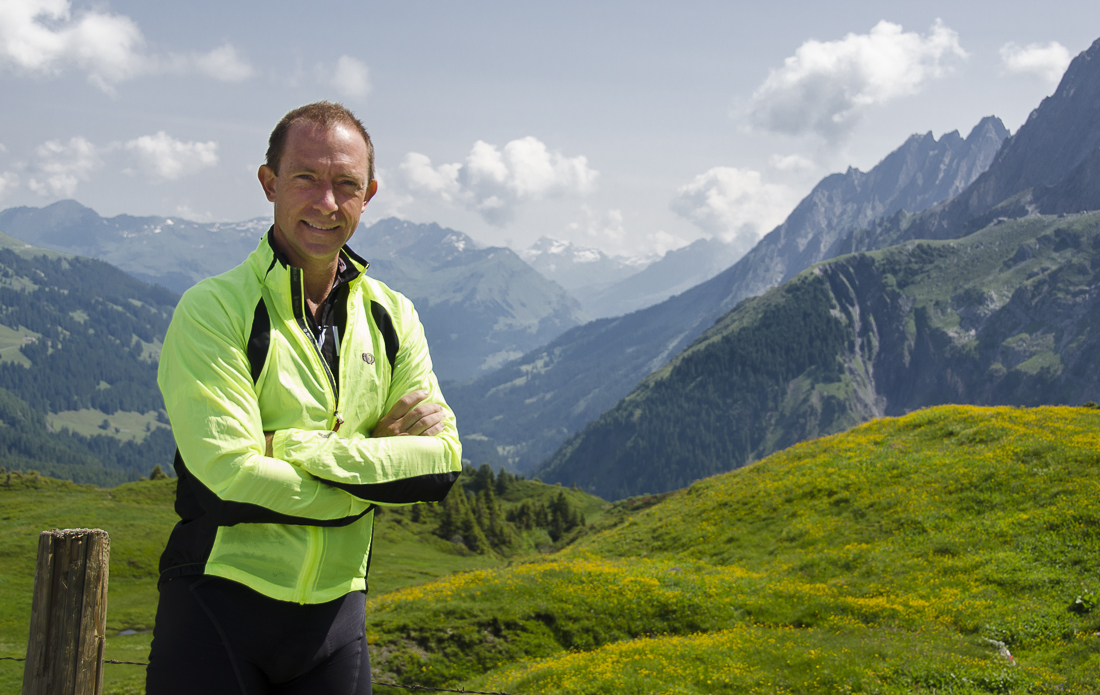
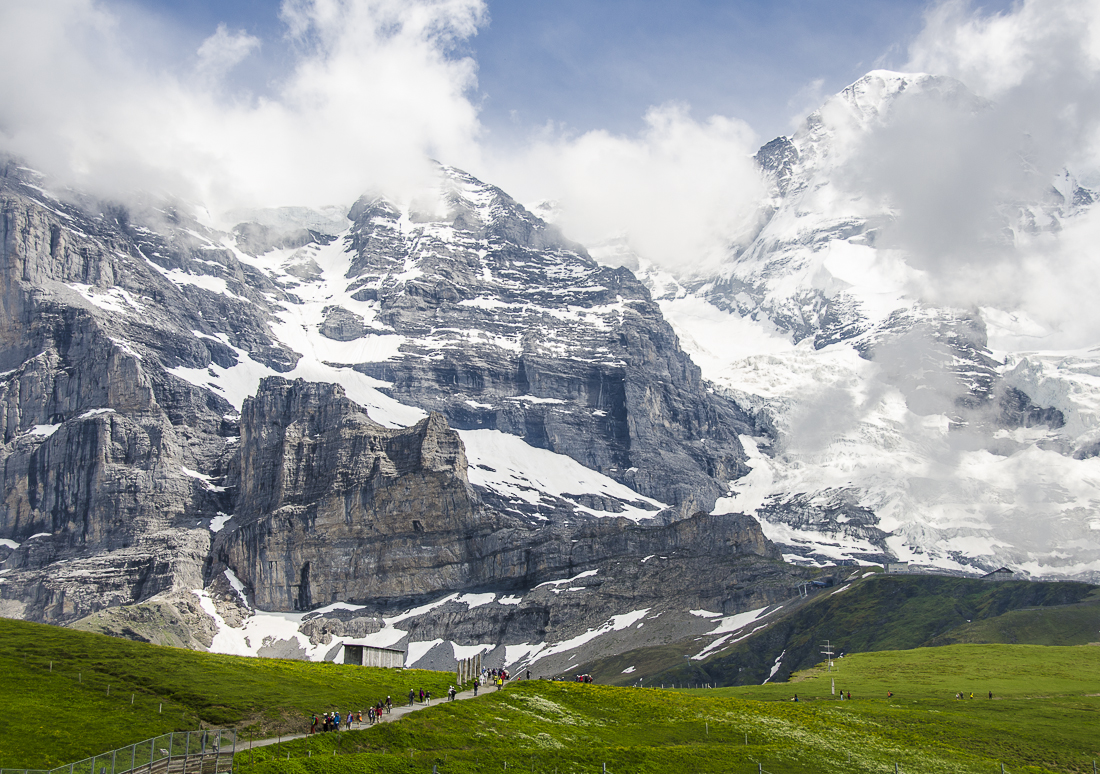
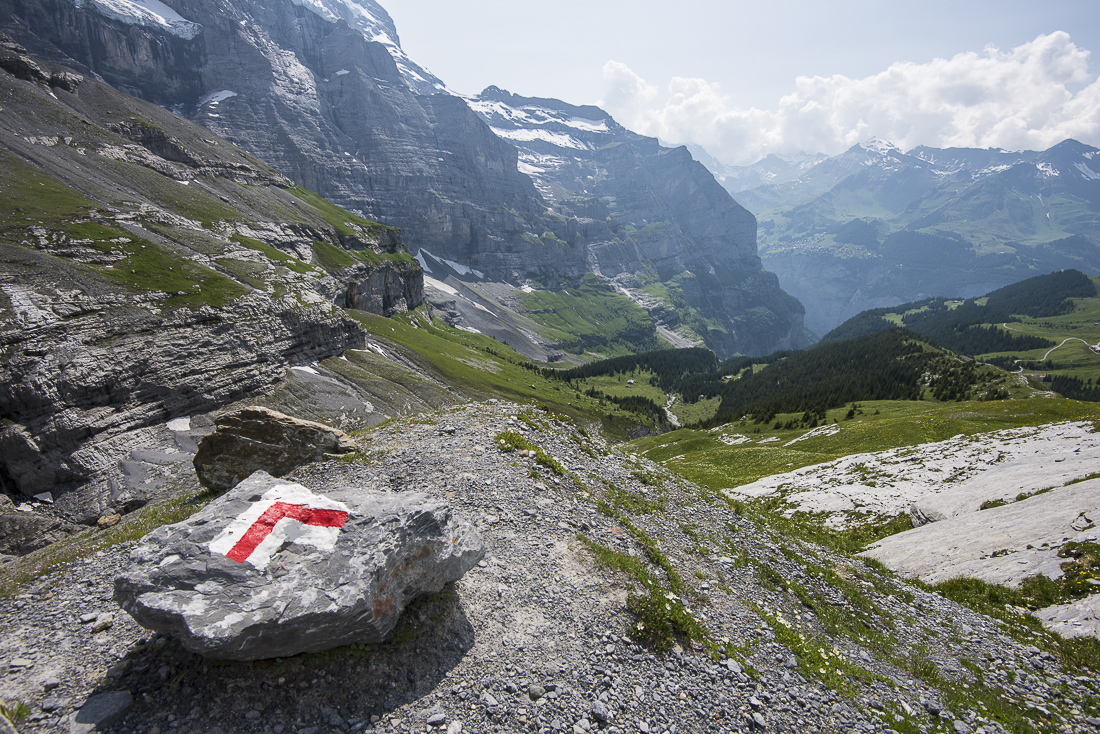
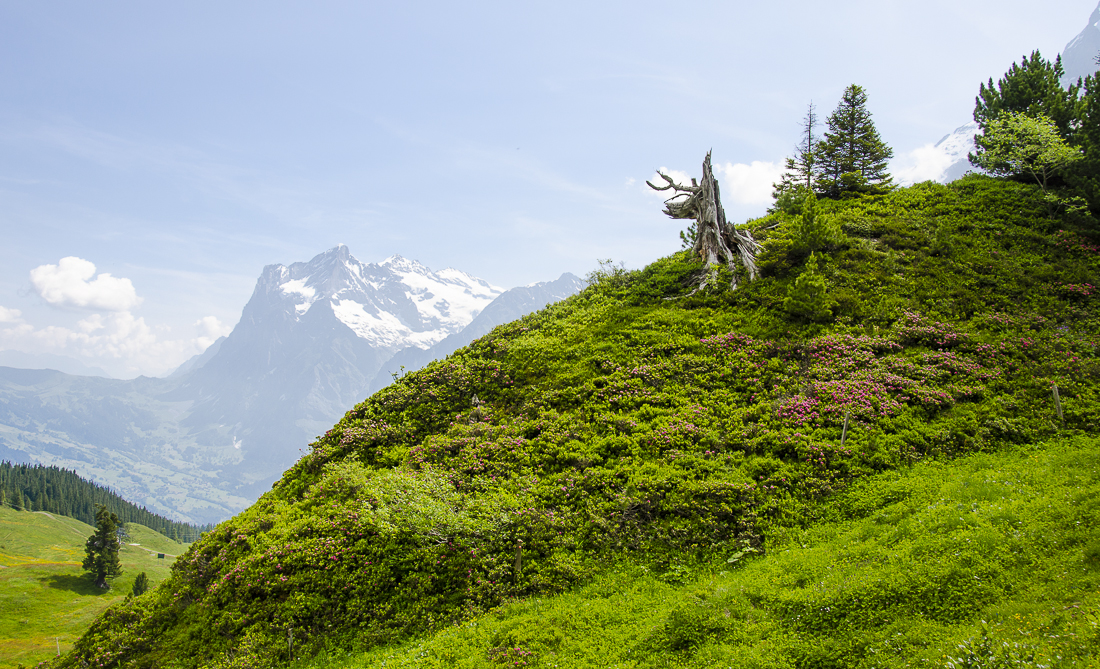
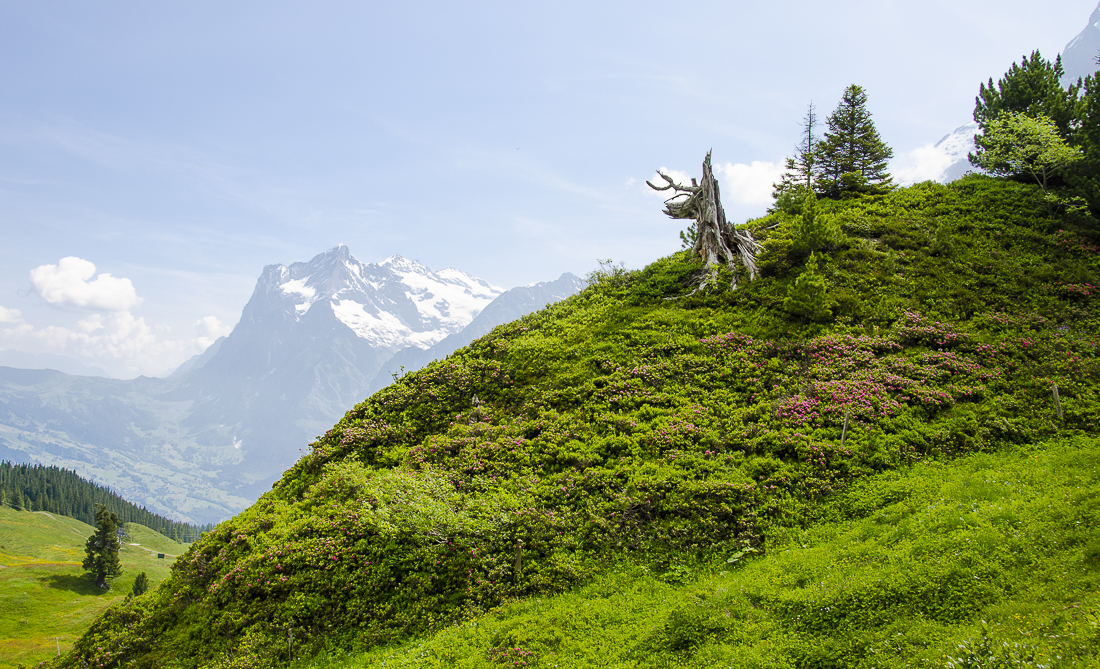
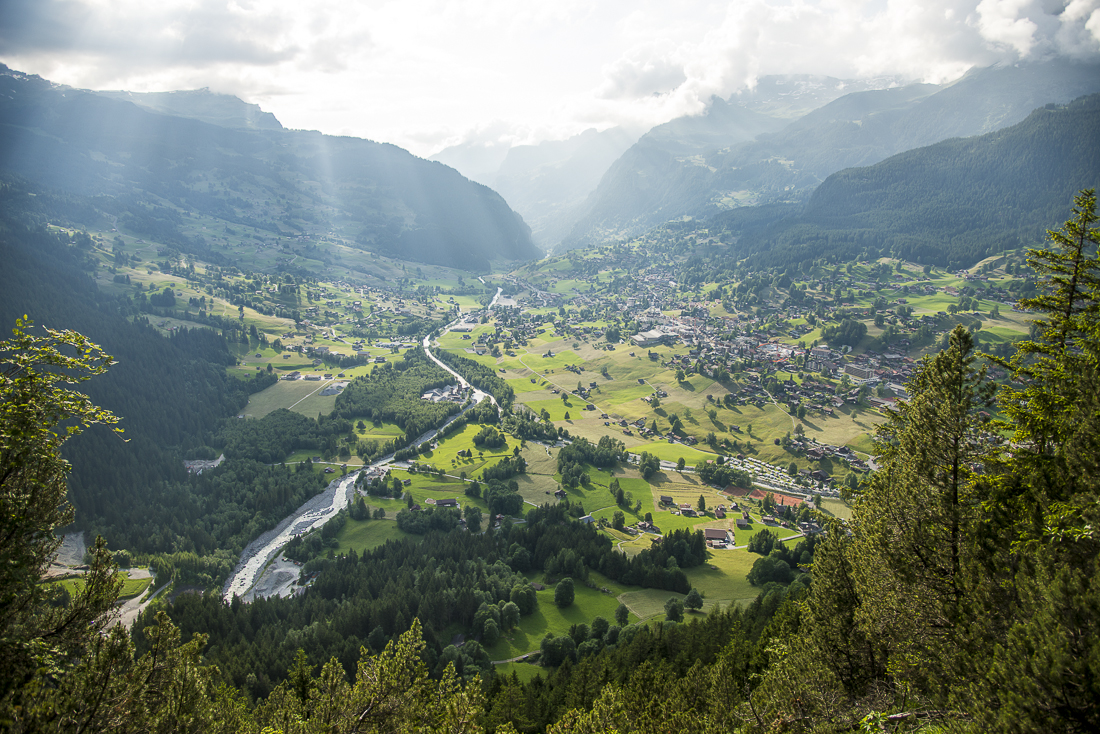
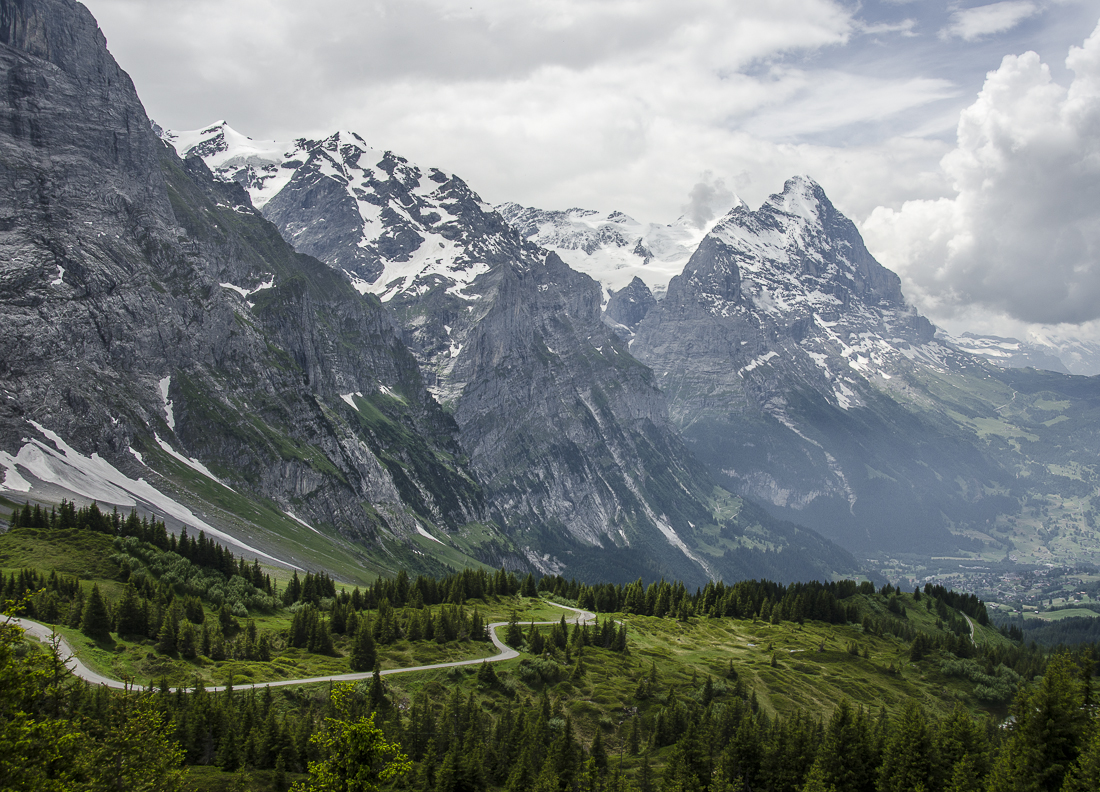
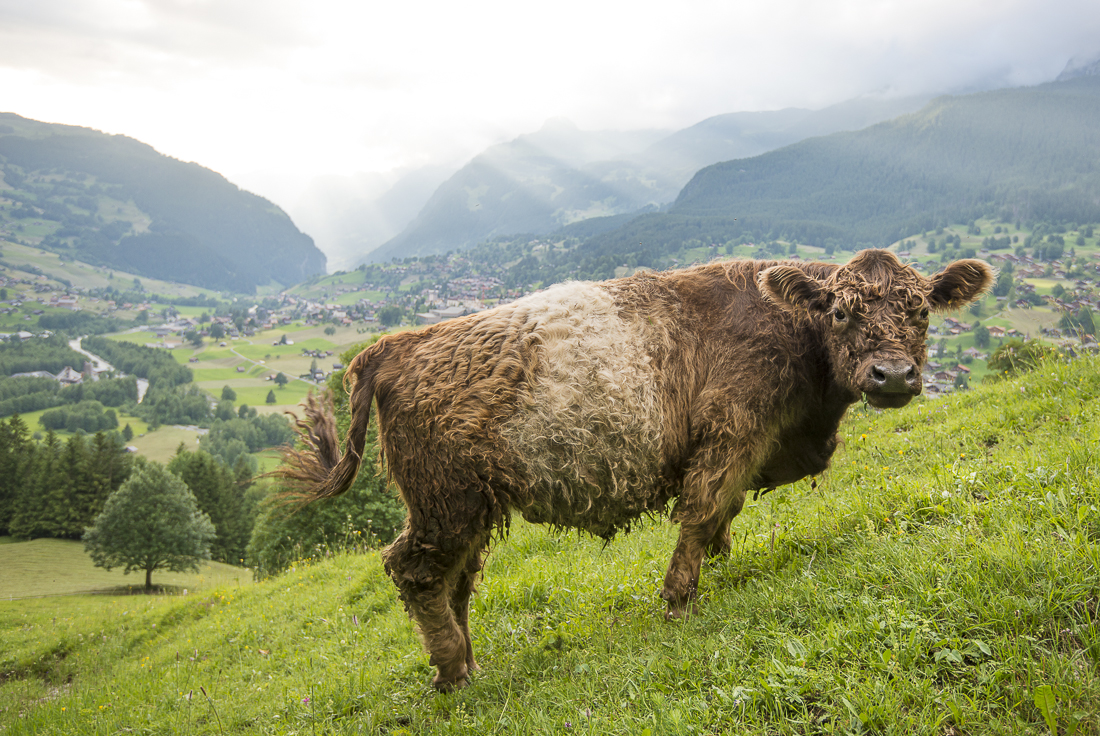
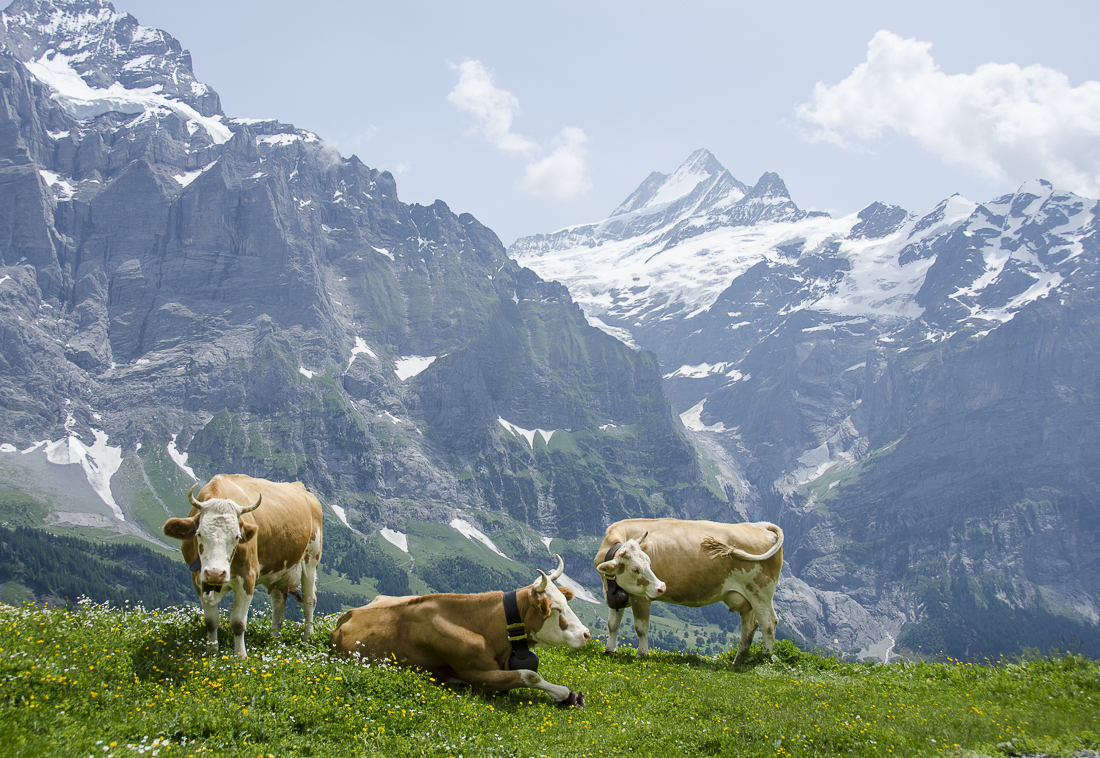
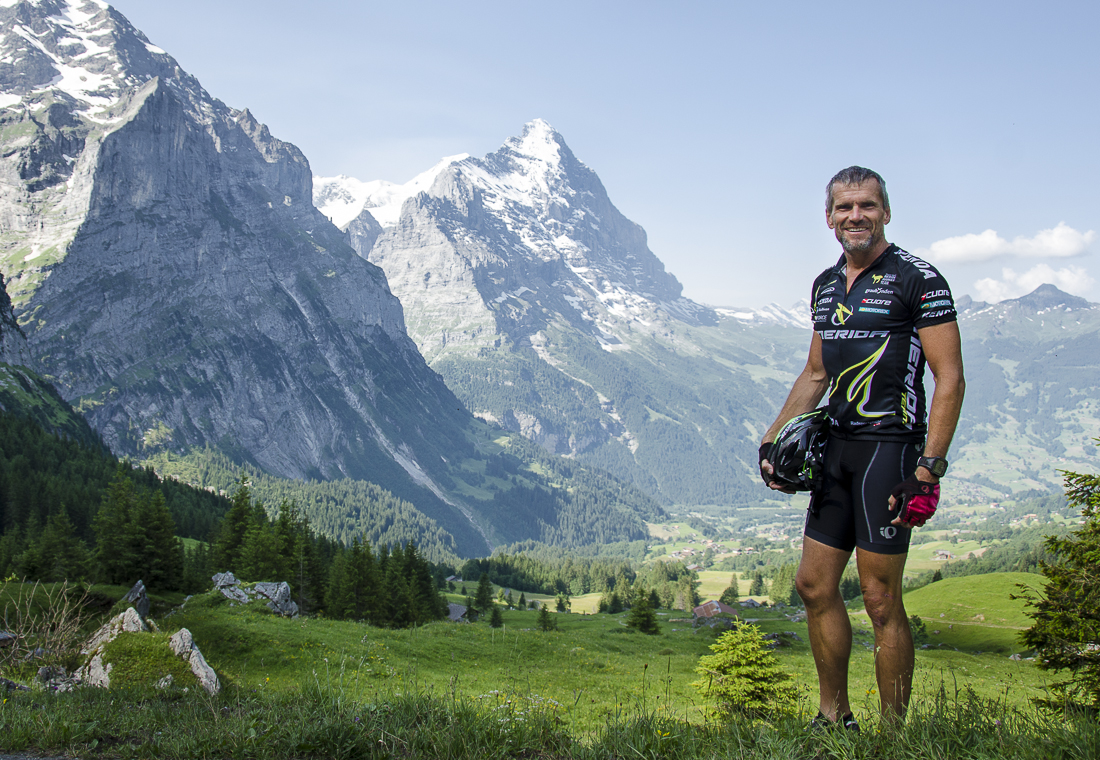
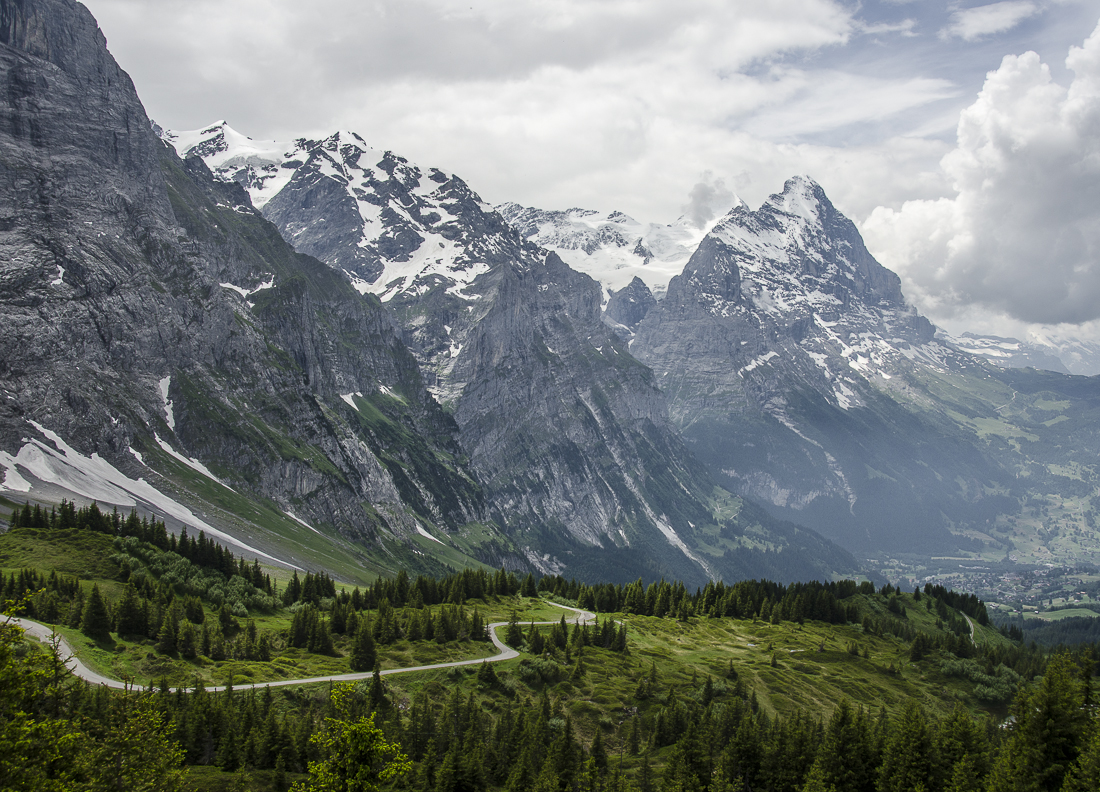
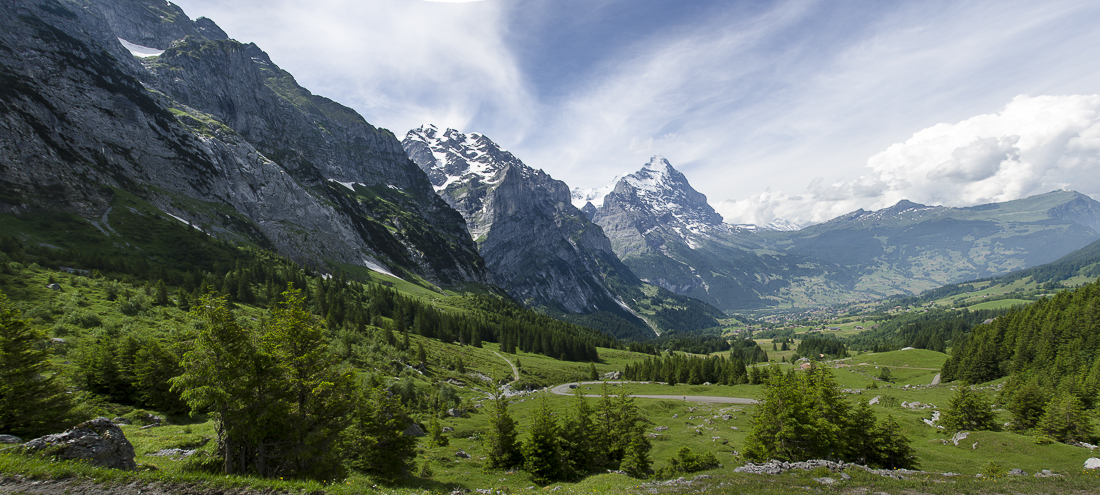
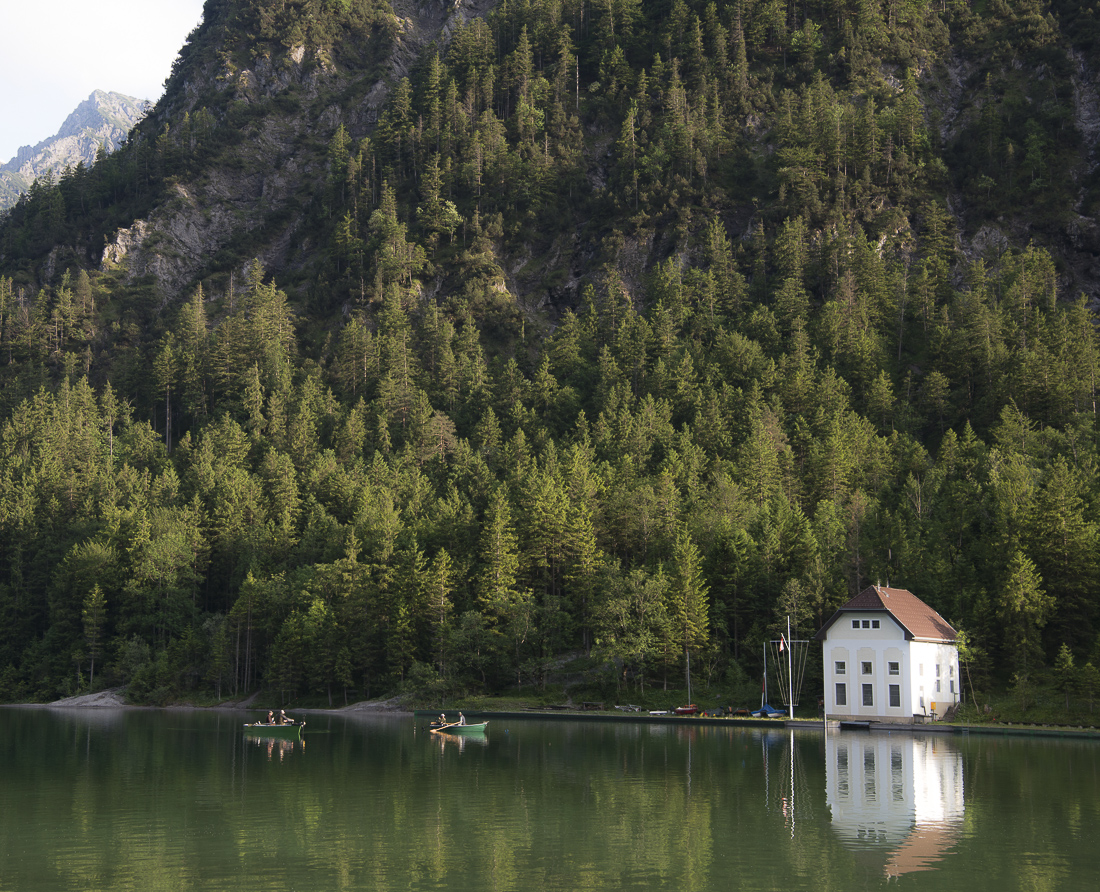
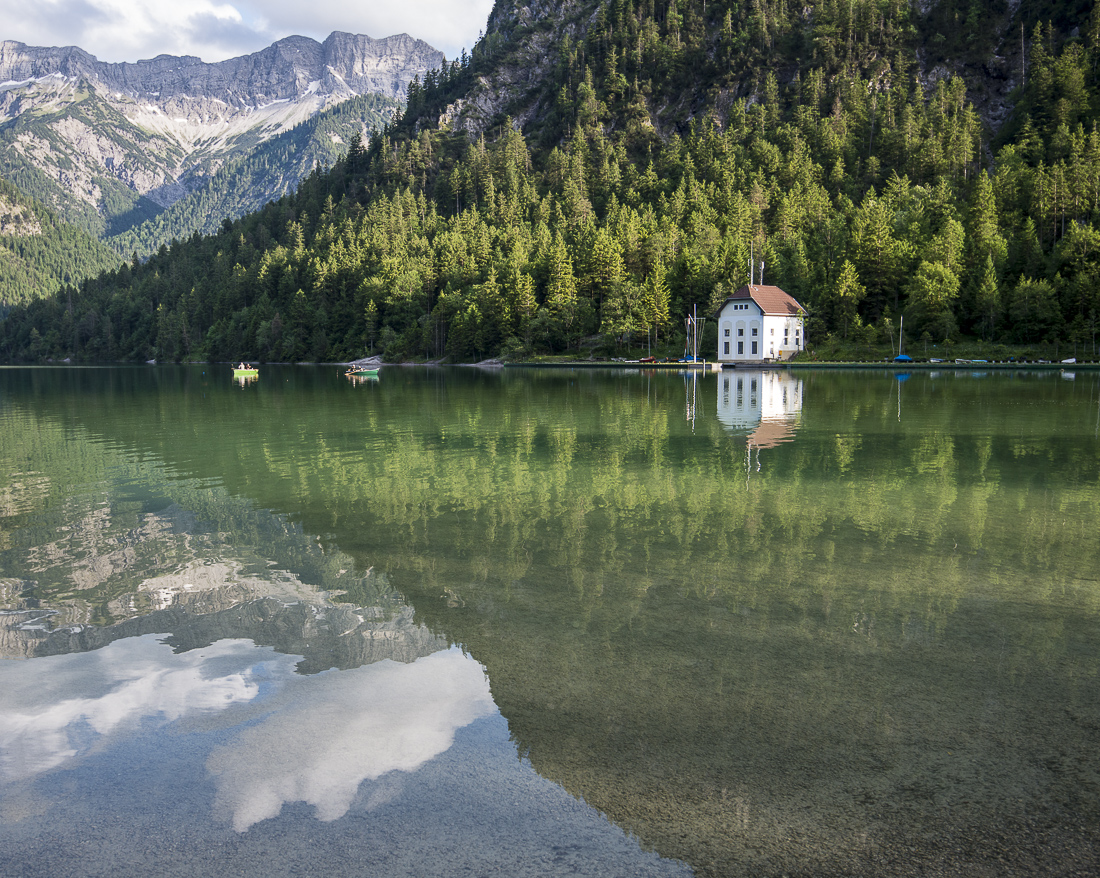
The shots on this page are not from the Dolomites.  They were taken somewhere along the road (in Austria, I believe) between the Ludwig castles (a prior post) and the Alpe di Suisi region (the next post).  The shots from this lovely spot (these taken on the camera that was not stolen) were the only ones that that survived from that drive.  I’d like to suggest that there were other, true masterpieces that I lost, but for better worse I don’t think that’s true.

 * I do not speak German, but I believe the title phrase above (“Stahlen sie meine kamera”) means “They stole my camera.”  The introductory exclamation (“Scheisse”) is an expletive, which I deem entirely appropriate under the circumstances.


A Longish London Layover

With just a day and a half of jet-lagged layover in London on the way to points further east, I don’t have many stories to tell.  It was my first visit to England, so I mostly hit the most touristy of spots, timing my outdoor excursions between episodes of drizzly rain.
 

c12-_JC82194.jpg_JC82347.jpg_JC82603.jpg_JC82632.jpg_JD88685.jpg_JD88725.jpg_JD88809.jpg_JC82698.jpg_JC82739.jpg_JC82463.jpg_JD89266.jpg_JD88872.jpg_JD89292.jpg_JD88938.jpg_JD89254.jpg_JD88989.jpg_JD88918.jpg_JD89037.jpg_JD89100.jpg_JD88842.jpg_JD89133.jpg_JD89147.jpg

Despite the supposedly-shared language, London can seem just as foreign at times as any other major European City.  Unlike the rest of the world, when the Brits speak English, they didn’t learn it from American television and music, so their accents are often harder to understand than the English you’ll hear in much more exotic-sounding destinations.  A few times I would have sworn I was in a Monty Python sketch.  My favorite amusement:  My hotel room had a set of bathroom scales, which clearly displayed my weight as about 10.5 stone.


 You probably recognize Big Ben — it’s the clocktower at the House of Parliament.  My hotel was very close to it — thus all the pictures.  The place (just above) with the flowers, all the British flags, and of course the Beaver-hatted guards is Buckingham Palace.  The high-up views are from the Tower Bridge and from St. Paul’s Cathedral.  The big Ferris Wheel is called the London eye.  The church you see pictured from the outside is Westminster Abbey.  The statuesque fellow riding horseback wielding a sword is Richard the Lionhearted.  I didn’t know the happy Asian couple strolling around the Tower Bridge in their wedding wear.


Cuba 2013, Part 3: A Return to Havana

This is the last of my posts from a May 2013 trip to Cuba.  The first was here.  The ten posts (with tons more pictures) from my 2012 trip started here, and ended here.  Most of what you see below are just typical sights on the streets of Havana.  They are not odd, atypical spots.  The rooftop shots are Parc Central,  but regular street scenes you see are what virtually all the streets look like.


After my 2012 trip to Cuba, I had separate posts highlighting the classic cars that roam the streets, the glamorous Tropicana, Cuban “patriotism” and education, a rooftop ritual, Cuban athletics and just everyday life in Havana.   Returning to Havana just a year later, I necessarily saw many of the same sights, as the pictures above reflect.

The most important “new” feature of the trip this time was the opportunity to see some of it through the eyes of a Cuban-American woman– “Didi” — whose family was very involved in the turmoil of the Revolutionary period, and who was visiting Cuba for the first time.

Didi’s parents left Cuba in the early 1970s – escaping first to Spain and then to the United States.  She had an uncle who was a political prisoner of Castro for more than a decade – apparently because he worked for a telephone company.  Her father faced a regime firing squad but was somehow spared at the last minute and sent back to work.  A close family member escaped to Florida on a raft.  An aunt was evacuated by the American CIA and the Catholic Church in the “Peter Pan” project – where parents gave up their children and sent them to the U.S. because they believed (rightly or wrongly) the kids would otherwise be forcibly interned by the Cuban Revolutionary government.  The family friend who was to have been the organist at her parents’ wedding was shot – apparently by government forces — on the church steps a day before the ceremony.

Americans who think all Revolutions are hip and who flippantly don “Che” Guevara T-shirts ought to spend a few minutes with a family like that.

Didi had never been to Cuba, and was on a personal mission to visit her family’s old apartment, her parents’ church, and her father’s school.  Mostly she wanted to see the country that her parents lived in and left – the world that she’d have grown up in had her family not been brave and determined enough to find a way out.  We saw in Havana the three-room concrete-floor apartment where she would likely have grown up.  We saw the kids in the street and the people on the balconies — living the life she most likely would have had to live.  She cried a lot; I tried not to cry along.  I know it was a profound experience for her, because it was deeply moving even for an Oklahoma boy who had no stake or connection to Cuba (except for his new friend Didi).

Didi is now a 30-something pediatric ICU physician, married to a pediatric oncologist.  Her brother is a successful lawyer in a Washington DC firm.  If she’d lived in Cuba, she would have grown up going to a school where she had to stand up every day and pledge allegiance to the Communist regime.  And she’d probably be making about $25 a month, working in whichever government job the regime instructed her to work.

The first shot just above is Didi’s family’s apartment; my ultra-wide-angle lens makes it look bigger than it really was.  The second shot is during the May Day parade (about which I did a prior post).  I was not yet aware of her family’s history when I yelled “come with me” and led her into the midst of a few thousand Cuban military — I can only imagine how crazy that must have felt.  The dark shot at the Tropicana has Didi on the right, with our mutual friend Patricia, who — like me — was privileged to share some of Didi’s quest, on the left.  The other shots are just a couple of strangers she met and embraced (literally) along the way.

============

A year ago, I wrote a post about the American embargo against Cuba.  The embargo (“El Bloqueo”) continues to be an enormous focus of attention.  My thoughts a year later are, hopefully, clearer and deeper, but ultimately the same:  You can legitimately debate the embargo’s ongoing rationale and effectiveness, but its roots and goals are noble.  More critically, it is not to blame for Cuba’s pitiful situation.  It is not America’s fault that a chaotically organized socialist economy that is based on governmental control and oppression operates very poorly and impoverishes its people.  Policy change is definitely needed – but it will have to start in Havana.
Cuba 2013 Part 2: Viñales

I don’t smoke.  Won’t smoke.  And even the smell of cigar smoke makes me nauseous.*  But when a very, very nice Cuban farmer in the middle of a field pulls tobacco leaves from his pocket, rolls you a cigar on his pants leg as a welcome gesture and lights it up for you with matches he pulls out of his hat, you should bite your lip a little, accept it graciously, and try not to hurl.


This was my second trip to Vinales – a small town west of Havana in the tobacco-growing region of Cuba.  This time I wandered the outskirts of the small town with a new friend, Didi, a member of my photo group who is Cuban-American (more on her story later).  As we wander down a tiny lane and started taking some pictures of the fields and mountains, we see a farmer coming toward us, planting melangas (potato-like root vegetables common in Cuba) one by one.

His clothes are tattered and caked in dirt (an occupational hazard for one hand-planting root vegetables).  His hands were so covered with mud he offers only a fist when I try to shake hands.  My pitiful Spanish-speaking skill let me engage in some superficial “Olas” and “mucho gustos” and very basic introductions.  Didi, on the other hand, is a fluent native Spanish speaker who engages — deeply and sincerely — with everyone we run across.  This farmer (“Marcello”) was no exception; he seemed to love her, despite the generation gap between them.  We take lots of pictures, of course.

After a few minutes, he pulls from his pocket something I soon recognize as a wad of tobacco leaves, and starts to tear and organize them.  He looks up at me a couple of times during this process, and I realize he is rolling ME a cigar.  Yikes.  The fact that his hands were too dirty to shake my hand does not deter him from using those same hands to make something I’m supposed to put in my mouth.  He’s using his mud-caked pants leg as a rolling table; a neighbor walks up and offers his relatively-clean pants leg, but Marcello declines the assistance.  Sure enough, he finishes up and presents it to me.  My hope that I could graciously accept it and carry it off unlit was dashed immediately:  Marcello produced a box of matches (stored on top of his head inside his straw hat) and struck the first match as he instructed me to bite the end off the cigar.

I thought of Bill Clinton – trying to do what’s expected without actually inhaling.  This was only modestly successful.  It won’t really stay lit without actual puffing, so Marcello takes it and puts it in his mouth and puffs it to a gentle smolder.  Then he gives it back.  I keep faking it.  Thankfully, the cheap, dry tobacco leaves he had (probably scavenged from the edge of a neighbor’s field) were of such poor quality they’re practically odorless and tasteless.  I may as well be smoking elm leaves.  It just smelled like a campfire – smoky and unpleasant, but not nauseating – and tasted like nothing.

We thank him; he hugs Didi; he hugs Didi again.  He goes back to work and we head on down the lane.  I let the cigar go out and then stuck it in my camera bag after we left Marcello.  Then I forgot about it.  So I actually (accidentally!) carried one illegal Cuban cigar (such as it was) through U.S. customs (without declaring it).  Oops.


As we continued wandering through the Vinales countryside, we got multiple invitations to come inside the modest homes along the dirt roads and paths.  We were offered seats, food, coffee, and (most importantly) directions back to town.  One thatch-roofed wooden hut was oozing smoke; inside we found three ladies roasting coffee in a small pan over an indoor fire.  The women said they took turns inside the hut because it was so miserable.  It wasn’t clear to me why this had to be done indoors.  It looked like a lot of trouble for a few cups of coffee.

*Honestly, I’d rather smell a fart than cigar smoke.  At least farts are usually unintentional, so they’re obnoxious only on the olfactory level.  Curiously, Cigar smokers seem to think they look very sophisticated with a six-inch-long cylinder in their mouth.  Be warned that if you’re blowing cigar smoke anywhere near me, I’ll be doing all I can to send a retaliatory “fart in your general direction.”