Category Archives: Travel

Mardis Gras 2012

It’s Fat Tuesday, and you’ll be relieved to know that I have been successfully evacuated from New Orleans.

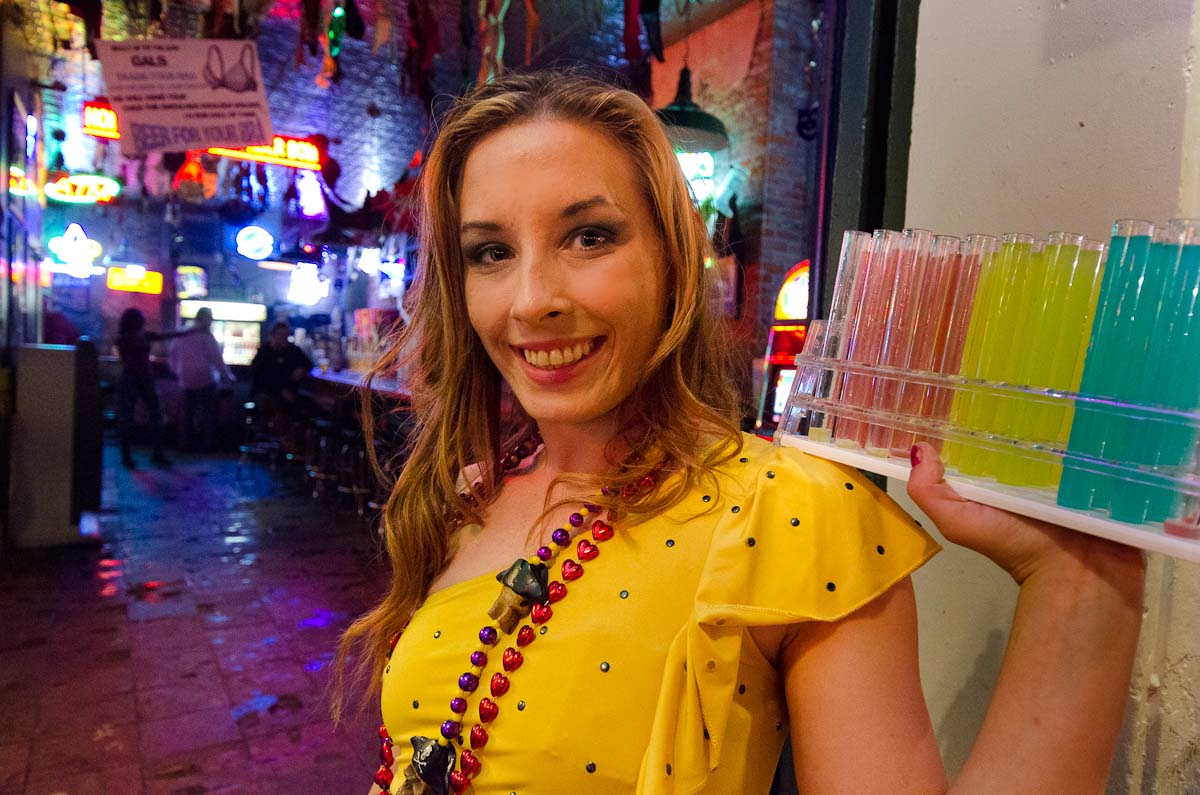
Mardis Gras festivities center around parades – usually 3 or 4 parades each day – each of which is put on by a New Orleans area “krewe.”  Krewes are like fraternities for grown-ups (using the latter term loosely).  A little like the Shriners, except that their primary mission is just to throw one great big bash (including a parade) each year.  If this sounds like an odd or shallow mission, bear in mind that the Mardis Gras celebration is arguably the single most important part of the culture and the economy of New Orleans.  Don’t get me wrong:  Mardis Gras is not for the faint of heart.  You’ll see some things you were not expecting to see, and a few things you’d rather not see.  But once you learn to navigate the terrain, you’re part of a unique American and the Southern tradition.

_JJC3333.JPG

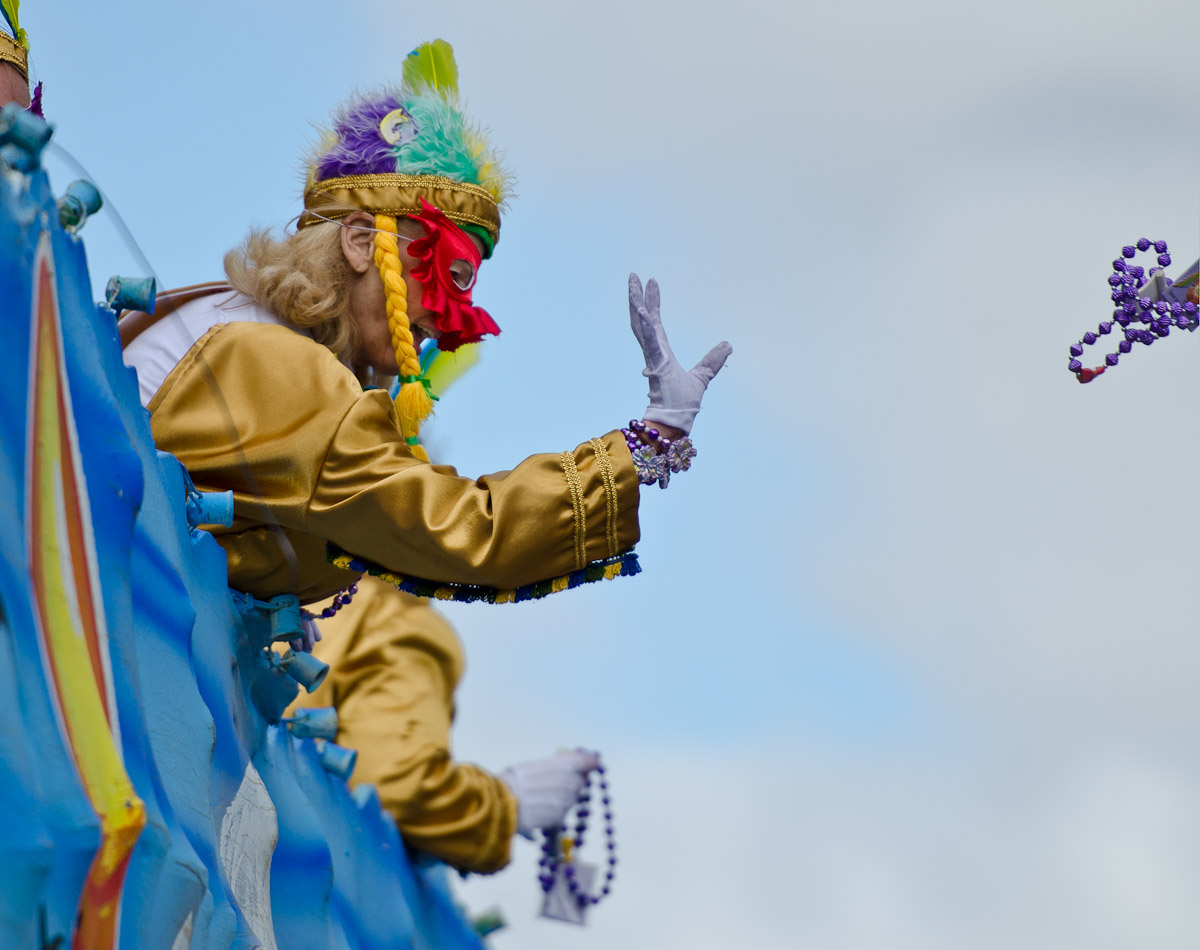
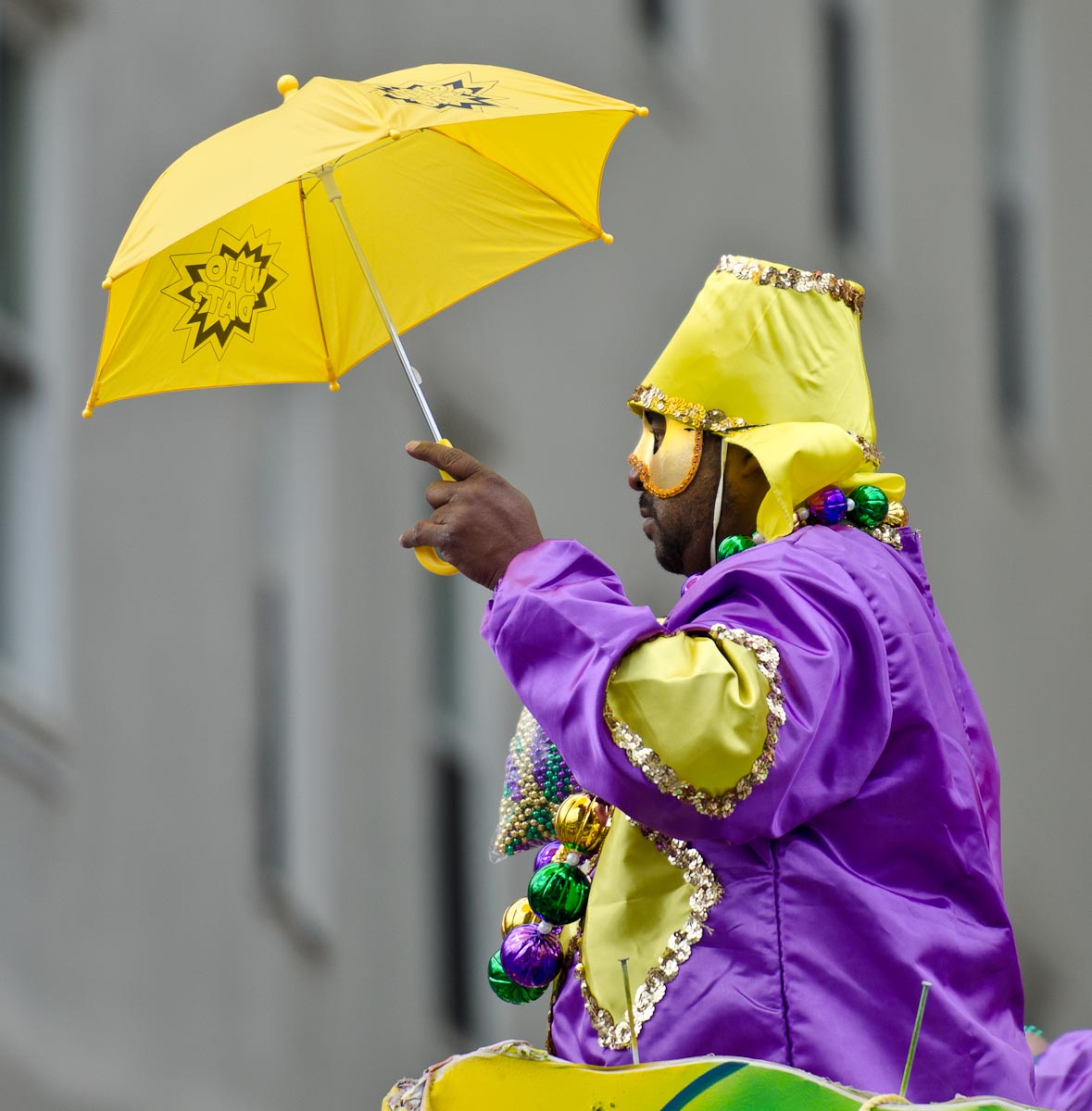
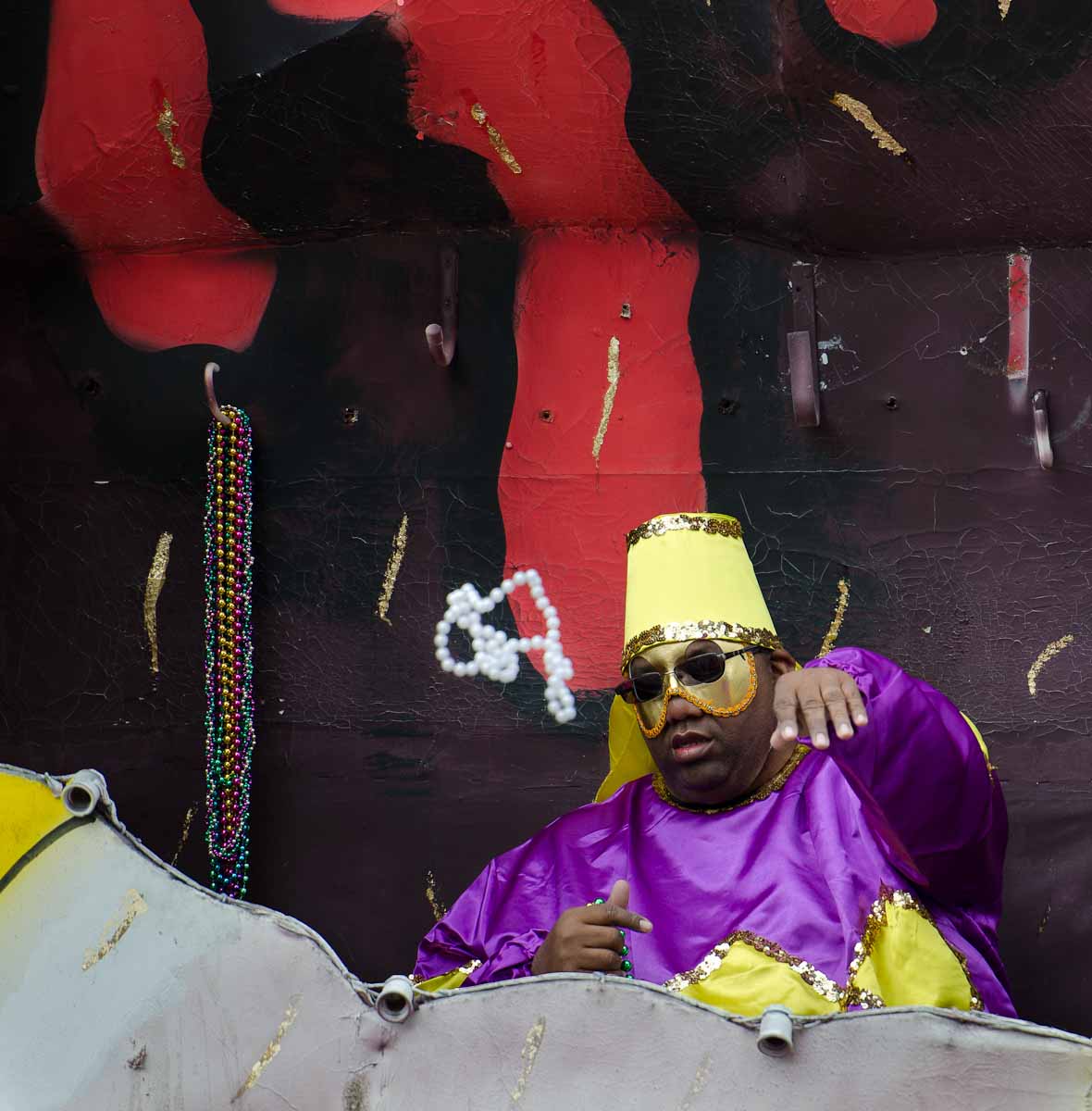
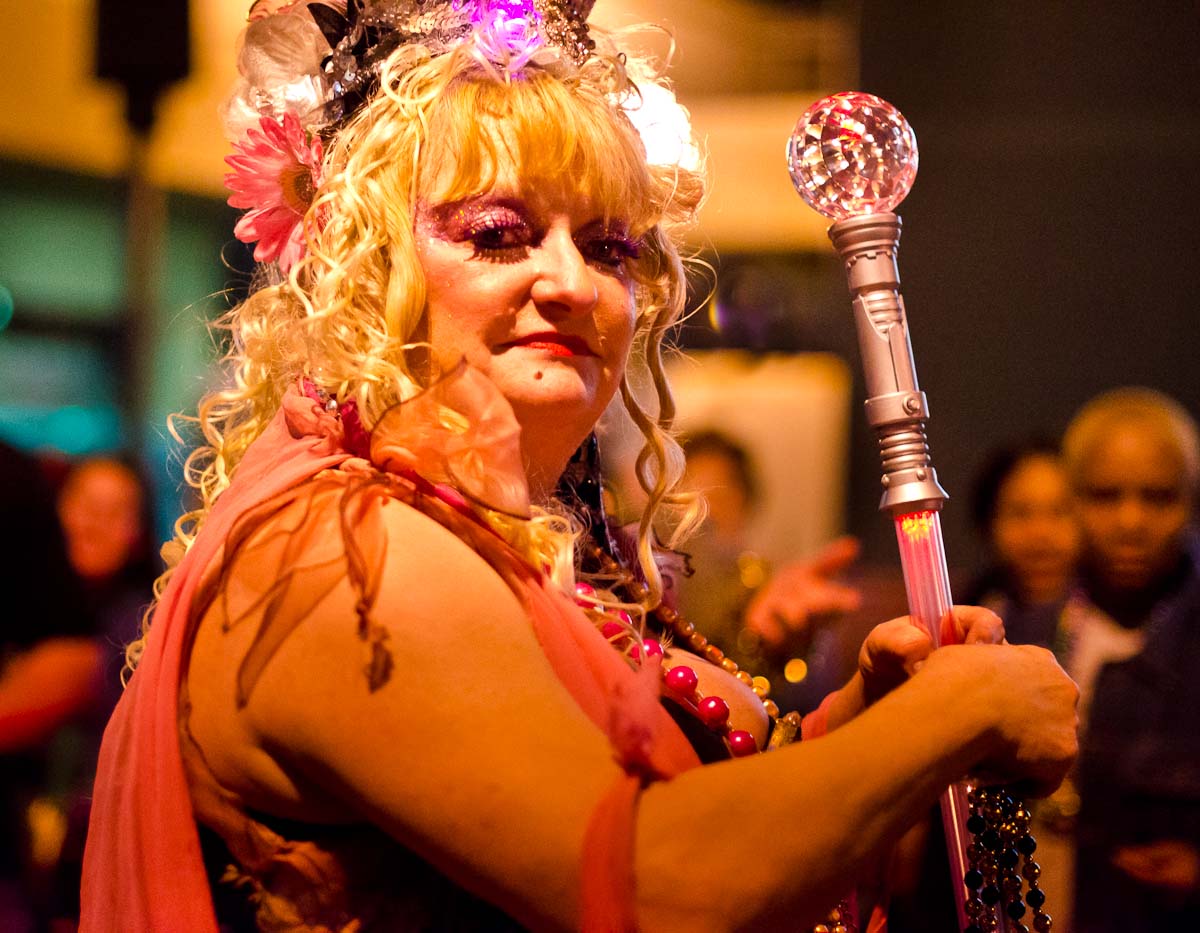
The picture just above is my friend Shane.  Shane is a member of a krewe called Bacchus, which means Shane dons a mask and a goofy costume and rides a parade float, throwing beads.  The Bacchus parade is not quite on the scale of the Rose Parade, but it’s closer than you might think. Each year, he invites 30 or 40 or 50 of his closest friends (mostly couples — a fully-coed and mostly-civilized crowd) to join him in New Orleans.  This was my eighth consecutive year.  Shane always brings a truckload (literally) of those enormous, gaudy, ridiculous strings of beads, so that we can all walk around town handing them out all weekend.  (The stereotype that Mardis Gras beads all go to young ladies who, uh, ‘flash’ for them is 99% incorrect.  The beads go to little kids who come out to see parades, to groups of grandmas in town for the weekend – to pretty much anybody who’ll smile and chat for a bit.)  Shane loves to come across total strangers walking around town with ‘his’ beads on.

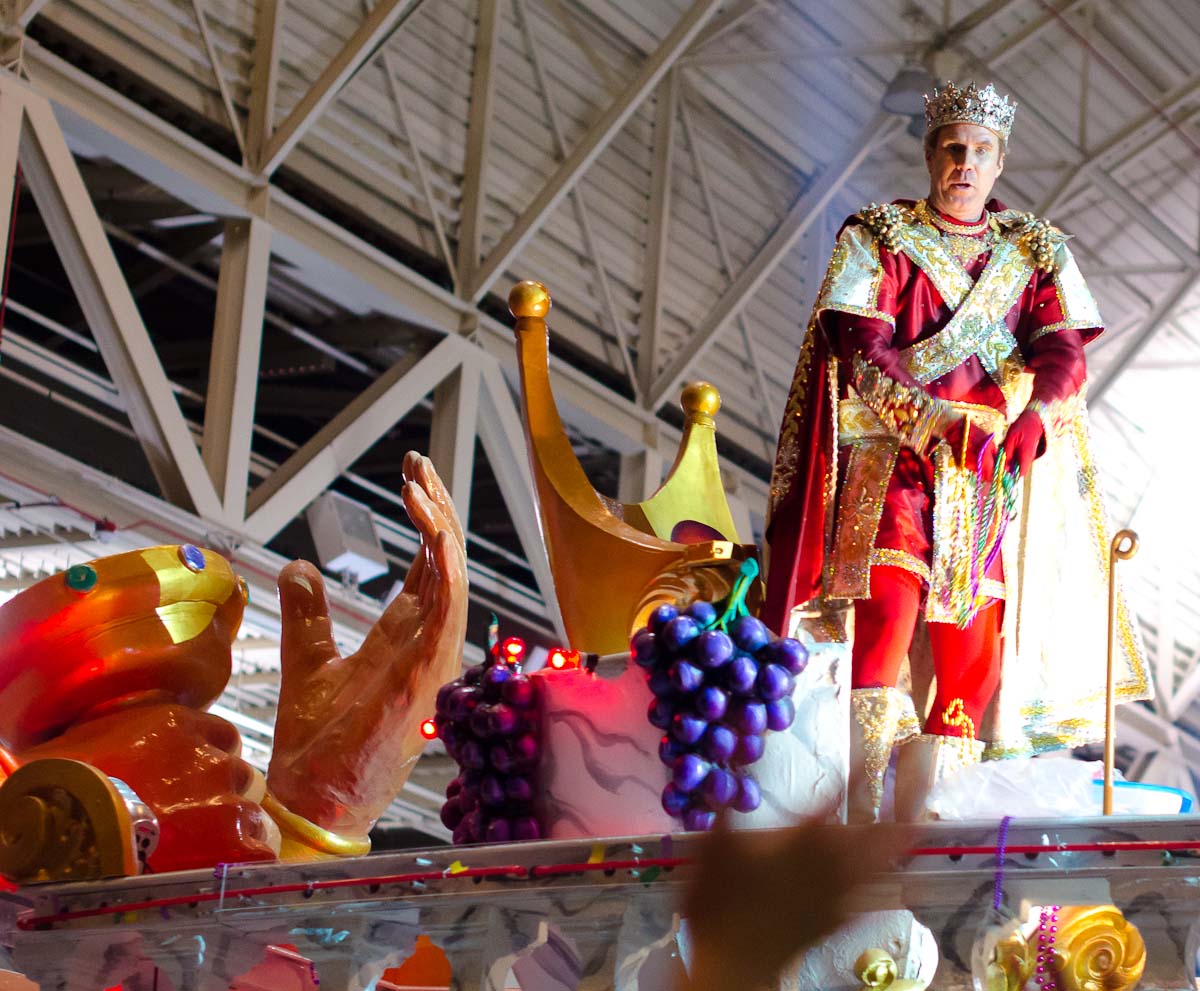
Several of the parades have a big gala or “ball” at the end of the parade.  The Bacchus krewe’s ball is a black-tie, long-gown event with about 10,000 guests.  As someone observed this year, it’s like a gigantic tailgate party in tuxedos. The highlight of the ball itself is that the parade actually comes right through the middle of the party – with beads flying everywhere.  The guy in the King costume in the pictures below is Will Ferrell, the comedian; he was the Mardis Gras King of Bacchus.
The Bacchus event is always the Sunday before Mardis Gras (Fat Tuesday).  Fat Tuesday, of course, is the day before Ash Wednesday, the start of Lent.  Ash Wednesday is forty days (not counting Sundays) before Easter.  Easter is the first Sunday after the night of first full moon after the first day of Spring (which is usually, but not always, Passover).  So I love it when people ask “When is Bacchus this year?” because I can tell them “It’s the Sunday before the Tuesday that’s just before the Wednesday that’s 40 days (not counting Sundays) before the first Sunday after the first full moon after the first day of spring – at about 7:30p.m.

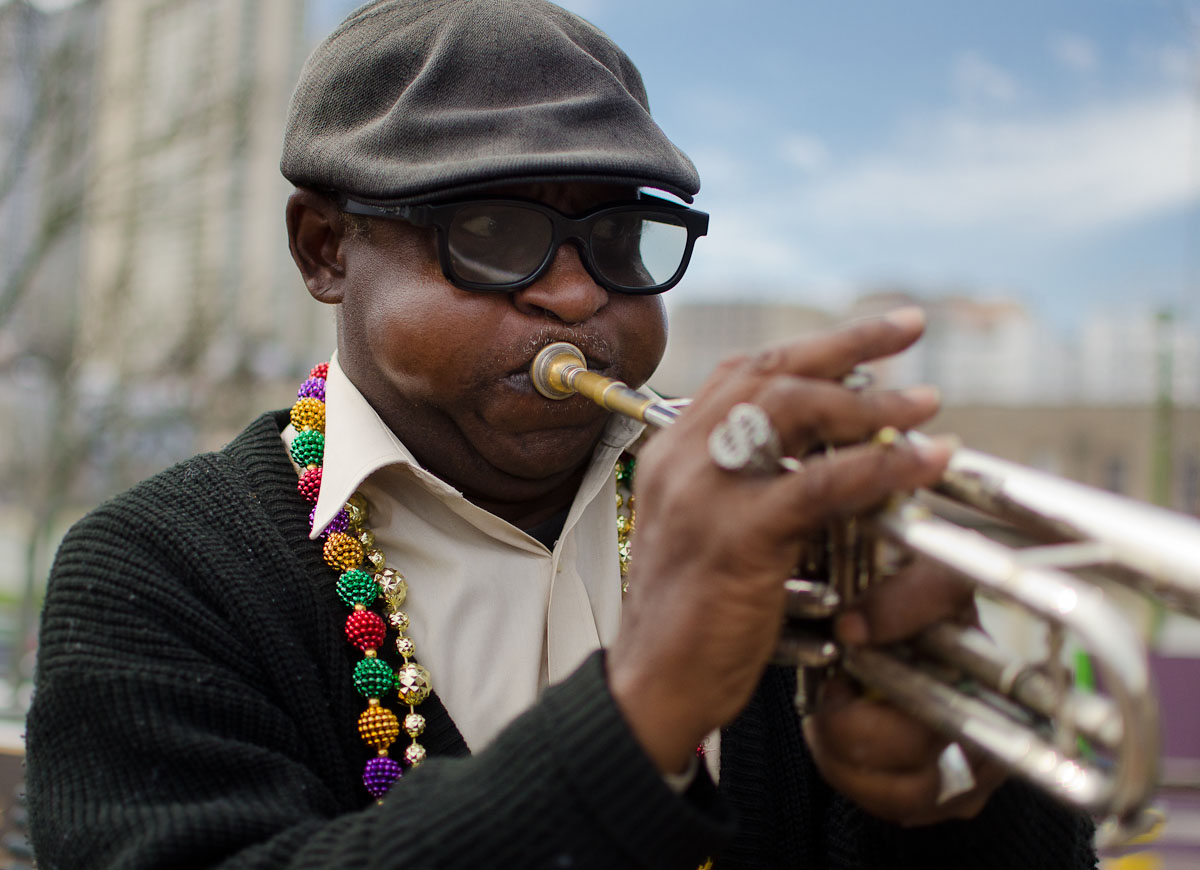
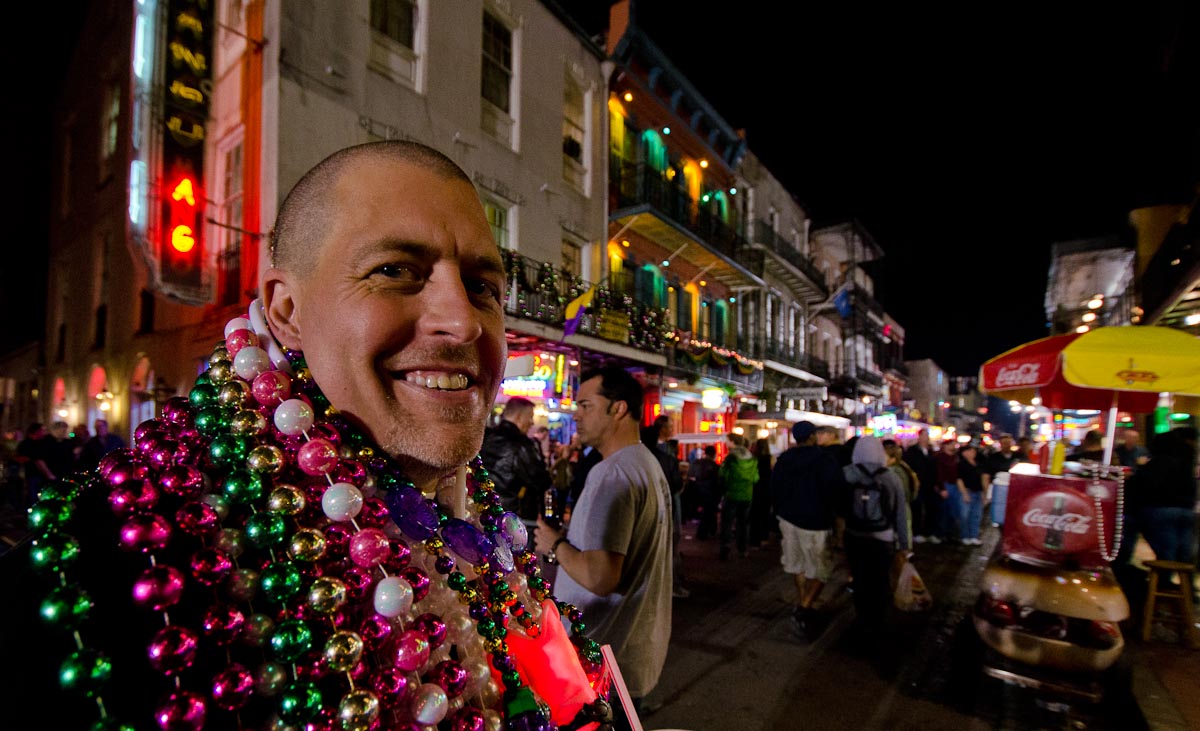
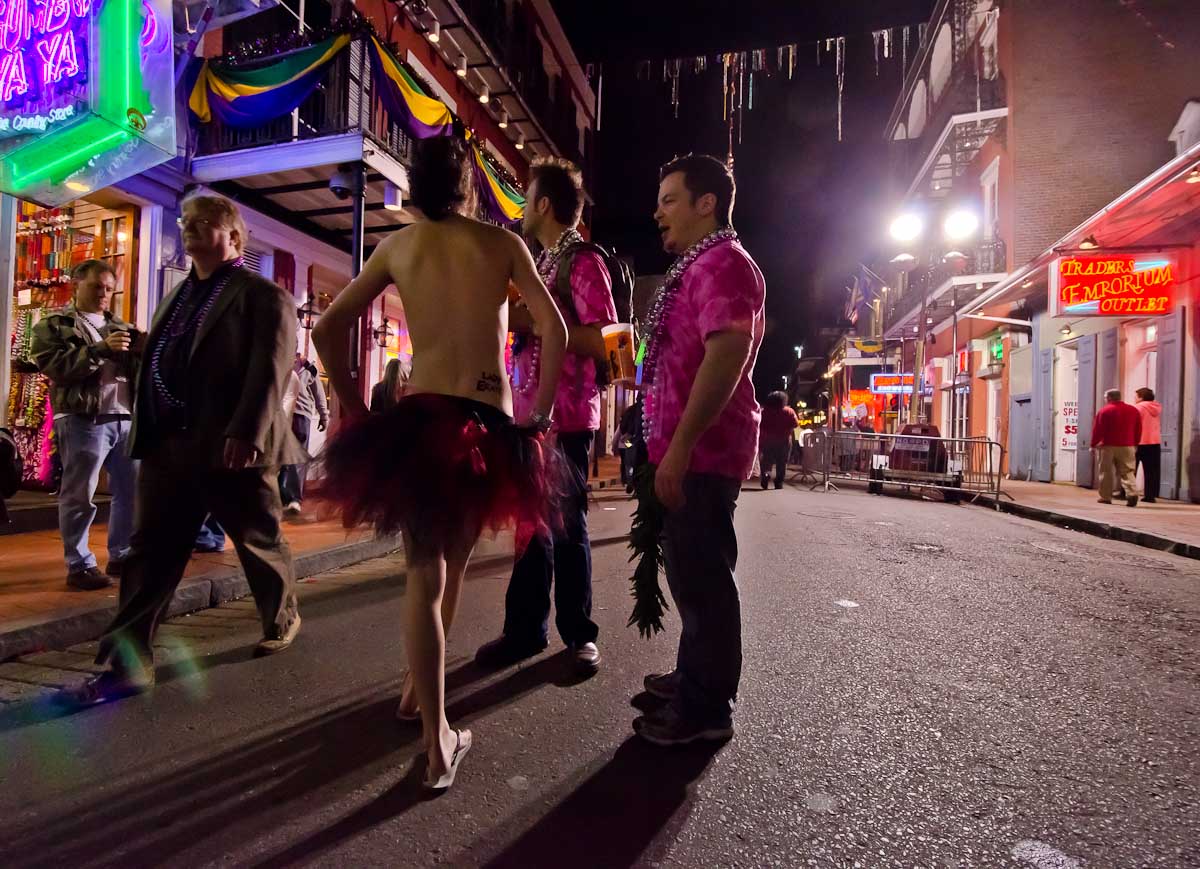
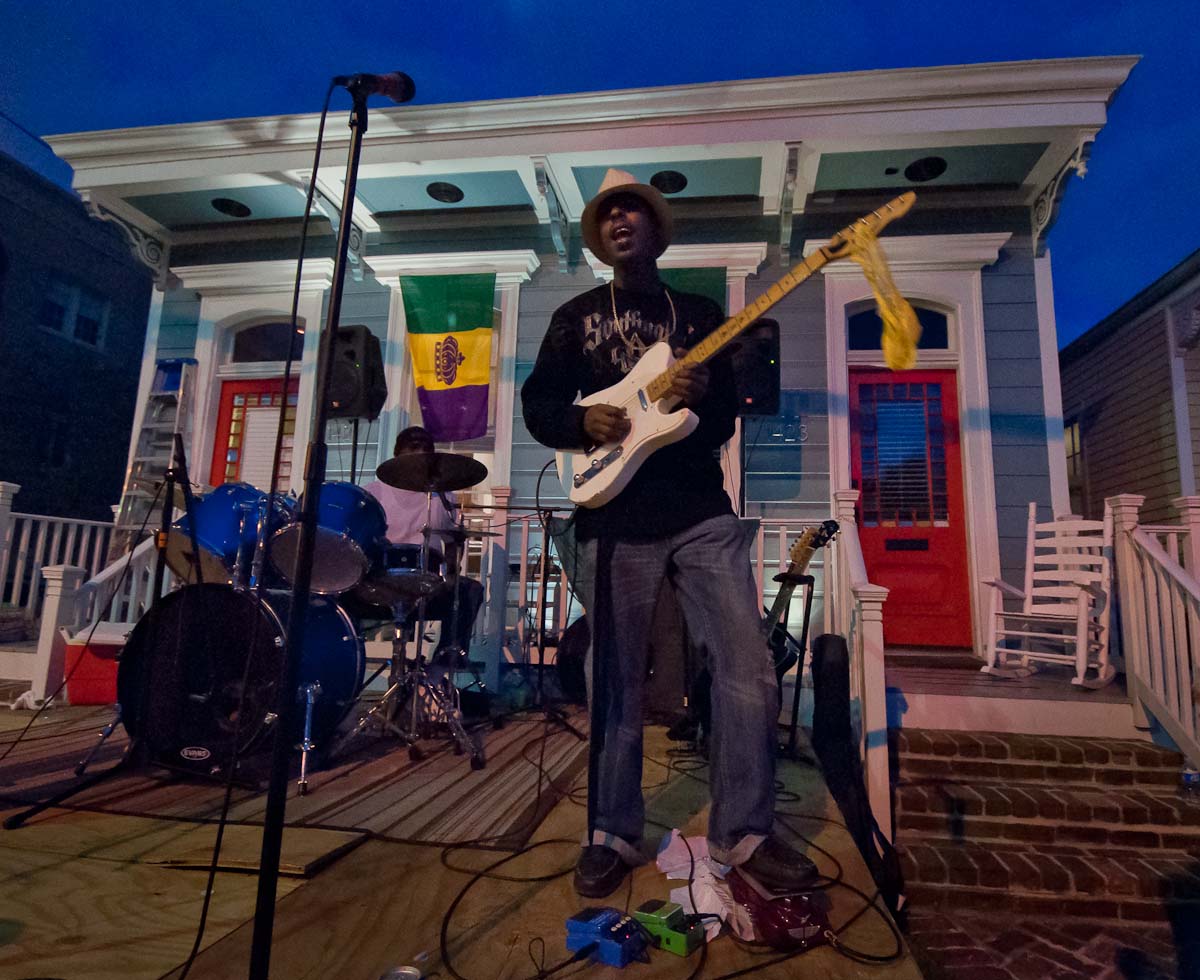
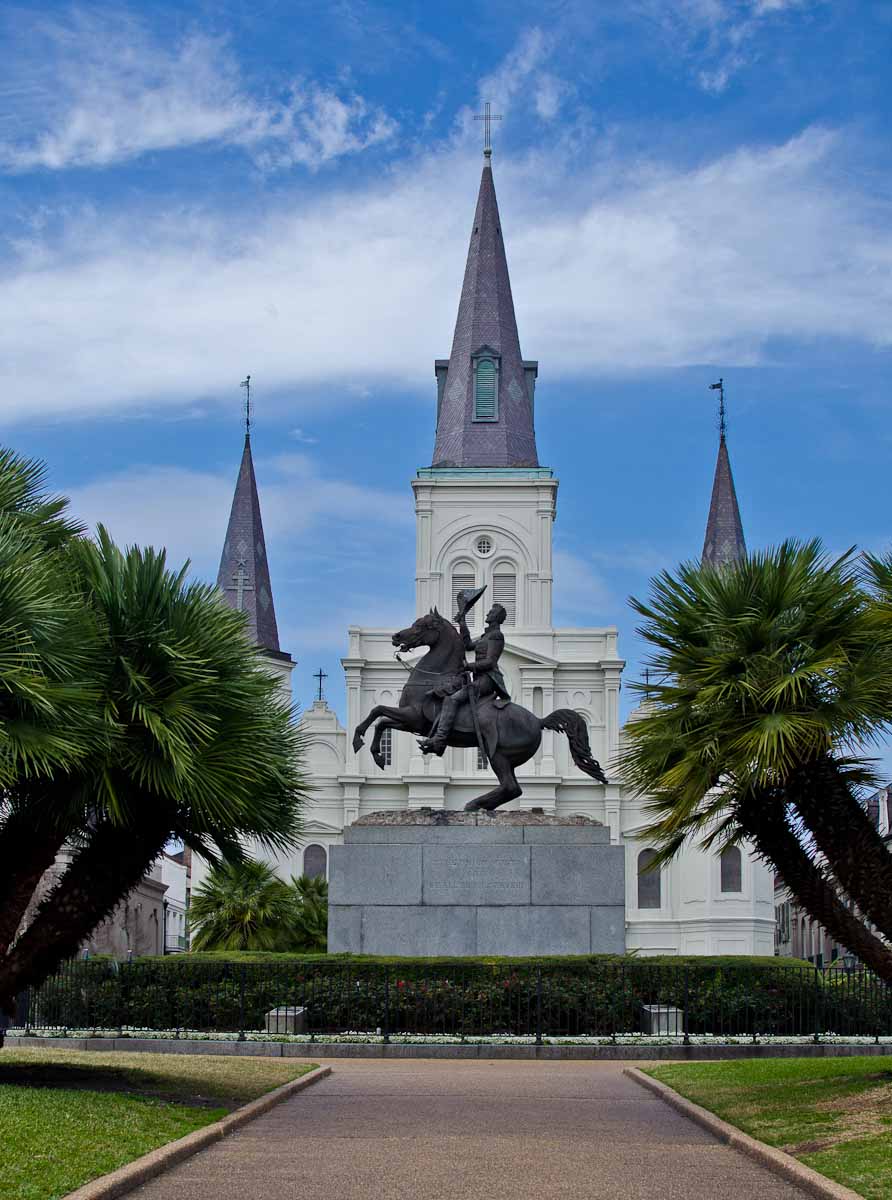
The street scenes in the pictures are mostly Bourbon Street.  The park with the horse statue is Jackson Square (named for then-General and later-President Andrew Jackson, a hero of the Battle of New Orleans). During the parades, I enjoyed taking pictures of the band kids more than anything — so much so that I’m giving those pictures a page of their own.  Obviously, the trumpeter shown in the daylight shot above is no kid – he’s a “pro,” if you can use that term for someone who hangs out in a park and plays the theme from Rocky when somebody throws a dollar in his trumpet case.  Only in New Orleans do the majority of trumpet players pooch their cheeks out like that.
_JJC3337.JPG_JJC3776.JPG_DSC0050.JPG_JJC3777.JPG_JJC3358.JPG_JJC3538.JPG_JJC3645.JPG_JJC4038.JPG


Mardis Gras Bands 2012


As I mention in my main Mardis Gras post, some of the best parts of Mardis Gras parades are the New Orleans area high school bands.  The best ones are often from the mostly-black high schools.   I started trying to get some interesting pictures of some of the band members as they marched by.  Remember:  I’m a long-time band nerd myself.  These groups had an amazing number of twirlers, pom poms, cheerleaders, drum majors, rifle carriers, sword bearers and everything else.  Good to see that band was apparently considered “cool” at these schools.  I sure thought they were.

The two pictures with several kids acting a little crazy was the culmination of a “duel” of sorts between two big New Orleans bands.  The two bands set up in an intersection, facing one another, and took turns doing their best to outplay their rivals.  They were both great — amazingly so for high school bands who had just finished three-hour parades.  Toward the end, one group ran forward to taunt the other.  I was standing right between the two groups — right in the middle of the craziness.  You can see the New Orleans police standing there as if to keep the peace, but it was all in good fun.

_DSC0036.JPG_DSC0039.JPG_JJC3801.JPG_JJC3814.JPG_JJC3844.JPG_JJC3425.JPG_JJC3443.JPG_JJC3675.JPG_JJC3733.JPG_JJC3747.JPG_JJC3762.JPG_JJC3419.JPG_JJC3792.JPG_JJC3765.JPG


My Kind of Town

I live in Houston, America’s fourth largest city.  Only New York, L.A., and Chicago are bigger, and if I had to choose among those three for a next-choice favorite city to live in, I think I’d choose Chicago every time.  Unless you asked me during the winter.  Let’s face it – the Midwest isn’t a beautiful place in February.  Fortunately, Chicago has more than its fair share of great museums – largely vestiges of two “World’s Fairs” held there (1893 & 1933) – so it’s possible to do lots of sightseeing indoors.

_JJC2596


My sister, my mom and I were recently in Chicago to see my nephew in the opening of a play.  It was cold, but I did have one day of nice weather.  I wandered down to Millenium Park, home of the big chrome “Bean” (a.k.a. the Cloud Gate statue).  I met David, the security guard (that’s him under the yellow hood).  I asked if his job was to keep people from stealing the 110-ton steel sculpture; he said it was mostly to keep people from hurting themselves.  I had trouble getting his picture because he kept darting away to scold people for climbing on nearby railings.

I also stumbled across a new (temporary) downtown icon – a 30-foot-tall Marilyn Monroe.  Cheesy, but a fun photo-op.  The blown-up-skirt Chicago statue is racy for a public sidewalk, but the boringly conservative alternative (i.e., Dallas’s version) isn’t worth the plaster.

_JJC2635e.JPG_JJC2648.JPG_JJC2656.JPG_JJC2661.JPG

The blue, high-tech-looking scene is the Museum of Science and Industry — that’s my sister, Jana, controlling the big orange thing.  The dinosaurs are in the Field Museum.  I didn’t get any pictures of the Art Institute that could possibly do it justice.  My mother (Joyce) made me ensure that the snowy street scene photo was dark and gloomy enough to portray her bravery in facing the Midwest cold.  Of course my sister, Jana, gets the photo credit for the group shot of me, Tyler and my mom.

_JJC2874.JPG_JJC2895.JPG_JJC3227.JPG_JJC2541.JPG_JJC2927.JPG_JJC2904.JPG


Fiestas Tipicas Nacionales

_JJC1611

_JJC1610.JPG_JJC1611.JPG_JJC1613.JPG_JJC1618.JPG_JJC1670.JPG_JJC1712.JPG_JJC1800.JPG_JJC1810.JPG_JJC1818.JPG_JJC1828.JPG_JJC1947.JPG_JJC2046.JPG_JJC2050.JPG_JJC1982.JPG_JJC2080.JPG_JJC2107.JPG_JJC2124.JPG_JJC2139.JPGc49-_JJC2168.JPG_JJC2164.JPG_JJC2213.JPG_JJC2257.JPG_JJC2228.JPG_JJC2235.JPG

“Tipicas” usually means “typical,” but as it’s used in the name of this festival, it means “picturesque; full of local color; traditional;” which is a pretty good description.  The main event is one-third rodeo, one-third Mexican bullfight, and one-third pure chaos.

The cowboy bullriders (montedors) are just T-shirt-clad teenagers, but the whole town packs into the “plaza” to watch.  The grandstands (graderias) are a makeshift wooden circle built in the middle of town just for this event.  Some areas have poles supporting a rusty sheet metal roof; a few parts have a thatched (palm-leaf) roof.   Lots of folks just crawl up under these bleachers (without buying a ticket) and peek out from under people’s feet.  There is absolutely nothing about any of it that would be OSHA-compliant.

Each session starts out like a rodeo bull ride – the worked-up bull storms out of the chute, trying to rid itself of the hombre on its shoulders.  This rarely took more than a couple of seconds.    The difference is that instead of a couple of professional life-saving rodeo “clowns” like a rodeo, here there are maybe 200 locals in the arena (toredos improvisados), eager to chase and be chased by the bull for five to ten minutes following each ride.  A good percentage of the folks down there in harm’s way are tipsy at best (surprise!).  The blue-shirted, rope-slinging lasadores were the “pros” on hand to get the bull out of the plaza when it was time for the next rider.  Though the first few pictures look pretty scary, that guy got up and ran away just fine.  In fact, I don’t think anybody (and certainly none of the bulls) was hurt.  The pictures turned out okay, considering they all had to be taken from my seat on the eighth row behind several poles.

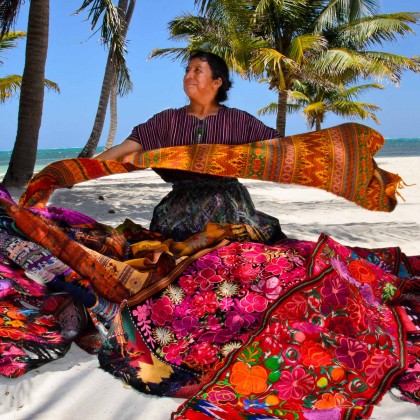
There was a big street festival outside, focused mostly on local foods, drink, dancing and (what else?) marimba playing.  Every street corner had one or two of those huge three-man marimbas (wooden xylophones), which are apparently a big tradition in this town (Santa Cruz, Guanacaste, Costa Rica).  There are two statues in the town square, and one of them is a marimba player, if that tells you anything.  Sometimes a singer or a drummer would join in.  It sure made things festive.  I also had some of the best street-vendor pork-on-a-stick you’ll ever run across.  Best of all, everybody seemed to like having their picture taken, and seemed glad to have outsiders see their traditions.  “Fiestas Tipicas Nacionales”:  I think it also means, “Gringos welcome”  (though there were only a handful of gringos visible in town).  Maybe next year I’ll earn my stripes as a toredo improvisado and let somebody else take the pictures.

Monkey See! (Costa Rica)

_JJC0977


_JJC0912.JPG_JJC0869.JPG_JJC0977.JPG_JJC1001.JPG_JJC1034.JPG_JJC1082.JPG_JJC1167.JPG_JJC1194.JPG_JJC1216.JPG_JJC1265.JPG_JJC0785.JPG_JJC1278.JPG_JJC0807.JPG_JJC1271.JPG

Tourism is Costa Rica’s biggest industry, and much of that tourism focuses on the country’s natural wonders.  Even so, it seems that each of the country’s national parks is manned only by three or four teenagers, and the main roads in and out can be less than inviting.   A couple of friends and I visited two parks last week – one trip involved paying off a guy who had blocked the road, and whose private property you have to cross to get to the national park.  In the other park, the main road had a sign saying that the roads were in such bad condition they suggest you not drive on them at all.  But of course we did.

The rough trips are worth it.  The white-faced monkeys (capuchins) and the waterfalls were in the Rincon de la Viaja National Park in Northwest Costa Rica.  The park is built around a volcano, which is sufficiently active to cause them to prohibit hikers up near the rim.  The “smoke” you see behind that red tree is stinky sulfur-smelling geothermal steam coming out of the ground.

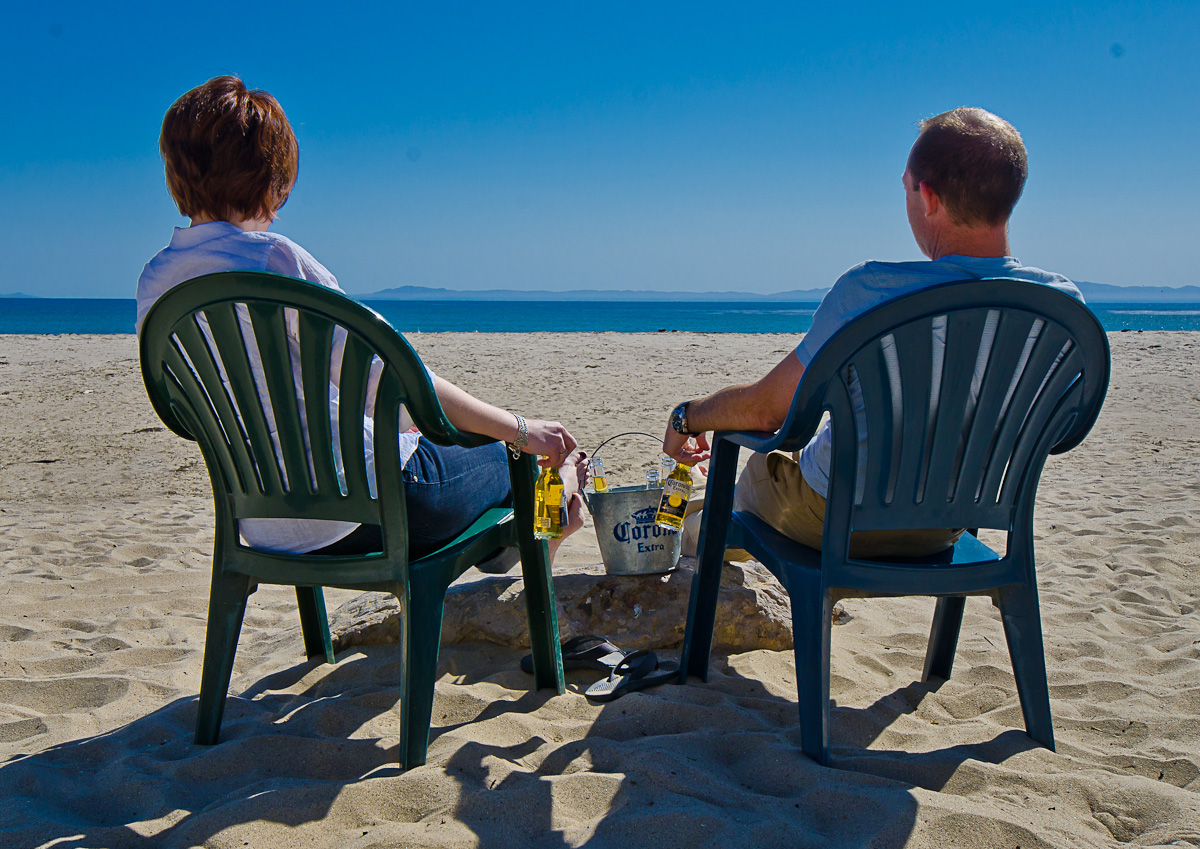
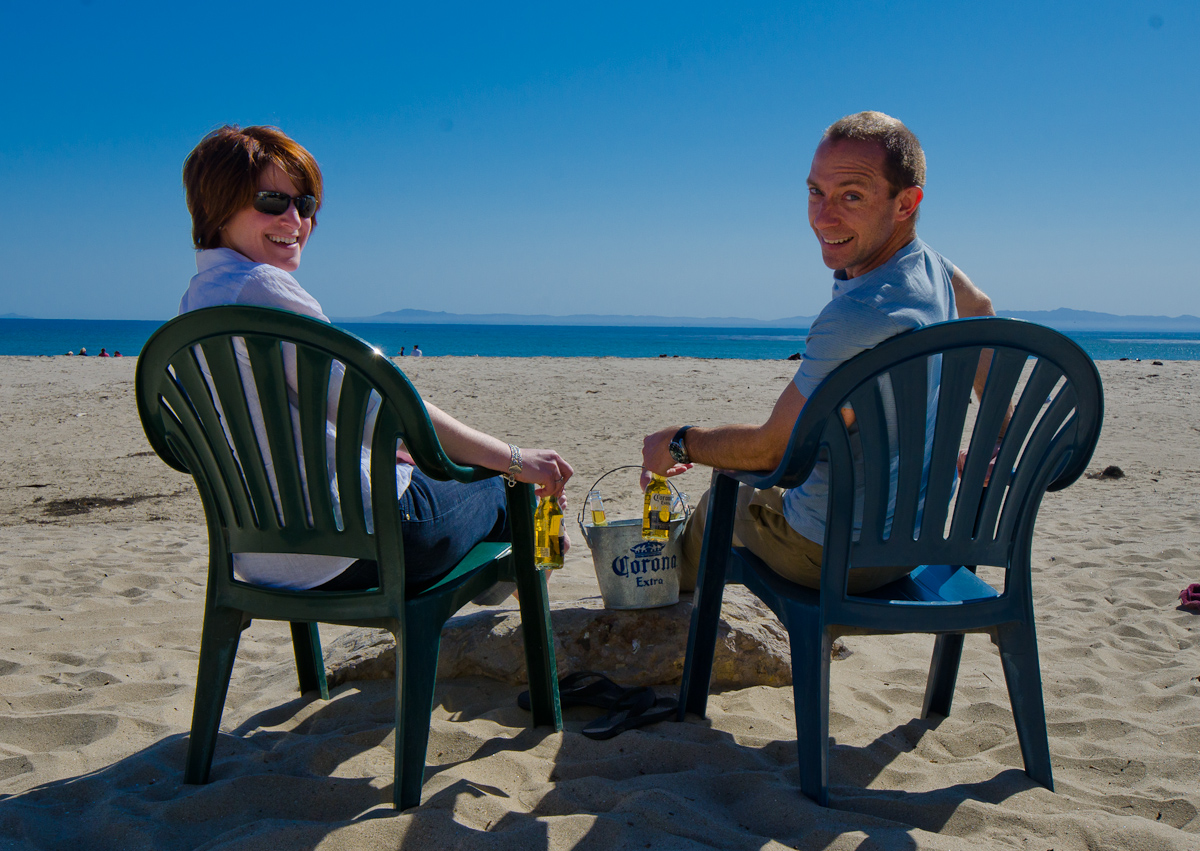
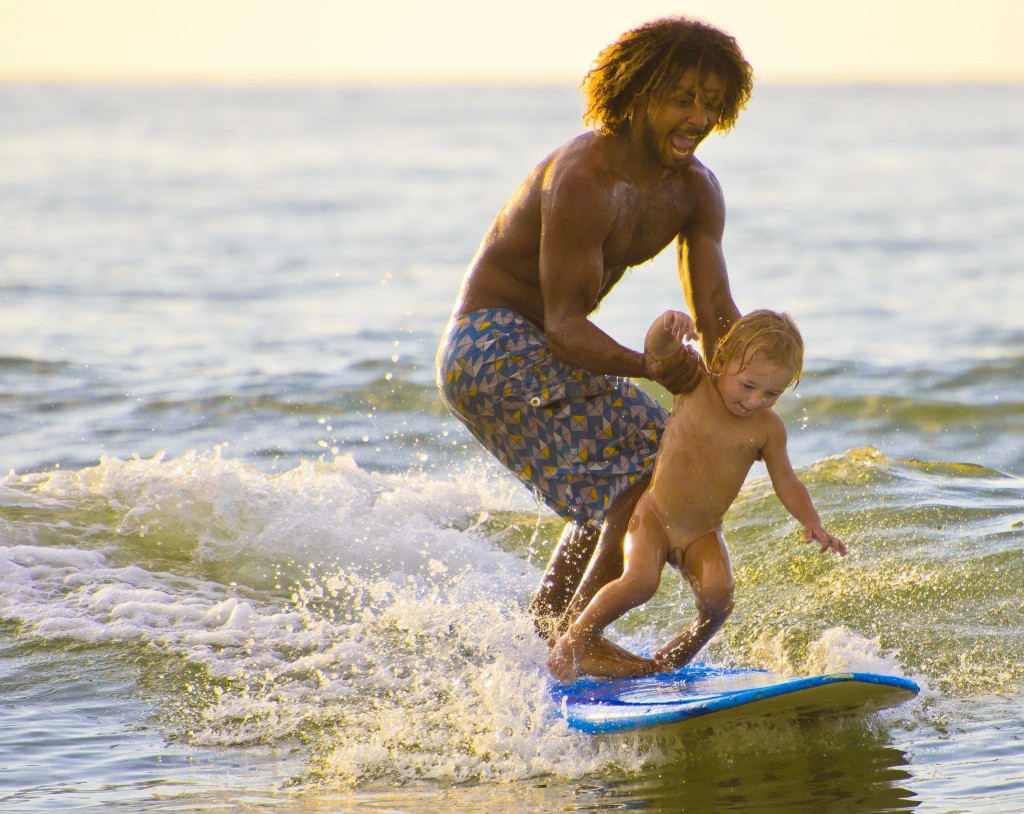
The beach pics here are mostly at Playa Naranjo, which is waaaay down a terrriibbllle dirt road/trail inside Santa Rosa National Park.   The beach is a couple of miles long, and there were maybe a dozen people on it at most on a Saturday afternoon.  We even picked up a hitchhiker there and took him back to town.  He spoke only Spanish so we tried out our espanol on him, with modest success.  The area is also a mecca for hard-core surfers, a dozen or more of whom were sleeping in a little tent camp near the beach.

The dark-faced (howler) monkey was just chilling roadside when I was driving back from a mountain bike trip a few days back.  Though both monkey pictures are of just one monkey, each time they were in a group of 10 or so.

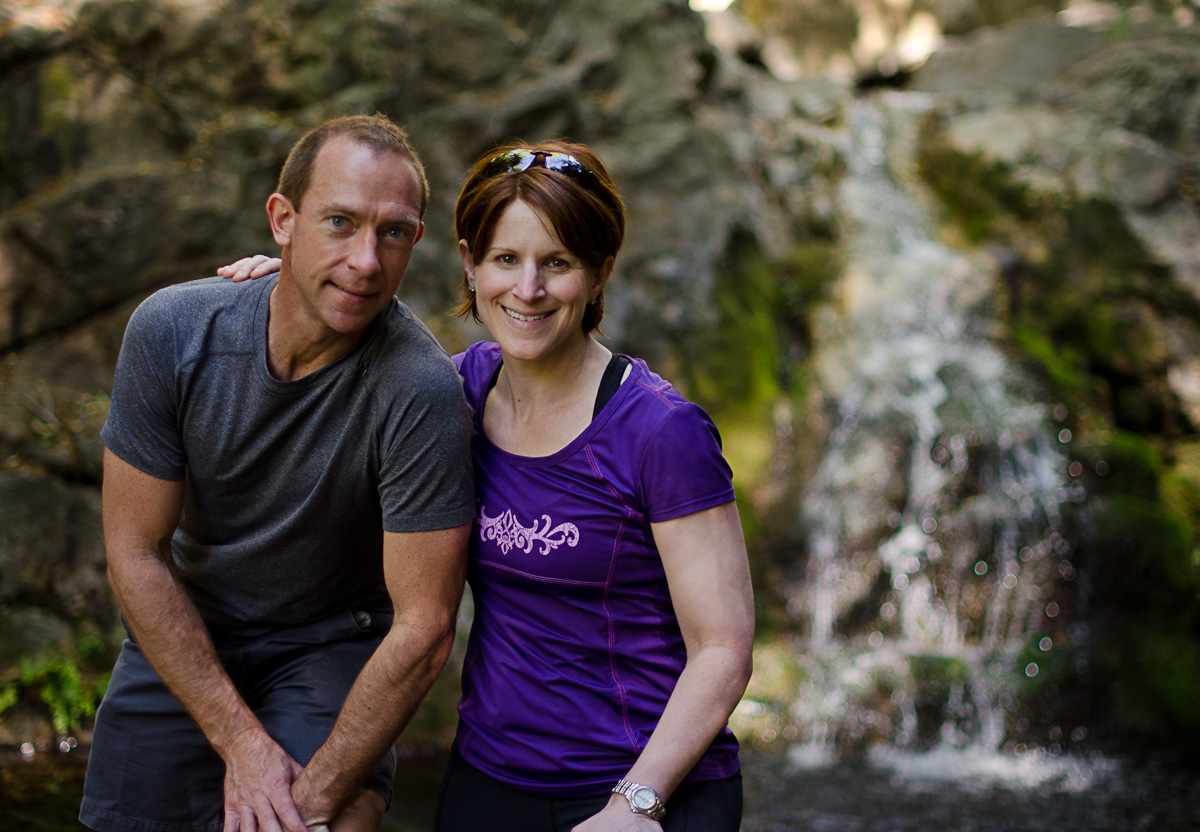
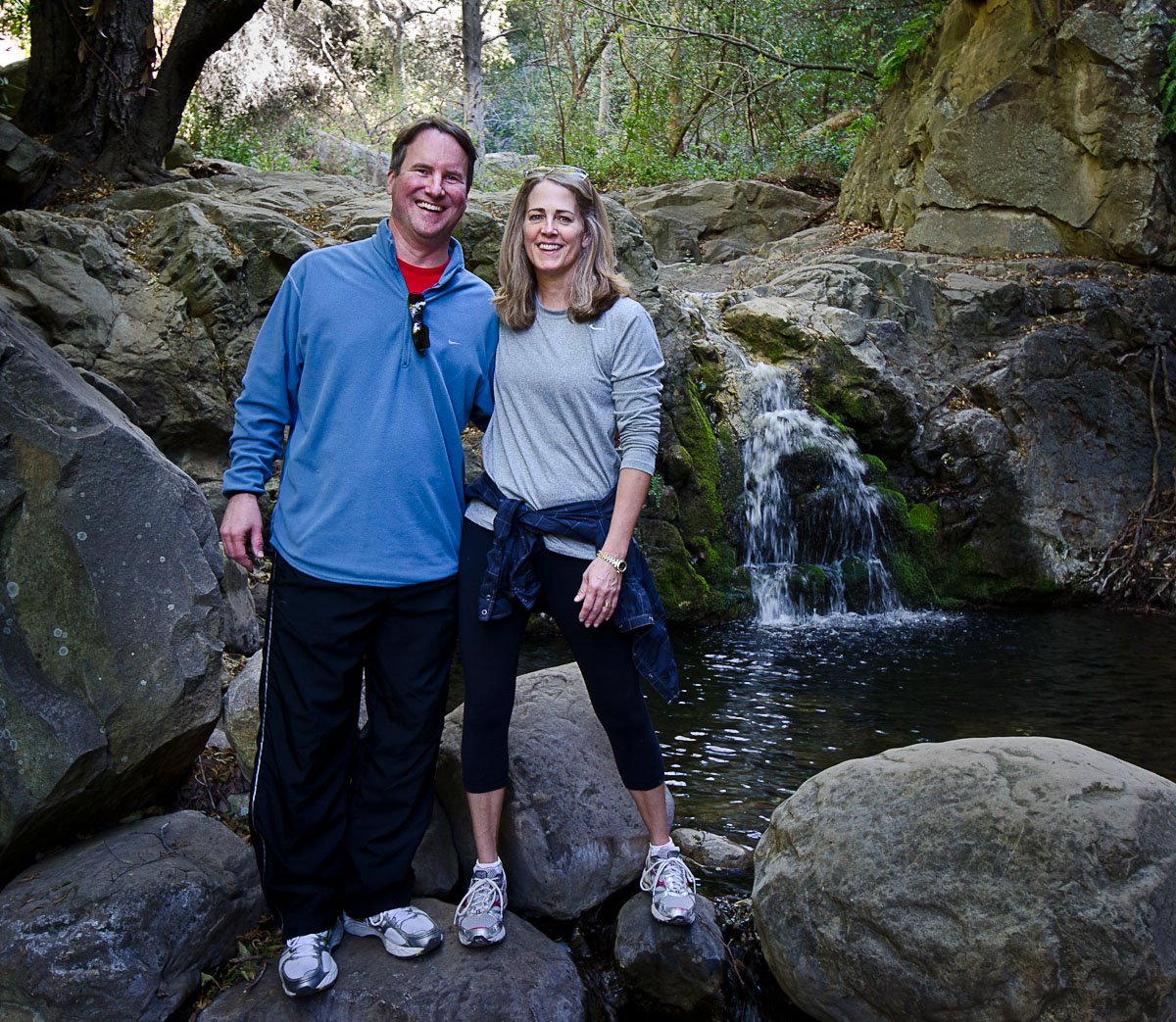
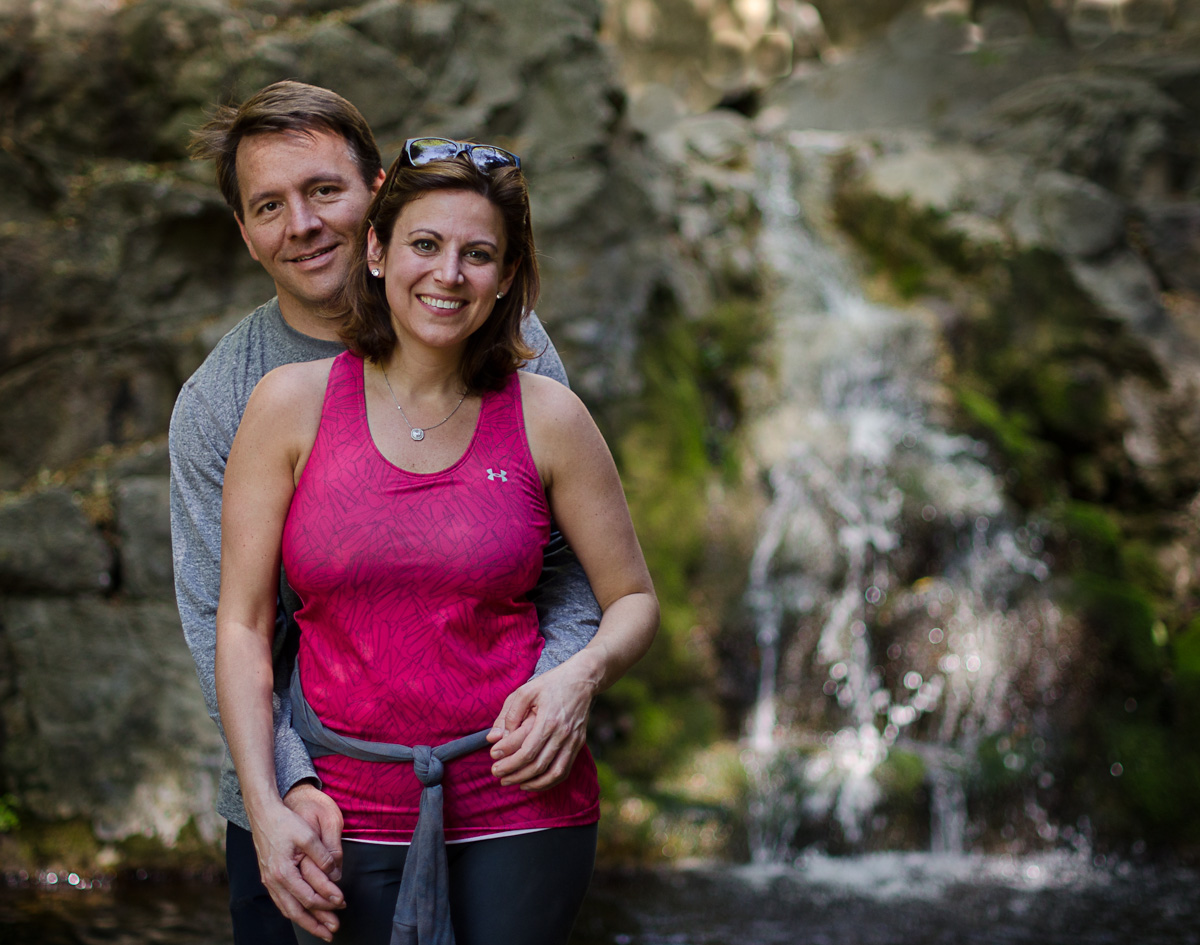
The nice couple in a few of the pictures (together, and separate) are Peter and Jana Thomsen, of Santa Cruz, California, who I met at the language school here.  Peter is a forty-something mountainbiking photographer who came to Costa Rica from the States to try to learn Spanish, so we were able to find a few things to talk about as the three of us drove into the depths of Costa Rica’s priceless national parks.  Peter’s actually a professional photographer (go to www.peterthomsen.com if you want some fabulous wedding photography), but I was able to convince him to push the button on my camera free of charge to get that one purple-shirted picture of me.