Category Archives: Europe

Sleepless in (Islamic) Istanbul

This is #2 of 3 posts about a November trip to Istanbul.  Click here to see the first one.

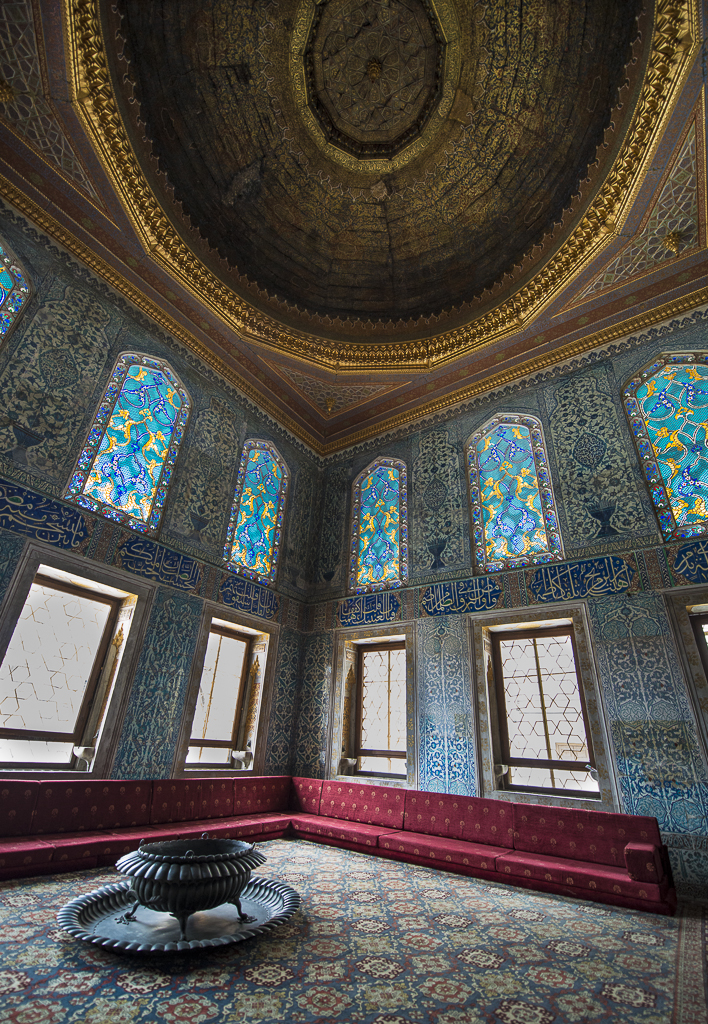
In Istanbul, Turkey, it’s pretty much impossible to get a decent night’s sleep.  An hour or two before dawn – and again at dawn — the shrill, crackling loudspeakers in the towers (“minarets”) of the city’s 5,000 or so mosques boom out the Muslim call to prayer.  Wherever you are, there are probably at least two or three mosques within the loudspeaker-enhanced earshot.  Bring earplugs.

Though the individual muezzin seem to have very different singing styles (some quite lyrical and some quite terrible), apparently the words are always the same.  The translation:

God is greatest.  I bear witness that there is no deity except God.  I bear witness that Muhammad is the messenger of God.  Come to prayer; come to success.  God is greatest; there is no deity except God.

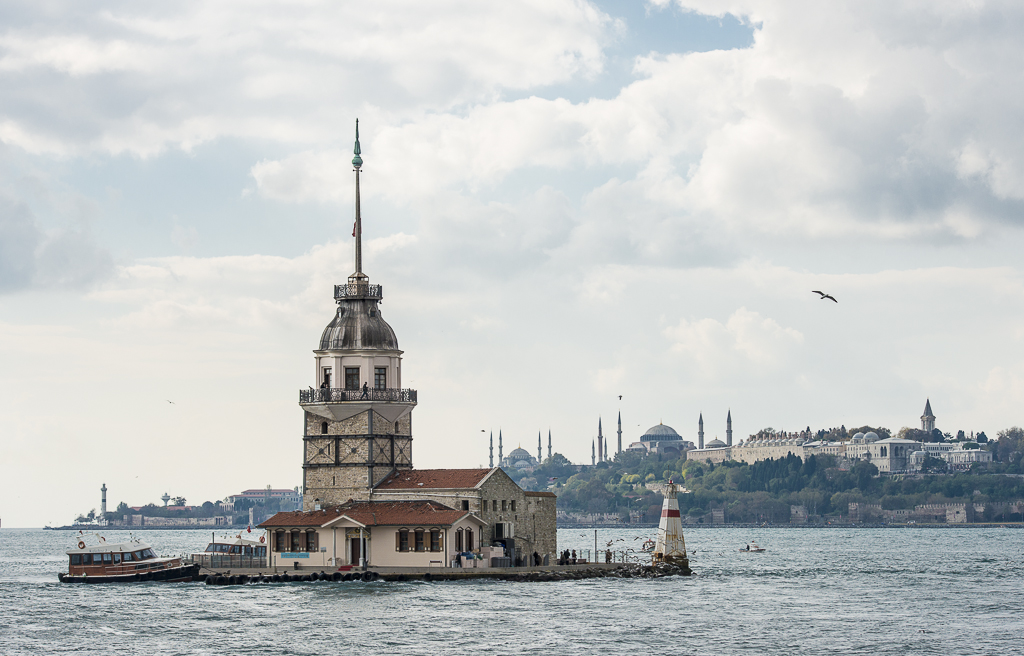
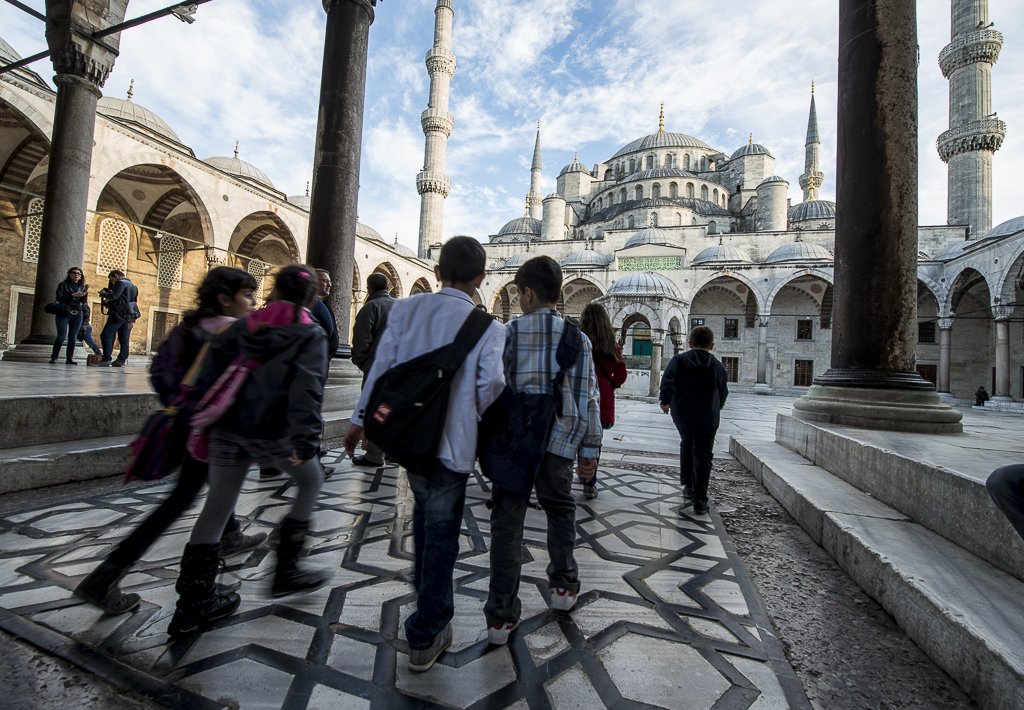
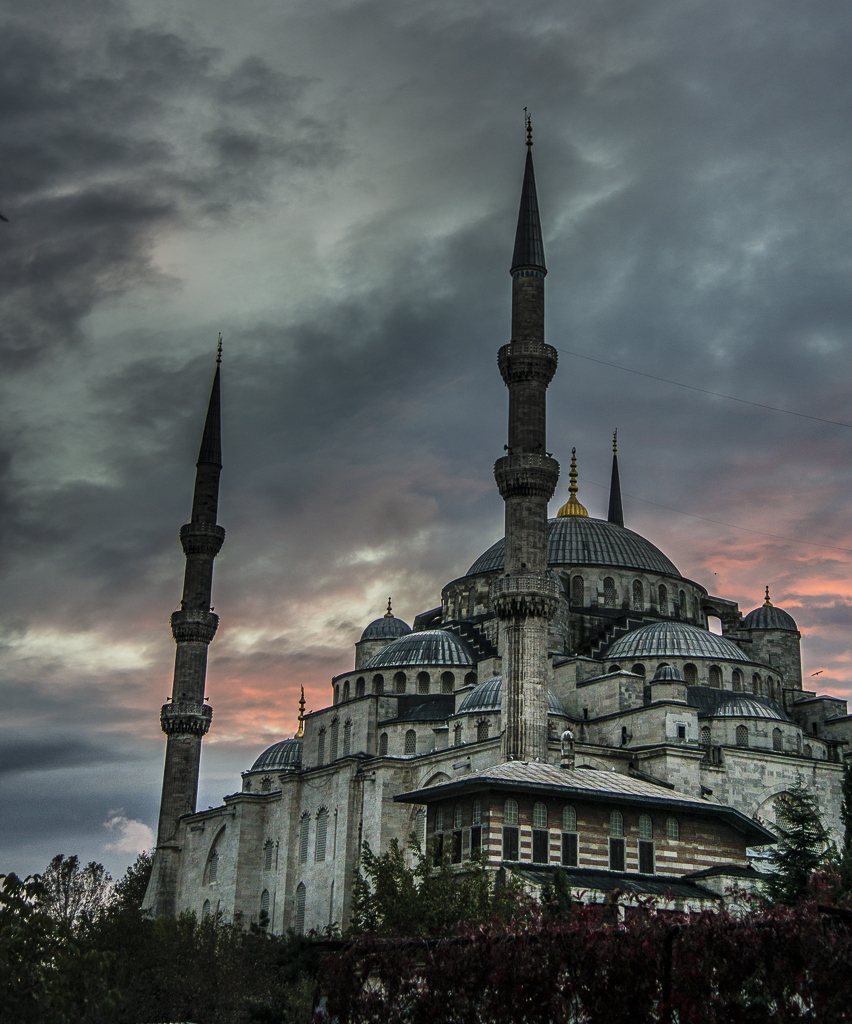
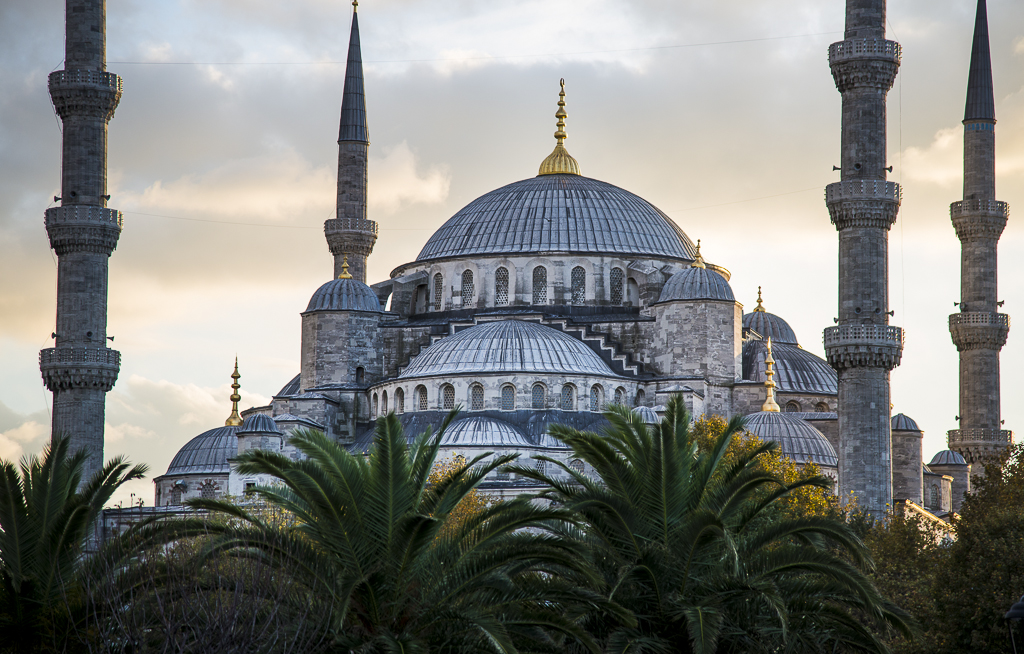
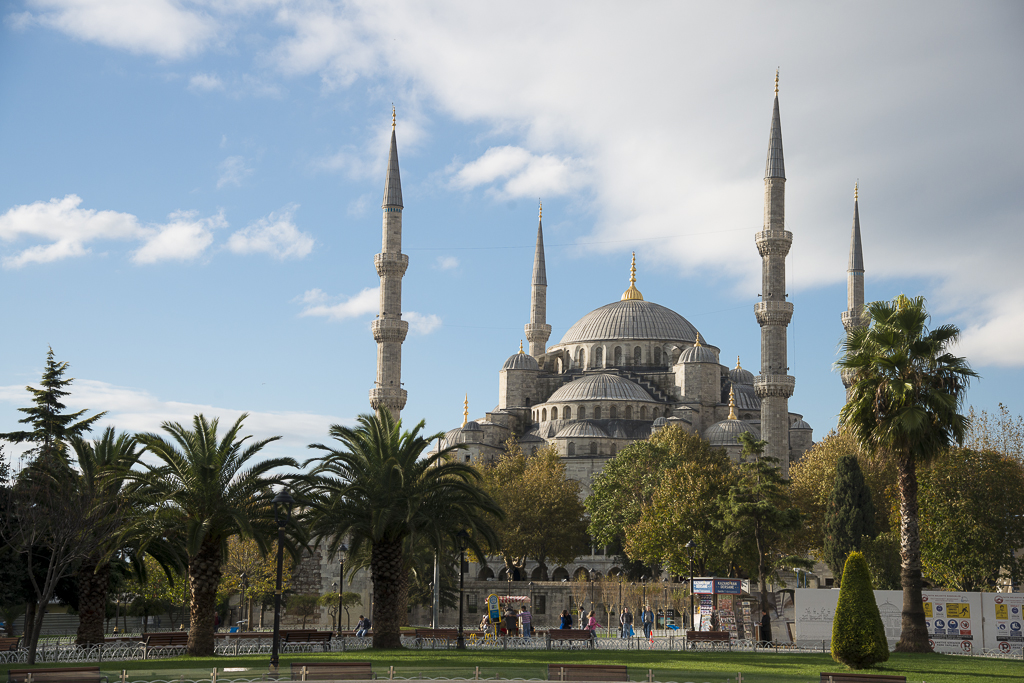
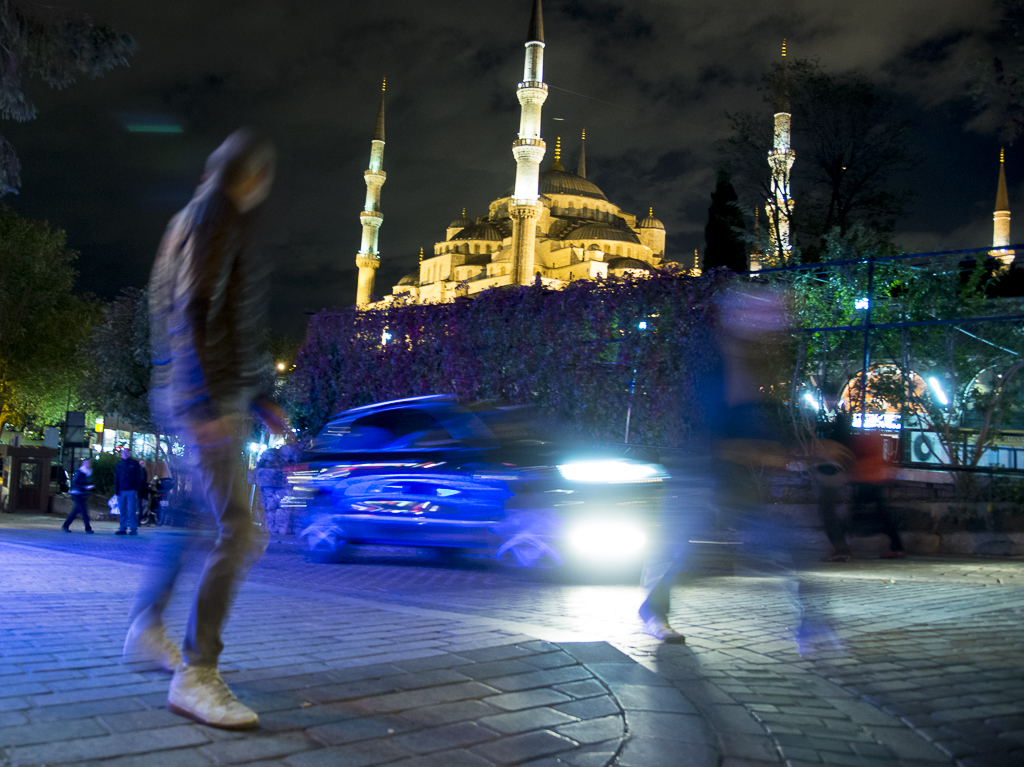
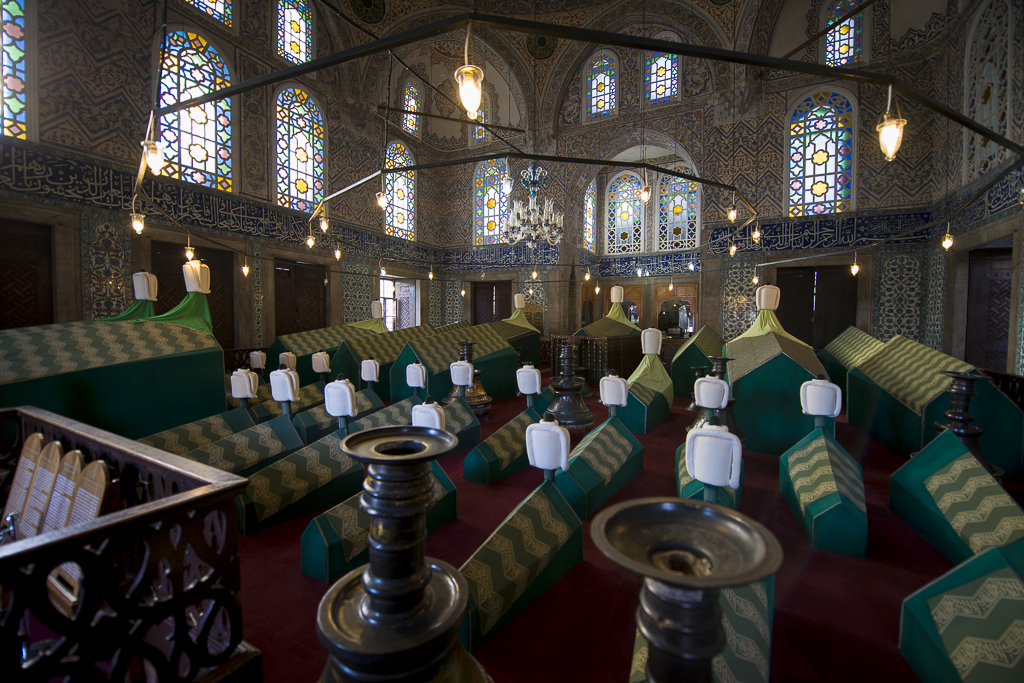
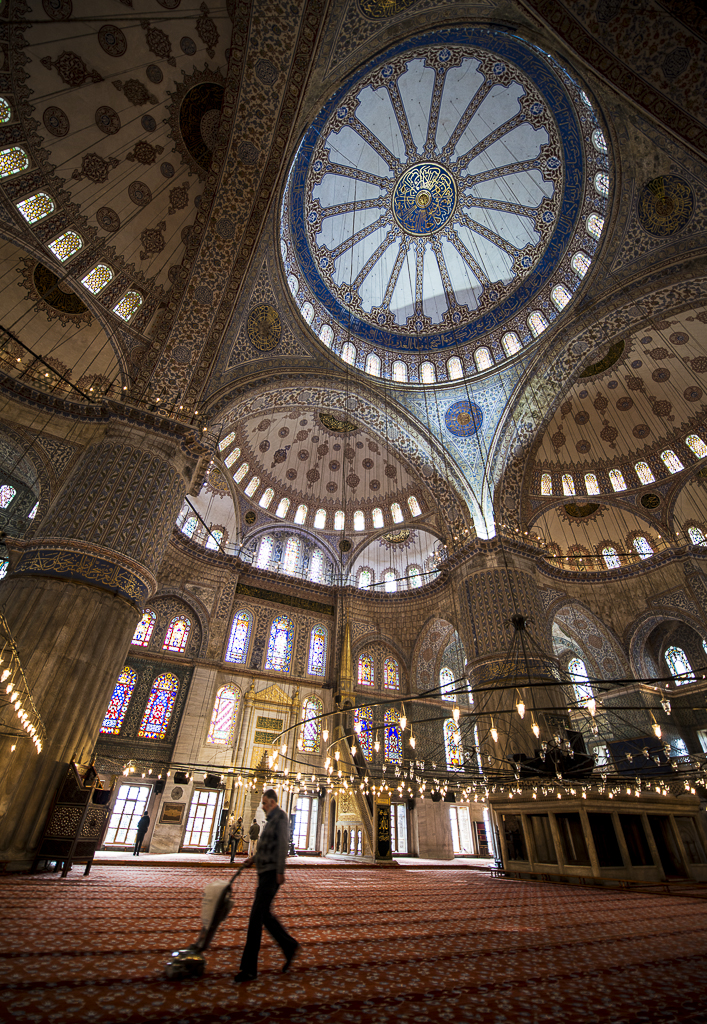
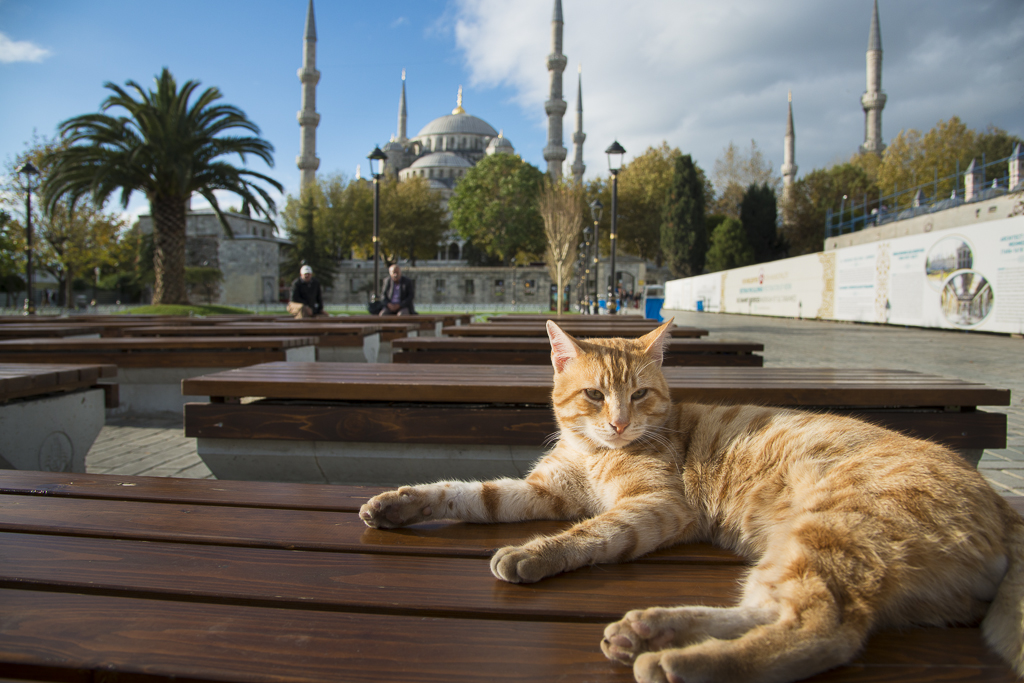
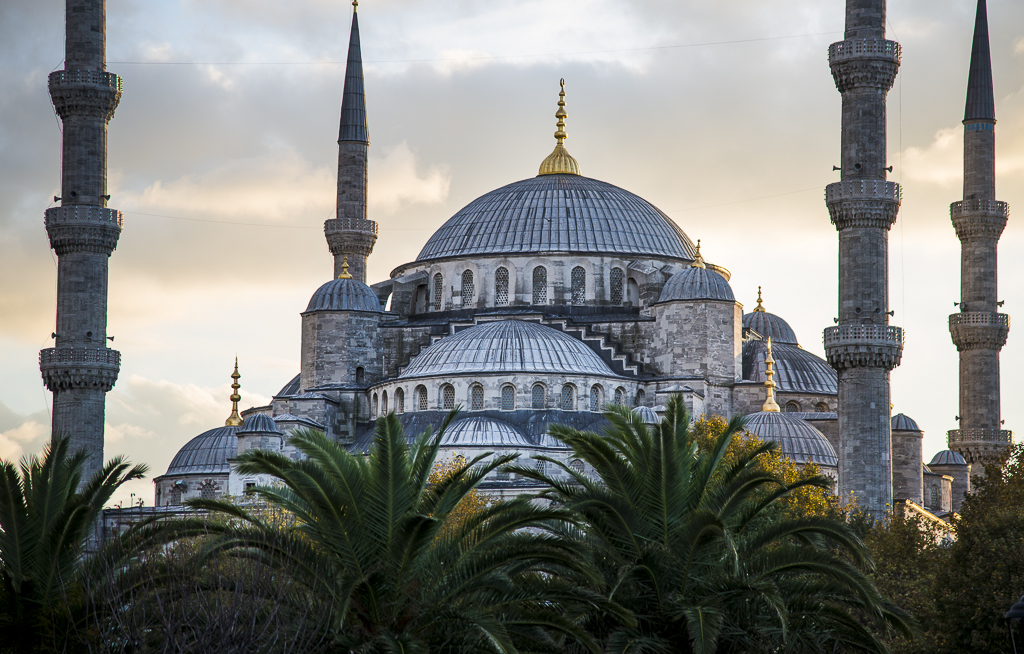
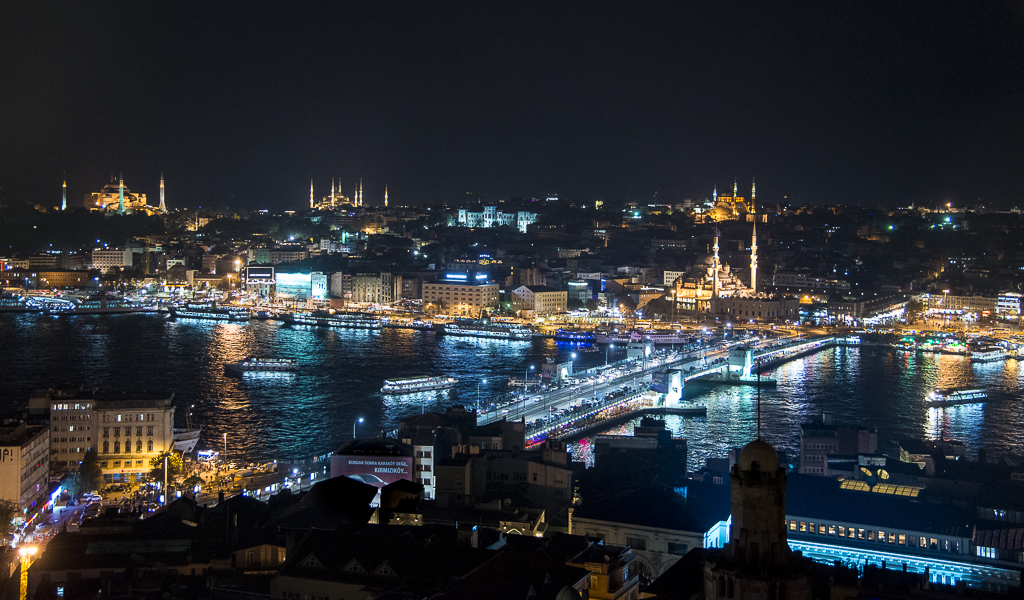
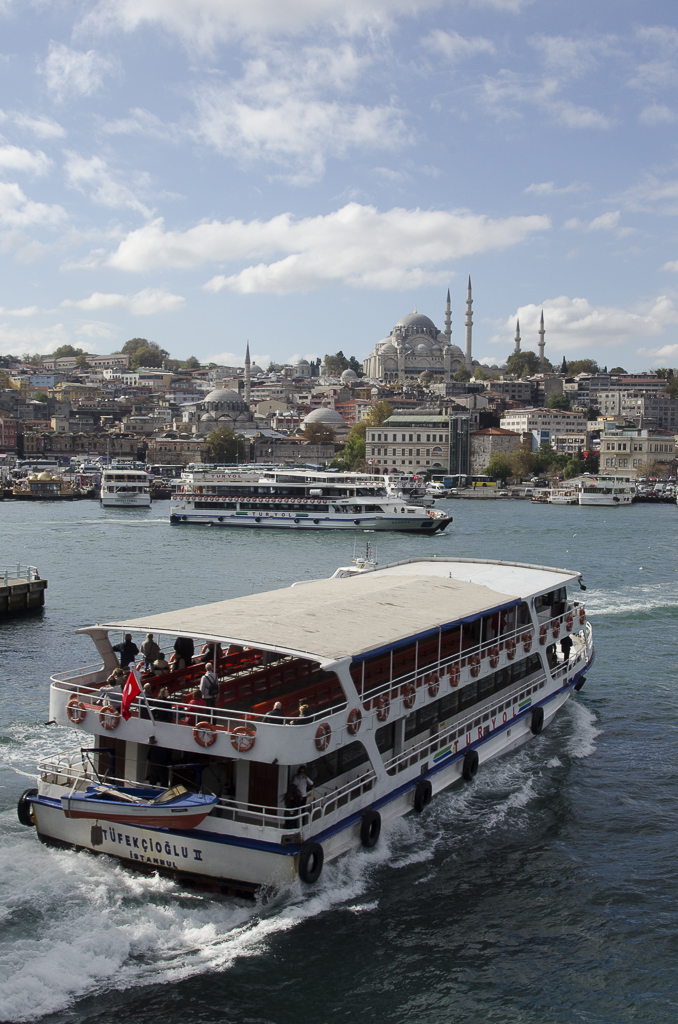
Most of the pictures here are of the big Blue Mosque, which sits in the old Sultanamet seciton of Istanbul – overlooking the Sea of Marmara and just across the plaza from the Hagia Sophia.  It’s “only” a little over 500 years old – built shortly after the Ottomans converted the city to Islam.  Today 99 percent of Istanbul residents are muslim.

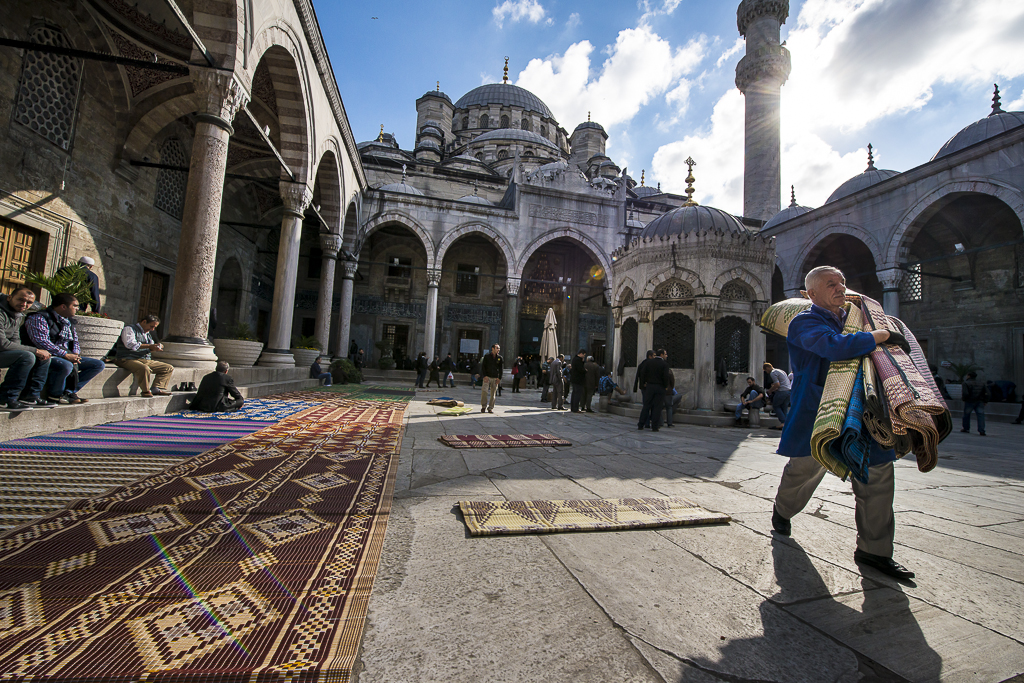
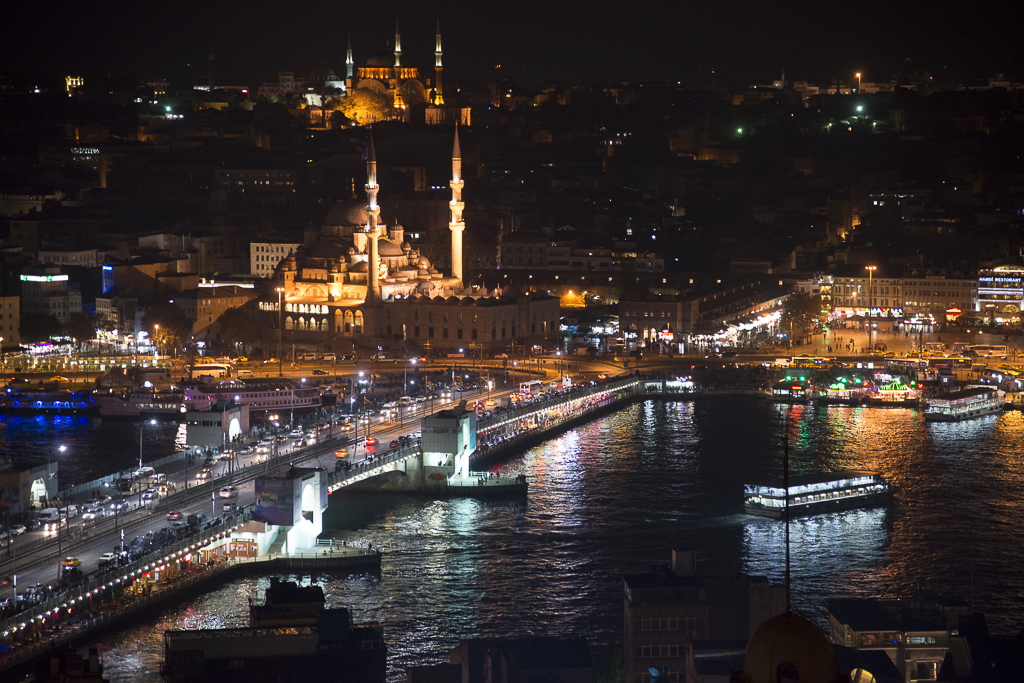
The picture (at the top) with the colorful rugs being spread out in the mosque courtyard is at the amusingly-named “New Mosque” – built in the 1600s (everything is relative).  The prayer service at noon on Friday draws an overflow crowd, thus the carpets as preparation for outdoor kneeling.  About two minutes after the picture was taken, I (along with a dozen or so other visitors) was politely (and appropriately) ushered out as their prayer service was about to begin.

_JC81091.jpg_JC81112.jpg_JC81134.jpg_JC81151.jpg_JC81856.jpg

Istanbul (Not Constantinople)*

Here’s the first of a handful of posts from a recent visit to Istanbul, Turkey. 

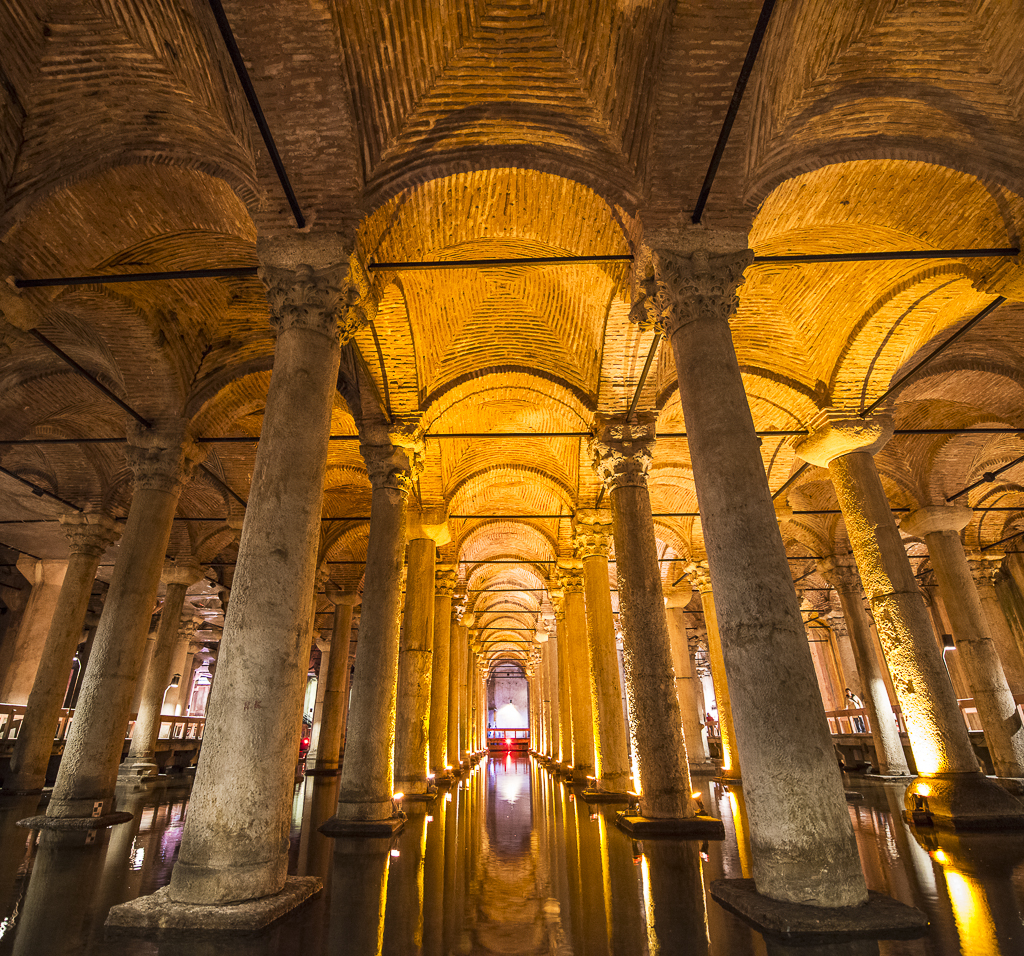
Napoleon once said that if the world had just one capital, it would be Constantinople – the city now known as Istanbul, Turkey.  Apparently lots of Emperors and Sultans felt the same way.  For over 1000 years, Istanbul was Constantinople – capital of the Eastern Roman Empire and named for the 4th Century Roman Emperor Constantine.  In 1453, the Ottoman armies of Sultan Mehmet II successfully laid siege to Constantinople and established Istanbul as the new capital of the Ottoman Empire.

The Sultan and the Ottomans were Islamic, so most of what is now Istanbul has been mostly Islamic ever since.  Grand Christian churches were converted to mosques.  The grandest of all was Hagia Sophia — originally dedicated in the year 361 and serving as a Christian church for nearly 1100 years.  When the Ottomans took over in 1453, the crosses and other Christian symbols that covered Hagia Sophia’s walls and ceiling were replaced with symbols of Muhammed and Allah.  A mihrab and minbar replaced altar and pulpit, and minarets (towers used for the daily call to prayer) were built on all four corners.  Fortunately, the enlightened Sultan only covered up – and did not destroy – many of the Christian religious icons.  Today the Hagia Sophia is a museum, showing off its immense and beautiful architechture and its odd current mix of Christian icons and Islamic symbols, and thus telling the story of Istanbul’s last 1700 years.

c11-_JC82565.jpgc49-_JC81465.jpgc59-_JC81568.jpgc38-_JJC6114.jpgc29-_JC81674.jpgc45-_JC81599.jpgc61-_JJC6118.jpgc64-_JC81492.jpgc68-_JC81641.jpgc77-_JJC6084.jpgc95-_JC81466.jpgc100-_JC81587.jpgc22-_JC80989.jpgc38-_JC81394.jpgc40-_JC80910.jpgc68-_JC81458.jpg

The tiny Church at the Chora monastery a few miles to the west saw a similar fate.  Today it’s a museum, and most of the amazing and elaborate murals have been restored.

_JC81968.jpg_JC81983.jpg

*”Istanbul (Not Constantinople)” is a goofy song about the re-naming of Constantinople.  It was a gold-record hit in the 1950s by the Four Lads, and was recorded again by the They Might Be Giants in the 1990s.  If you don’t remember it, watch the recent version on YouTube.  It’ll make you smile.  “All the girls from Constantinople are in Istanbul (not Constantinople); so if you’ve a date in Constantinople, she’ll be waiting in Istanbul.” 


Siena Sunflowers


It’s a myth that big sunflowers like this turn to follow the sun all day.  They just face east.  Apparently when they’re tiny, they might turn (i.e., they’re “heliotropic”), but not when they’re mature.  So if you want to photograph them “head-on” and you want something else in the picture, that “something else” needs to be lined up precisely due west of the flower patch.  Thus, last week as I drove through a part of north-central Italy (near Siena) where they grow sunflowers, my goal was to spot some cool old building — a big church or something that made you think “Tuscany” — that looked good from the east, and that was situated exactly due west of a pretty sunflower field.  Hmmmm.

Even after finding a spot, I had to avoid an ugly fence — and an ugly sunflower farmer 100 yards up the road near the signs that said “proprieta privata.”   Thus I took all these pictures from a single spot in the middle of the road, with the Castillo del Cuatro Torres (“Castle of the Four Towers”) lined up on the hill due west of me.

These were the last shots I took before I packed the camera away for a while and headed toward the airport for my flight back to Houston.


A Small Slice of Pisa

I spent one hour and forty-five minutes in Pisa.  I know this because that’s how much time I could buy on the parking meter with the Euro coins I had in my pocket.

I was unwilling to be the only person in 500 years to go through Pisa, Italy without touring the town’s tilted Tuscan Torre.  The strikingly slanted stone spire is the belltower of Pisa’s 900 year old major Duomo.   The cathedral’s conspicuously canted campanile has been plauged by that famous foundational flaw since its construction in the 11th through 13th centuries.  I had no city map, but assumed (correctly) that I could just follow the flow of tourists to the area’s awkwardly angled axis of attention.  (Okay, I’ll stop.)
These pictures are misleading — especially the first one, above.  When you use a wide angle lens and point the camera upward to take a picture of, e.g., a tower, everything looks like it’s leaning inward.  (Click here for another example).  In fact, the tower actually leans away from the adjacent (perfectly upright) cathedral, as you can sense in the pictures just above, and at bottom.

The line to go up in the tower was exceeded only by the line to buy a ticket to get you into that other line, so I decided to stay at ground level.  It’d be hard to see the tower from the tower anyway.  The goofiest part of the experience was the number of people (a hundred or so at any given moment) posing for pictures that would give the illusion that they were holding the tower up (Google “funny pictures leaning tower pisa”).


There’s a famous story that Galileo — the Renaissance-era physicist/astronomer who was born in Pisa and started his scientific work there — dropped two cannonballs of different weights off the Tower of Pisa (already tilting back then) to test his theory that they would fall at the same speed.  What’s interesting is the reason that story is probably not true:  Galileo “proved” his theory not by experiments, but by just thinking about it.  I love that.

(Here’s the thought process.  Imagine two same-size blocks being dropped – one ten pounds and the other two pounds — connected by a very short string.  If the heavy block was prone to fall faster, the tether to a slower-falling two-pound block would slow the fall of the heavy one, making the pair fall slower than the ten-pounder by itself.  But if that short string has effectively tied the two tightly together, they are a twelve-pound unit, and if heavier things fall faster, the now-twelve-pound unit should fall even faster than a ten-pound block by itself.  It can’t be that both these things are true, so the assumption – about heavy things falling faster – can’t be correct.) 
Galileo was a stud.  Maybe da Vinci was smarter, but Galileo changed the world.  When earlier scientists encountered evidence inconsistent with what the Roman Church taught them about an earth-centered universe, they just puzzled over why their evidence must have been in error.  Galileo changed all that — gathering and sharing the telescopic observations and thereby ushering in a Scientific Revolution.  He was darn-near burned at the stake by the Church for doing so.  One historian has suggested that the astounding scientific and technological progress of the last few hundred years — and thus the ensuing prosperity of the modern Western world — would have been greatly delayed without him.   (Two good books on these topics:  Galileo’s Daughter and The Birth of Plenty).

For a while, at least, Pisa was the center of Galileo’s universe.  So it was fun to imagine that Galileo himself had wandered around Pisa’s Tower Square just about like I did — only five-hundred years earlier, and with a lot “weightier” things on his mind.


Italy: Cinque Terre

On Italy’s western Mediterranean coast — way up north on the front and top of the “boot” – is an area called the Cinque Terre (“five lands”).  It’s a series of five colorful little villages that have been hanging on the cliffs and hillsides just above the water for a thousand years.

A 2011 flood damaged a few of the towns and the trails and vineyards between them, so I explored only Riomaggiore and Manarola.  There aren’t really roads in the towns (they were built pre-automobile, of course; I parked a mile away and walked in).  The old passageways within the towns are narrow:  one writeup said they were purposely maze-like to thwart pirates who would try to land and pillage the towns.  Hopefully, the piracy rate has dropped in recent years.

Easily the nicest accessible view was a hillside overlooking Manarola and its tiny harbor.  The late afternoon light was okay, but I could tell it would get prettier and prettier as the sun set.  So I just hung out in Manarola:  had some lasagna, climbed up and down, watched the swimmers and window-shopped — taking another picture or 20 every hour or so til it got dark.  You can see from the series of pictures how the light (and thus the pictures) changed.

_JC85550.jpg_JC85666.jpg_JC85682.jpg_JC85701.jpg_JC85710.jpg_JC85734.jpg_JC85789.jpg_JC85794.jpg_JC85810-2.jpg_JC85817.jpg_JC85829.jpg

I did take a few shots of other things in the towns.  The wide shot in the group below is Riomaggiore, which is just a mile or two away.

_JC85611.jpg_JC85561.jpg_JC85585.jpg_JC85618.jpg_JC85592.jpg

A final note for photographers:  All these shots were with the Nikon D800 and the 24-120 f4 Nikkor lens.  The second- and third-to-last (after-sunset) pictures above were taken with ISO 1600, hand-held at 1/4 or 1/5 second.  The great color and noise-free images at 1600 are a tribute to the D800 sensor, but I was more shocked and impressed by the performance of the “VR” technology in the lens that allowed me to handhold 1/4 second and still get perfectly-sharp pictures (which was handy, because my tripod was approximately 5,000 miles away).  The final picture is at ISO 3200.   I did have a railing to stabilize my elbows.  As I often say, for those of us who attempted photography 30 years ago, modern cameras are indistinguishable from magic.