Category Archives: Photography

The Road to Morocco

I promised myself I wouldn’t let a full year go by before finally sorting through (and sharing) my photos from a 2018 trip to Morocco.   


If you’re reading this, you probably know that I love to travel to new, unusual places.  And you probably know that I enjoy almost all those trips and generally come home telling mostly-positive stories even about places that have plenty of oddities and problems.  (See, for example, my reports from Cuba and Iran and Myanmar and Colombia and Guatemala . . . .).  I’m pretty open-minded (or at least non-judmental) about cultures very different from my own.  But there was something ‘off’ about Morocco.  Although the small group of folks I traveled with were unbeatable, and though the trip was expertly planned and the accommodations as swank as I could ever have hoped, I wouldn’t count Morocco among my favorite destinations.

I expected (naively, I suppose) Morocco might be similar to Iran — where I’d had a truly great trip in 2017.  It wasn’t.  I think the counterintuitive problem is that, unlike Iran, Morocco has long been an established and popular tourist destination for Americans and Europeans.  (Bob Hope and Bing Crosby sang “Off on the road to Morocco” and Humphrey Bogart did his play-it-again-Sam in Casablanca in 1942, though both were actually filmed in the American Southwest.).  In Iran, people were just excited to see and meet American visitors intrepid enough to trapse their cities and deserts.  In Morocco, they learned long ago that “visitors” are “tourists,” and tourists are revenue sources.
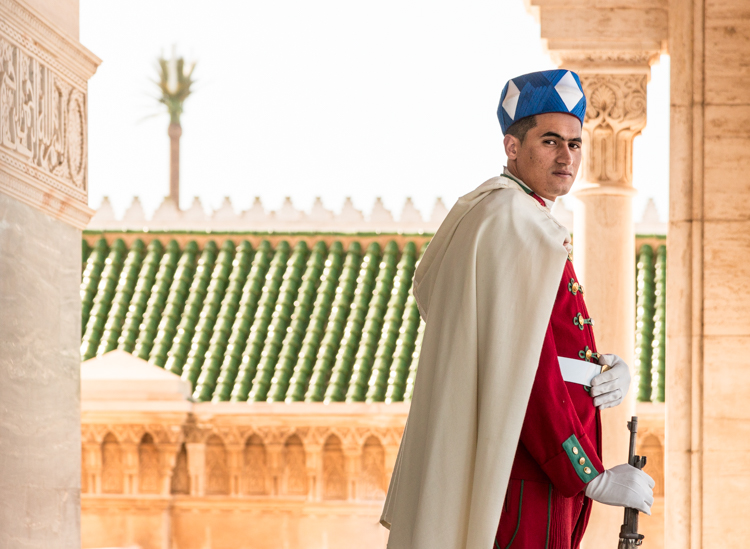
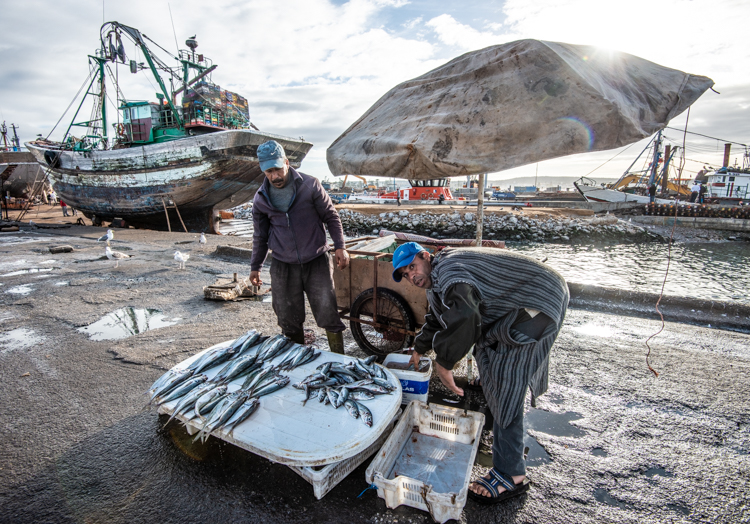
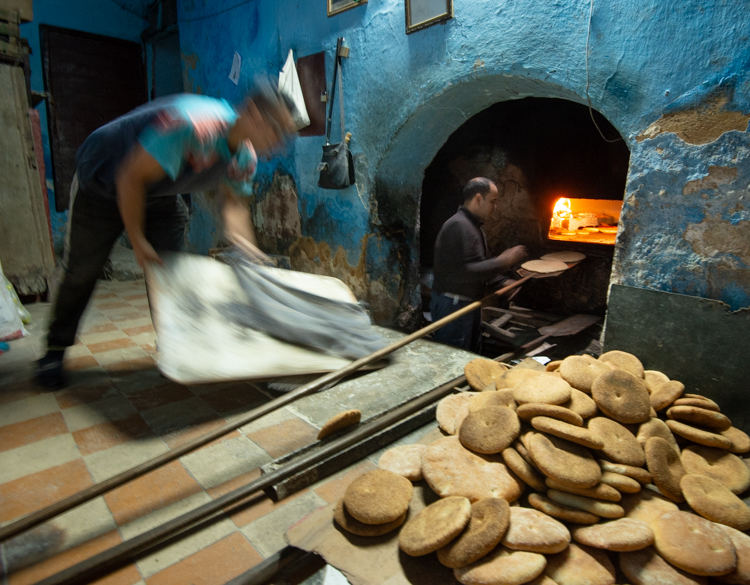
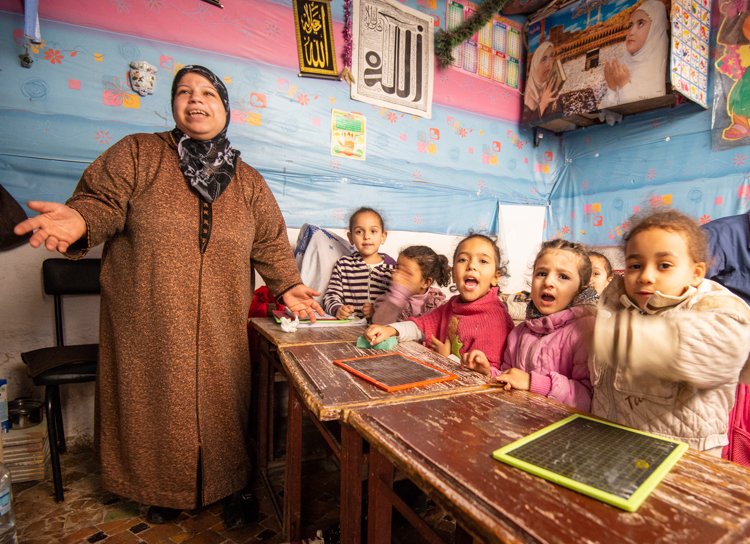
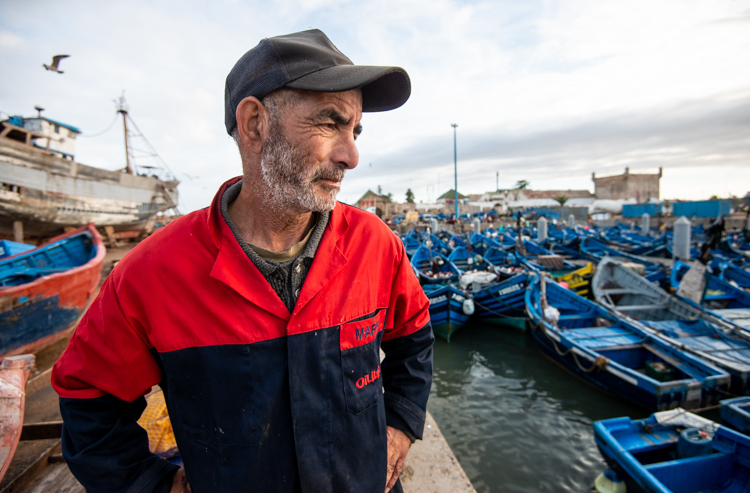
My pictures from photography trips usually include lots of images of local people.  But you won’t see many people here.  Almost everyone I photographed (or tried to photograph) asked for money in one way or another.  That’s something I try to avoid:  to me, it can ruin the authenticity of both the experience and the photograph.  Others just shooed me away entirely — which I actually prefer.  Some would actively invite you to take their picture — only to expect payment when you did.  It was hard to know what you were getting into. 

It’s fine when people don’t want to be photographed — I completely respect that.   And there’s nothing inherently wrong with them doing it only if they get paid.  I’m just not usually interested.

I was fascinated at how quickly so many locals morphed from entrepreneur to beggar to extortionist.  Their initial approach was to try sell you something you clearly did not want (kids trying to hand you an obviously worthless trinket or adults giving unrequested, intrusive ‘guide’ services).  When that failed to generate a cash response, they’d often keep their hand out and just ask for money.  When that failed, they often did not give up:  uncomfortable persistent harassment was not uncommon. 


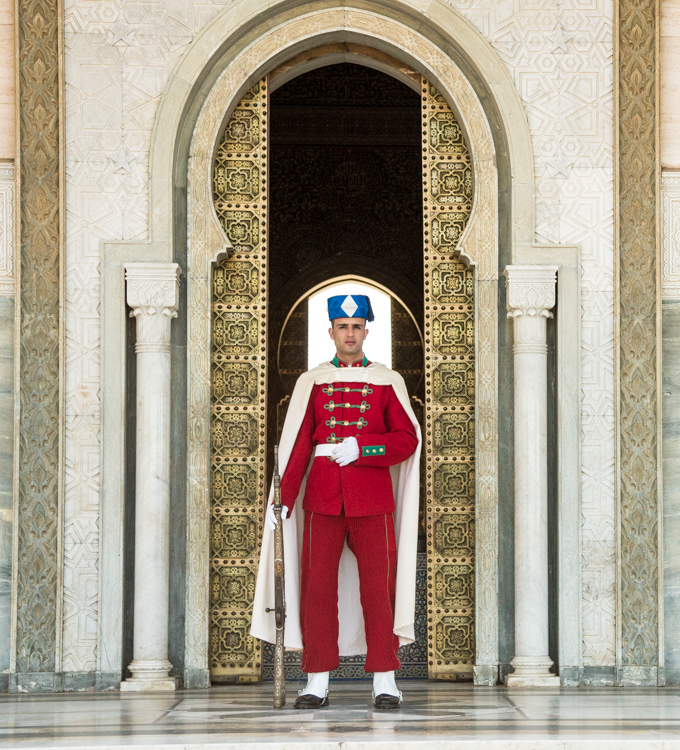
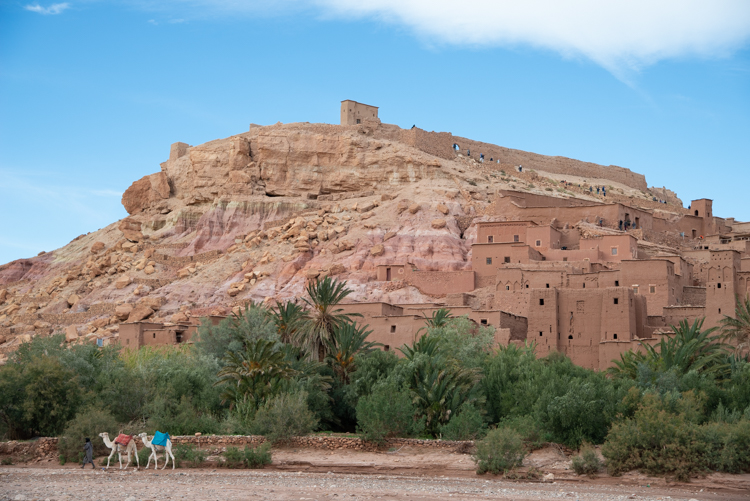
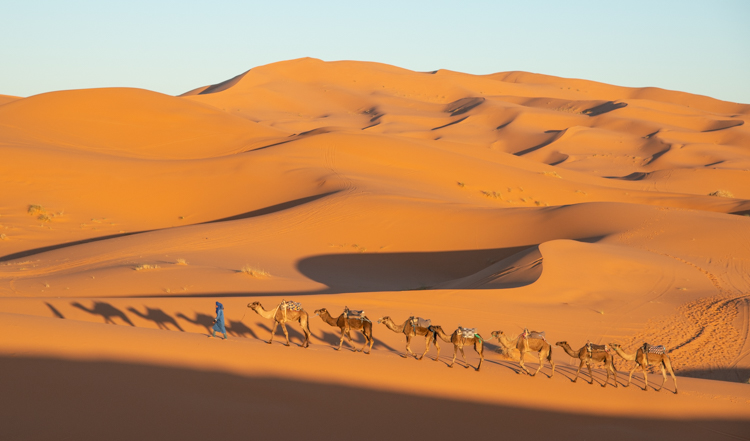
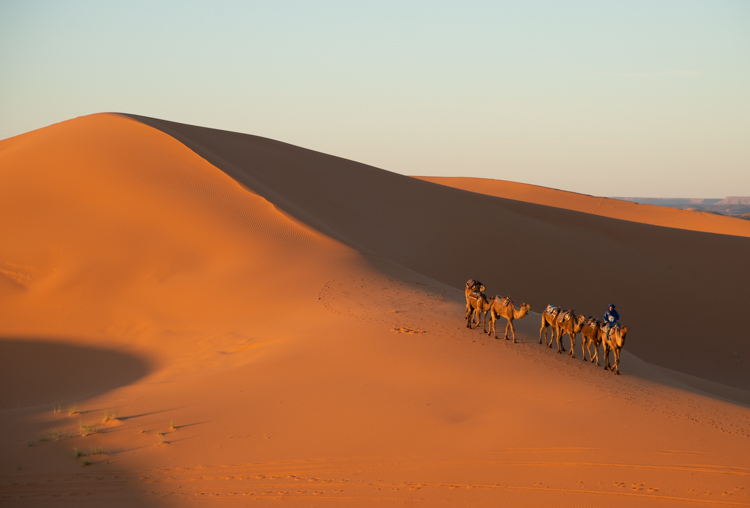
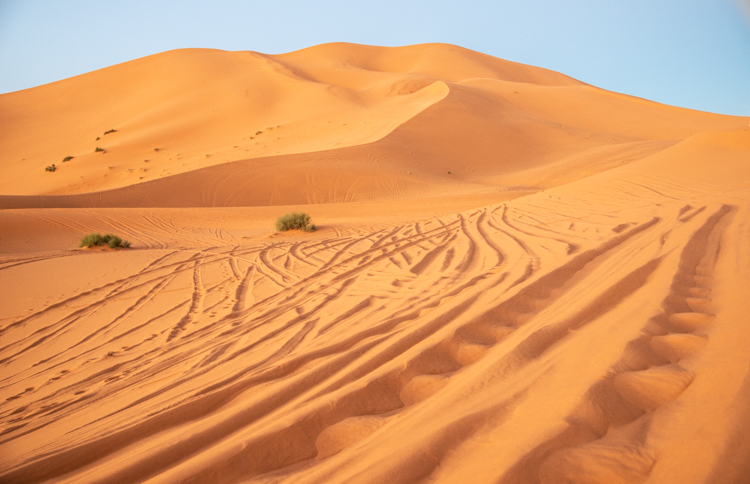
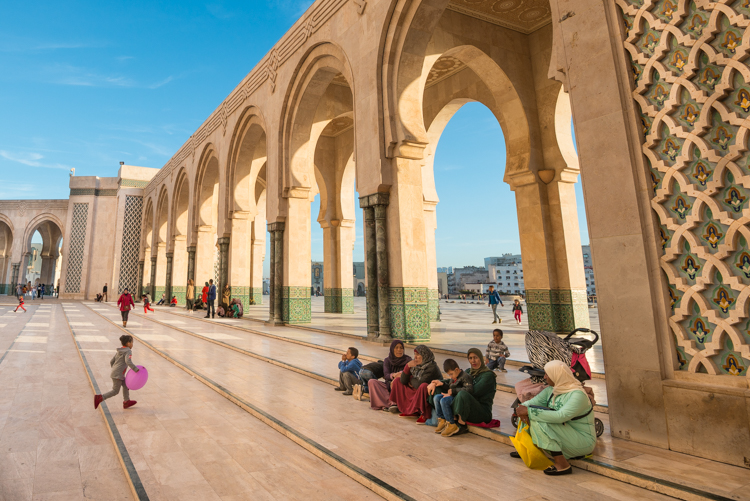
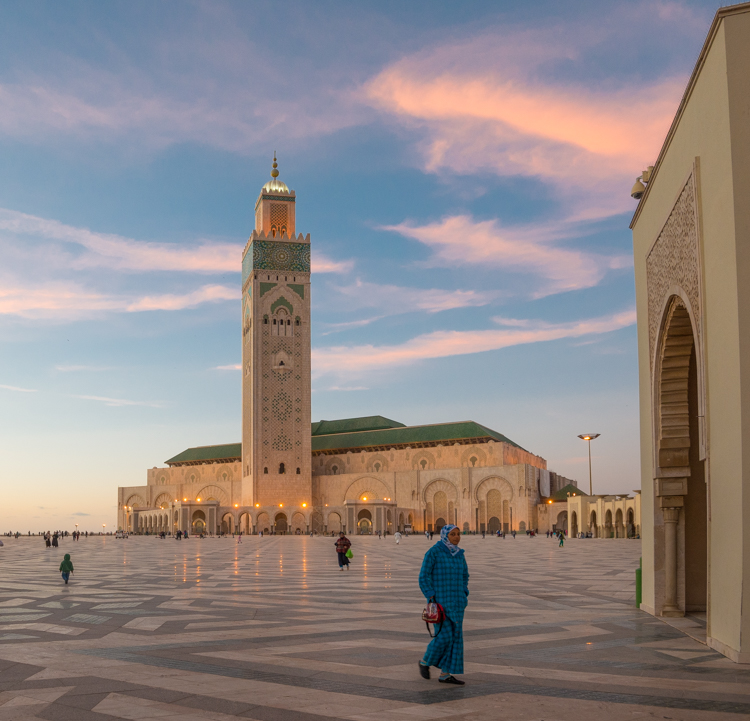
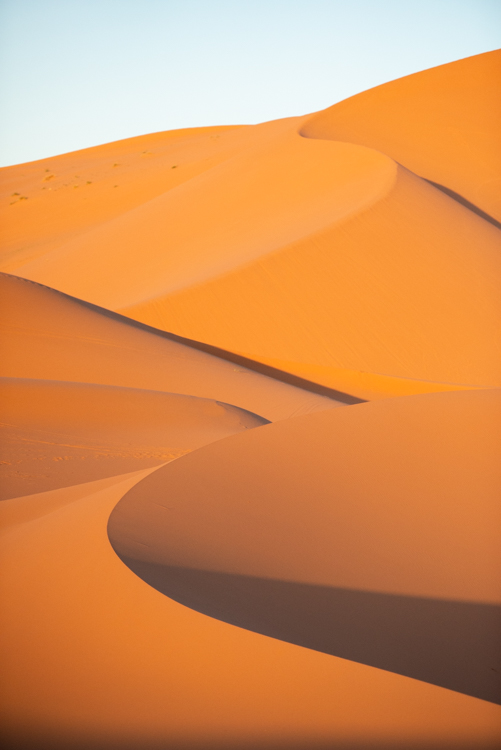
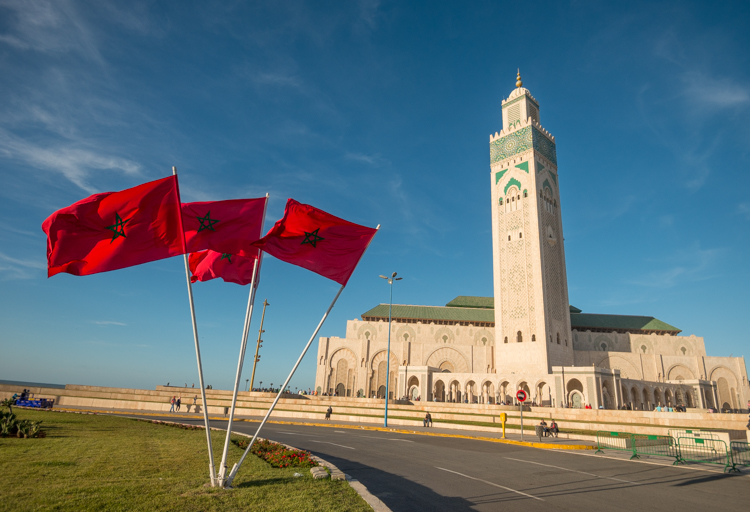
My whole complaint about visiting Morocco is the lack of a feeling of authenticity.  The country’s biggest mosque — The Al Hassan II in Casablanca — was built in 1993.  Up close, it looked more like a Las Vegas mock-up than a real or historic or sacred site.  Morocco sits at the edge of the Sahara Desert, so twice we paid local guides to get us deep into the desert, but both times wound up on well-trodden sand within sight of highways and hotels.  And those pictures below of the camels in the desert?  Of course they’re a set-up.  A guide dons the traditional robe as part of the gig, and knows just where to lead the herd at sunset for the best photo opportunities.  Fun to do and see, but not as real, authentic cultural experience.  It’s just hard to be anything but a touristy tourist in Morocco.

The “snake charmers” I saw all over Marrakech’s market square on my first evening in the country proved to be something of an omen for the rest of the trip.  The snakes are de-fanged, so it’s all rather faked anyway.  They’re not “charming” for the sake charming; they’re there as a tourist draw.  If anyone comes even close to raising a camera in their direction, a couple of those “charmers” would aggressively rush over with their hands out, preventing any photos until and unless you ‘tip’ them.  And the nasal-sounding ‘flute’ playing is terrible.  I just skipped it and went looking for a diet coke.

+    +    +    +    +
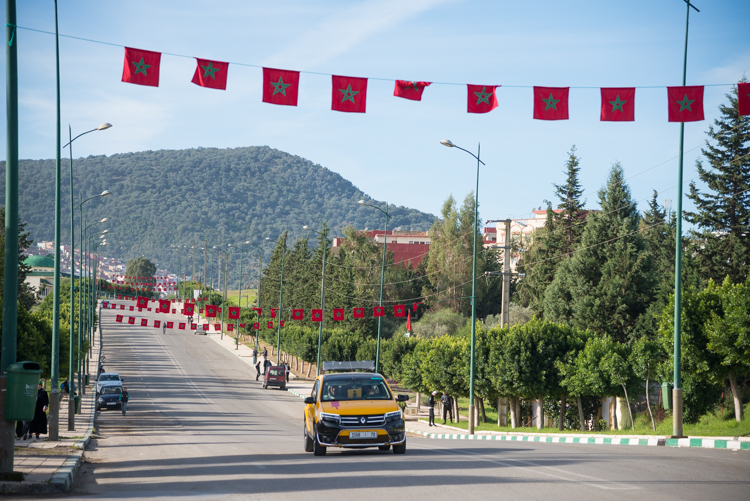
Another odd feature:  Flags.  As we drove through the countryside, there were Moroccan flags everywhere.  Tiny villages would  have 100s of flags installed along the roadside.  Flags were sometimes every 100 yards or so on completely unpopulated stretches of highway.  Imagine the most flag-obsessed town in America on the Fourth of July:  this was pretty much every town, every day.  But these were government-installed displays and they felt very different.  Maybe it was the ugly all-red flags (with a green ‘pentagram’ star), or maybe it was knowing that Morocco is governed by a sometimes heavy-handed king, but this had no feel of authentic patriotism.  It felt more like a monarchical government reminding you that it was everywhere.


Iran: The Islamic Republic

#8 in a series that started here.

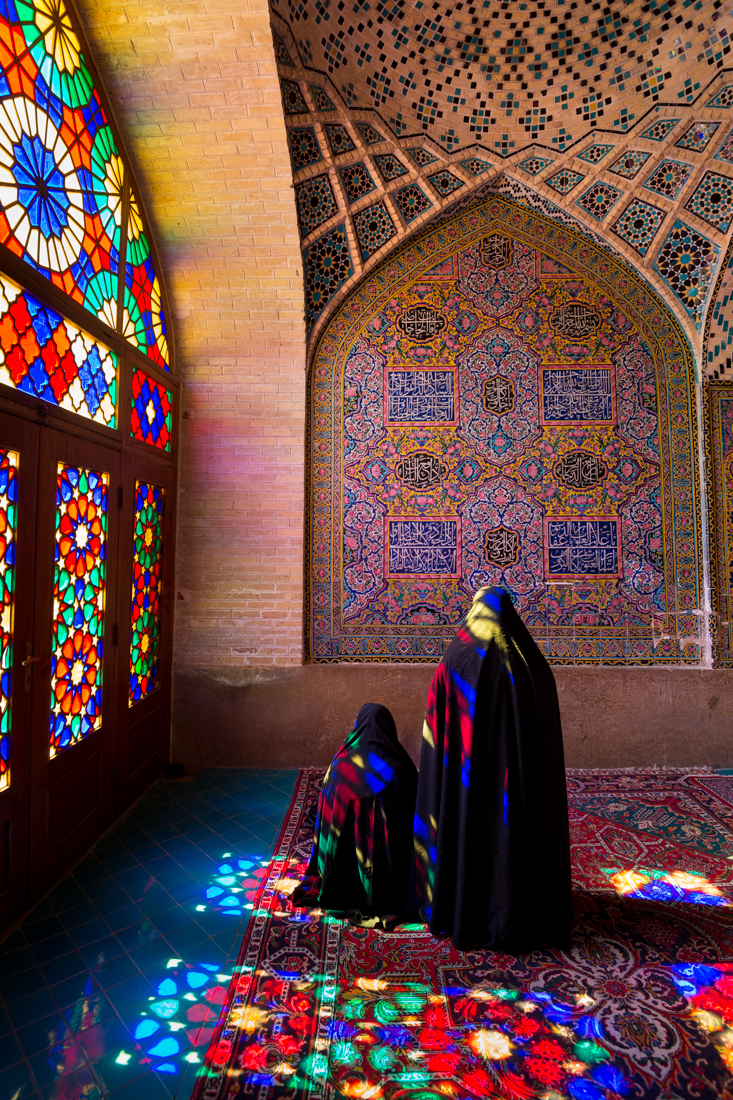
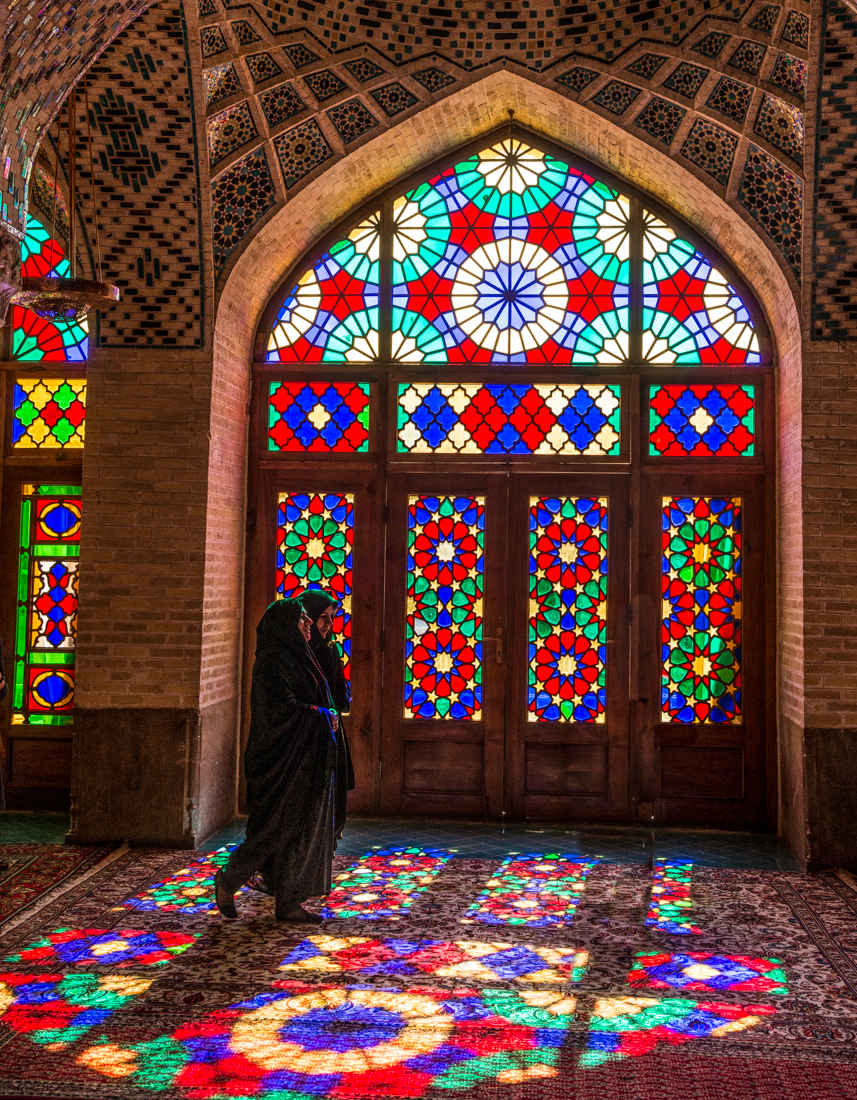
Two ladies show up to pray at the Pink Mosque in Shiraz.


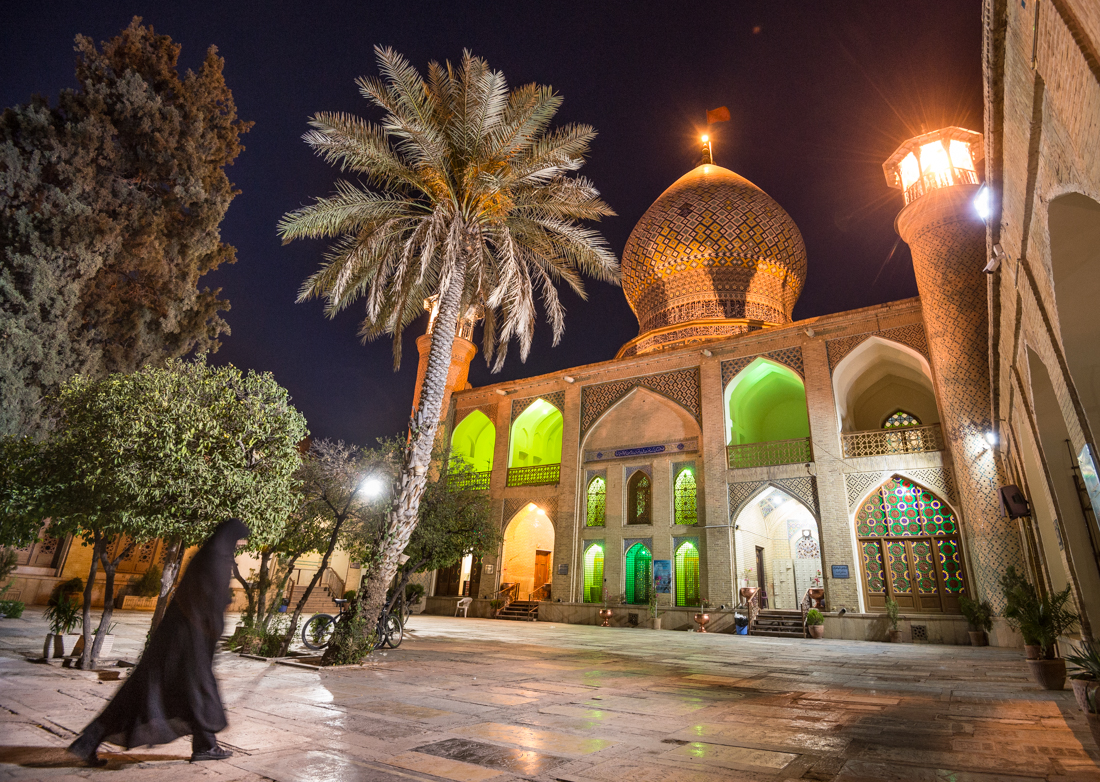
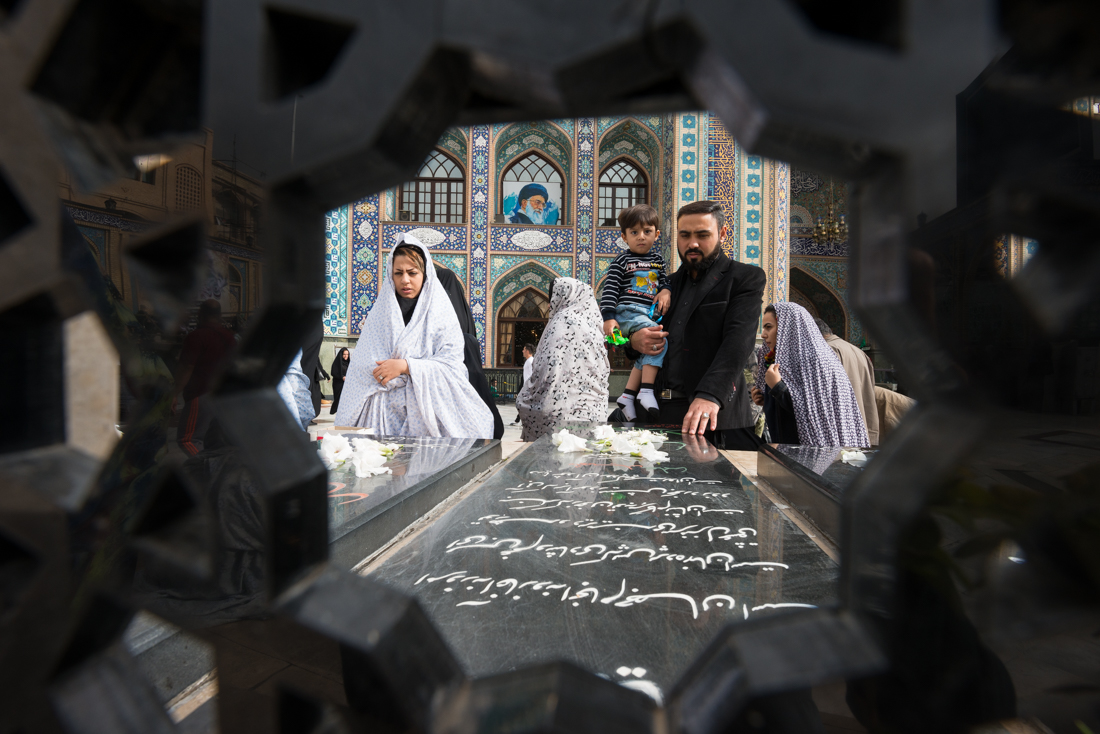
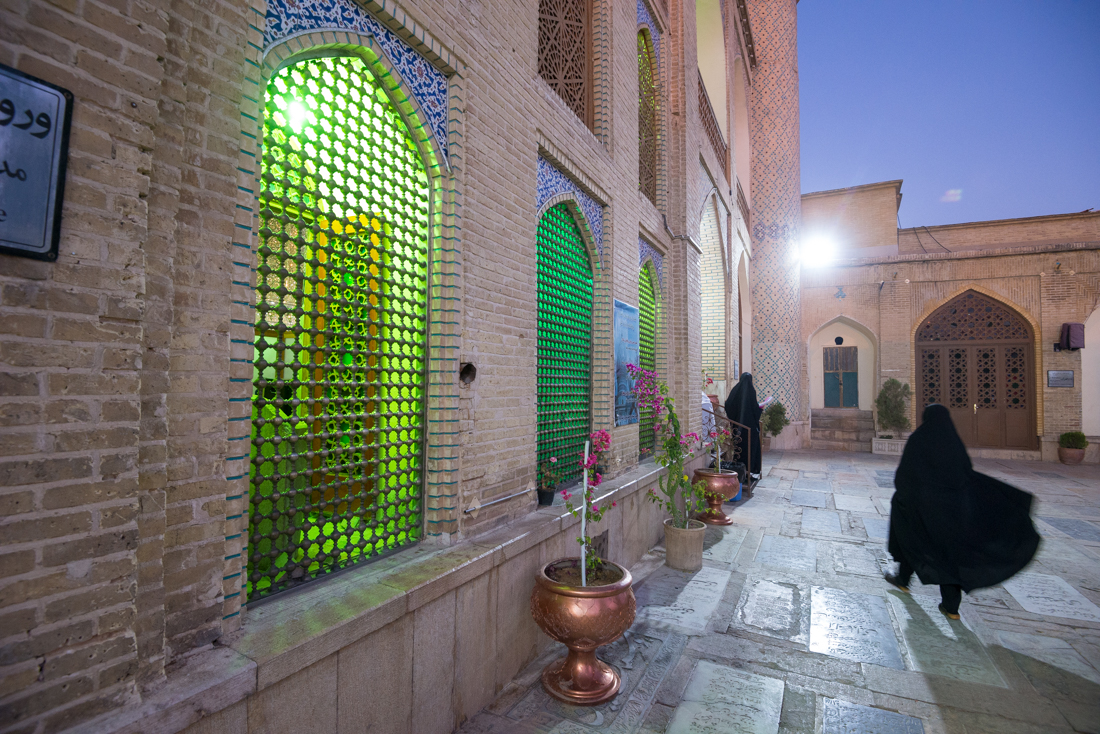
Aramgah-e Ali Ibn Hamzeh Shrine in Shiraz. The interior is a mosaic of tiny mirrors.


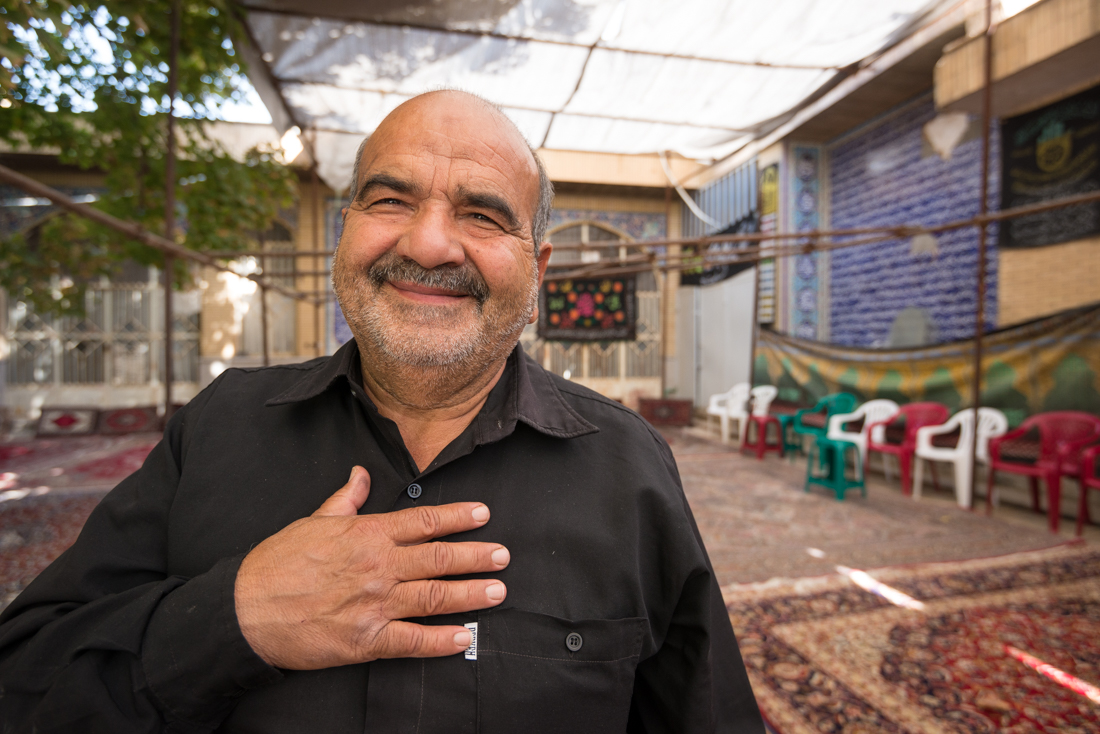
An informal mosque. When we peeked in the door during a service, someone rushed out to encourage us to come inside. Men and women were separated by a drape, and I could only go on the men’s side. There about 150 women, and about 8 men, including this very friendly guy. Of course, they brought out tea and cookies.


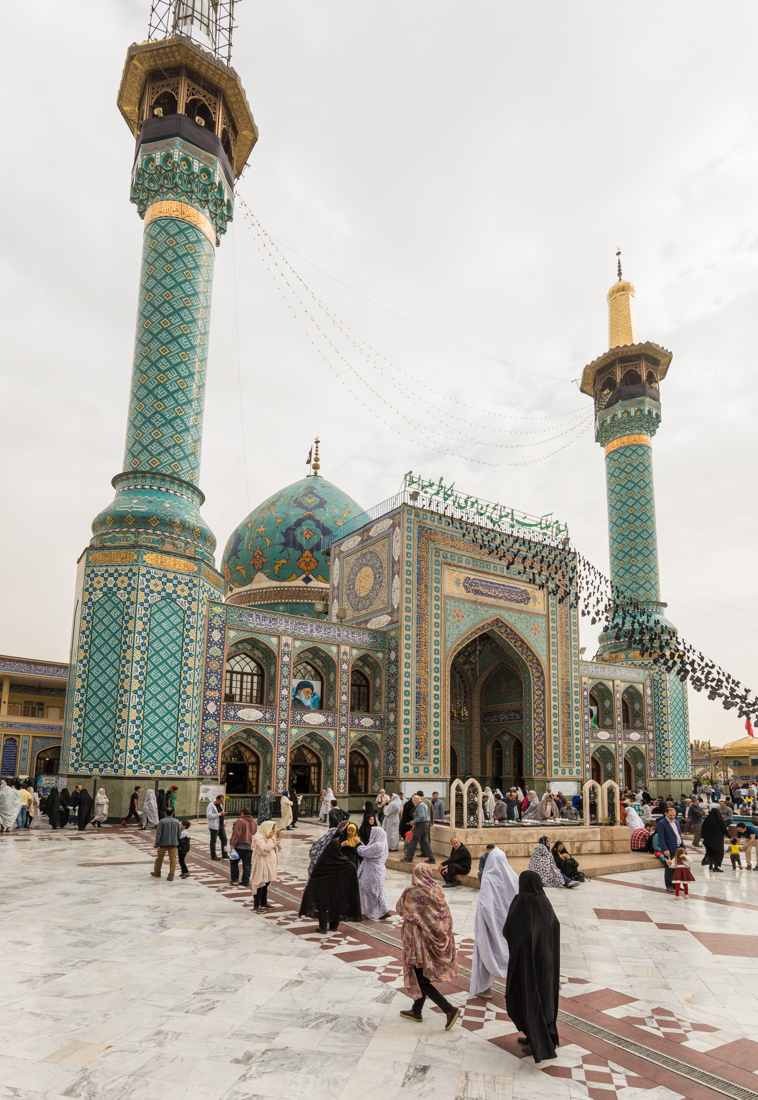
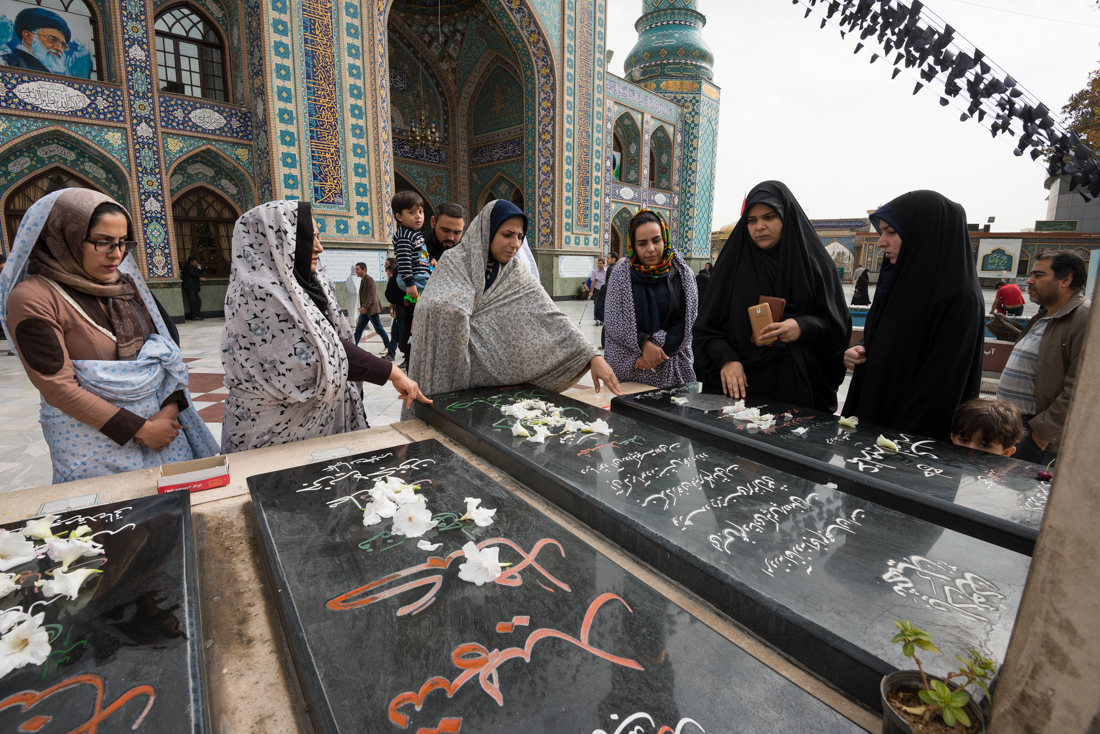
Imam Zadeh Saleh Shrine and Mosque in Tehran. Iranian Muslims spend a lot of time paying tribute to martyrs.


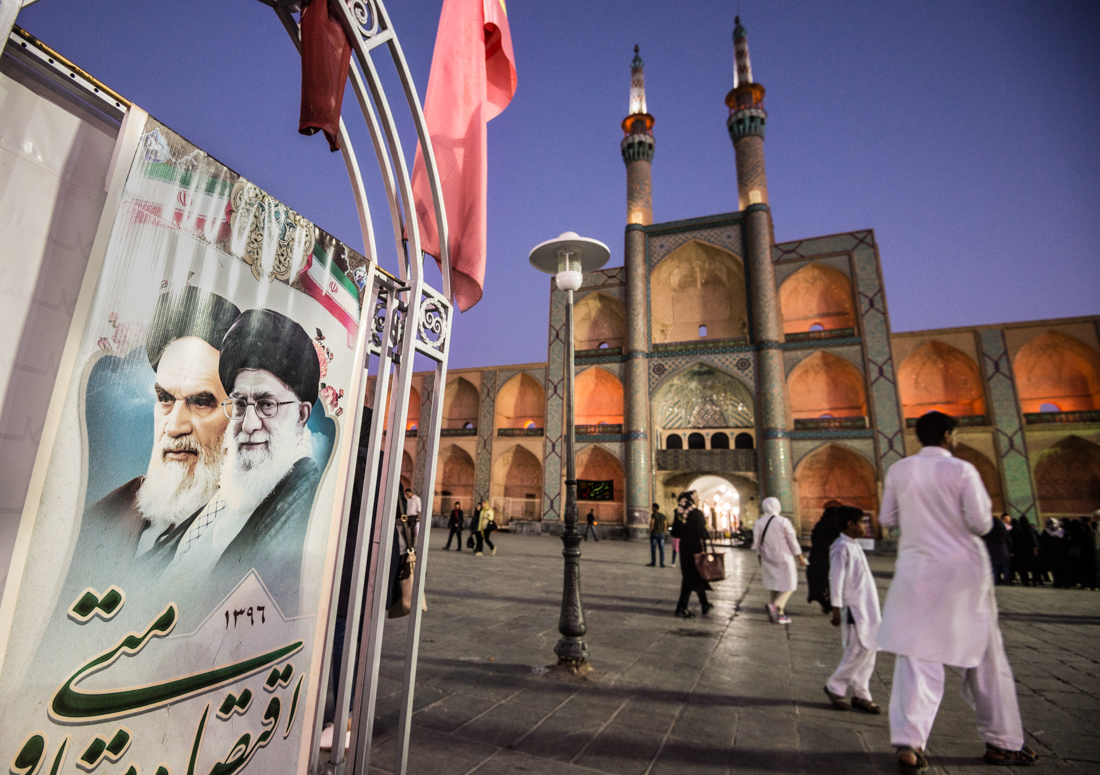
Images of Iran’s original Supreme Leader, the “Ayatollah” Ruhollah Khomeini, and its current Supreme Leader Ali Khamenei, are everywhere.
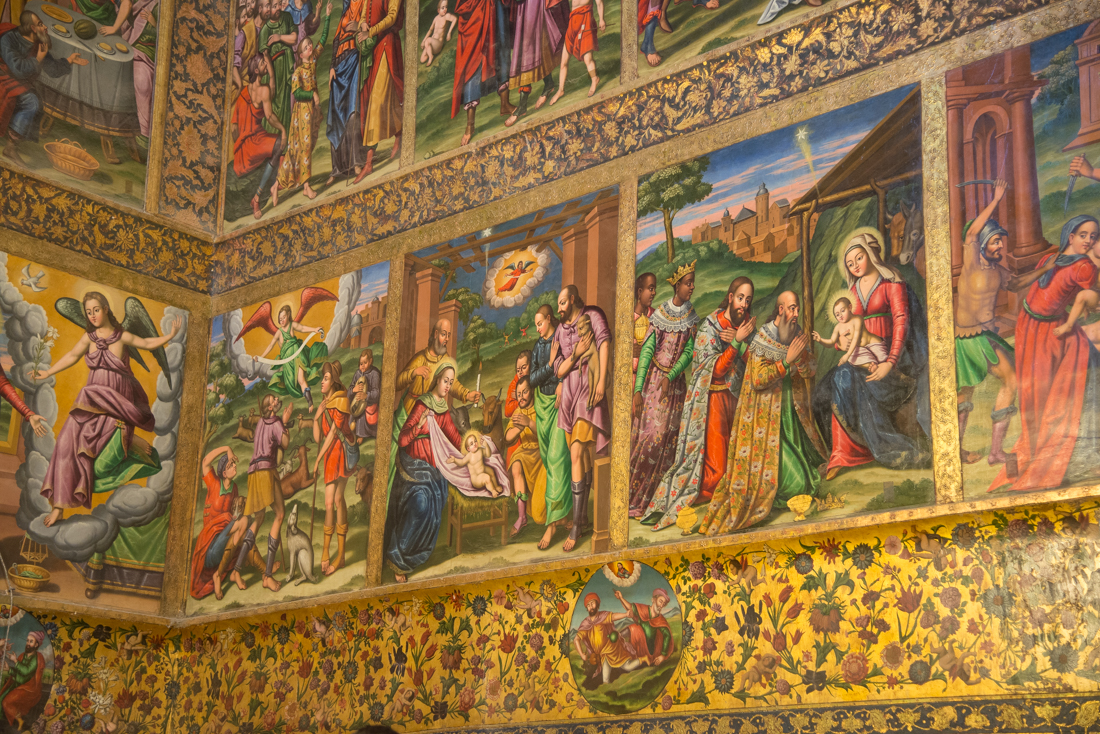
One of the first sights I visited in Iran was a perfectly preserved and functioning 17th Century Armenian Christian church, the Holy Savior Cathedral – complete with crosses and elaborate paintings of Christian crucifixion and nativity. During the trip, I saw reproductions of The Last Supper (DaVinci’s painting of Jesus and his twelve disciples) in multiple public places. I also saw large monuments and relics from Zoroastrian groups (an ancient monotheistic religion) that were prominently preserved and protected. My assumptions about how other religions fared in the “Islamic Republic of Iran” were wrong — or at least incomplete.

Unlike the radical Sunni ISIS movement, Iran’s leadership has not generally destroyed monuments or culture of other religious groups.   The ancient Persian-Iranian imperial hero Cyrus the Great was known for his tolerance of the diverse practices of the people he’d conquered, and Iranians seems to take some pride in that example. The Republic’s Constitution sets aside five Parliament seats specifically for the country’s minority religions (Armenian and Assyrian Christians, Zoroastrians, and Jews), whose small numbers would otherwise leave them wholly unrepresented.  

Make no mistake: Non-Muslims make up maybe 2 percent of the population. And the flip-side of those 5 reserved parliament seats is that the other 285 seats are effectively reserved for Muslims. Other minority religions – notably the Bahai and Sufi — are not recognized and thus effectively prohibited. In several ways, followers of the minority religions are treated as second-class citizens – affecting, for example, their ability to hold most public offices or inherit property. The recognized Christians in Iran are almost exclusively members of distinct ethnic groups who conduct their services in their own languages (not in Farsi), and thus they pose little risk of converting Iranian Muslims to their faiths. (According to the U.S. State Department, such conversion is still theoretically punishable by death.)

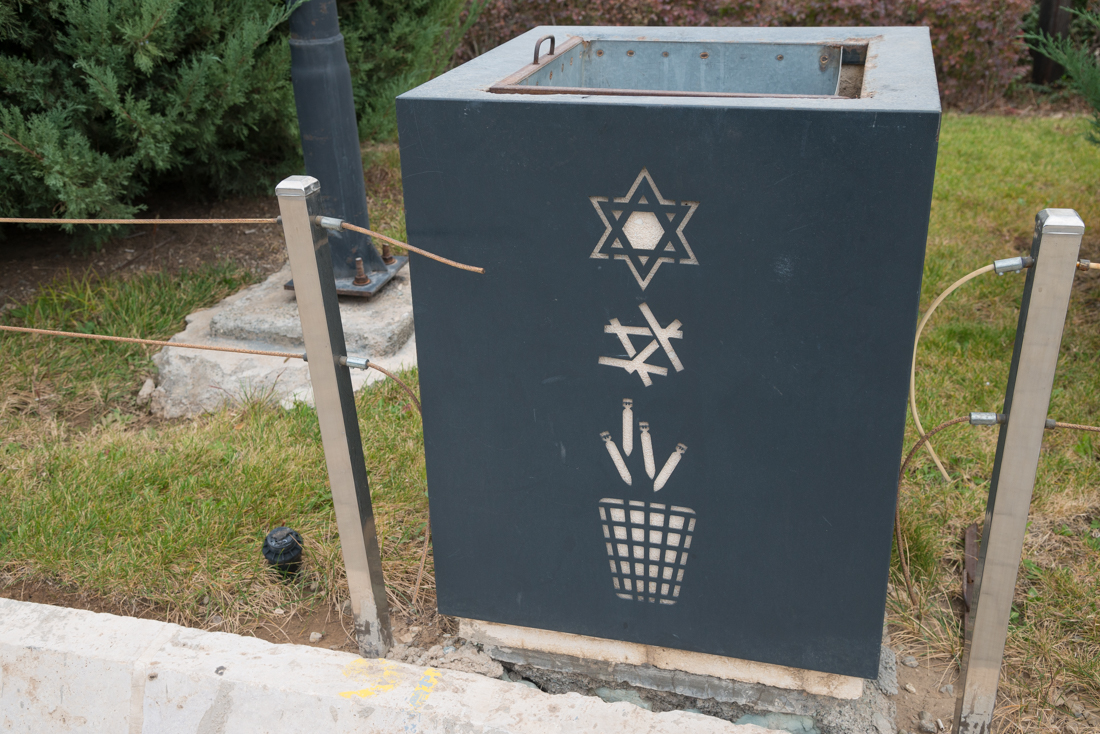
Iranian hostility toward Israel can be strong. Israelis are not allowed into Iran, and we (Americans) were told that if our passports even included a stamp from a prior trip to Israel, we would not be allowed into the country.  Surprisingly, at the huge National Museum of the Islamic Revolution and Holy Defense in Tehran, there was an exhibit – complete with respectful images of Jesus and Mary and the Jewish Star of David — giving tribute to members of the “minority religions” and their contributions in the Iran/Iraq war.   But just outside, the Star of David (as a symbol of Israel and/or Judaism) was part of the conspicuous label for the trash cans.

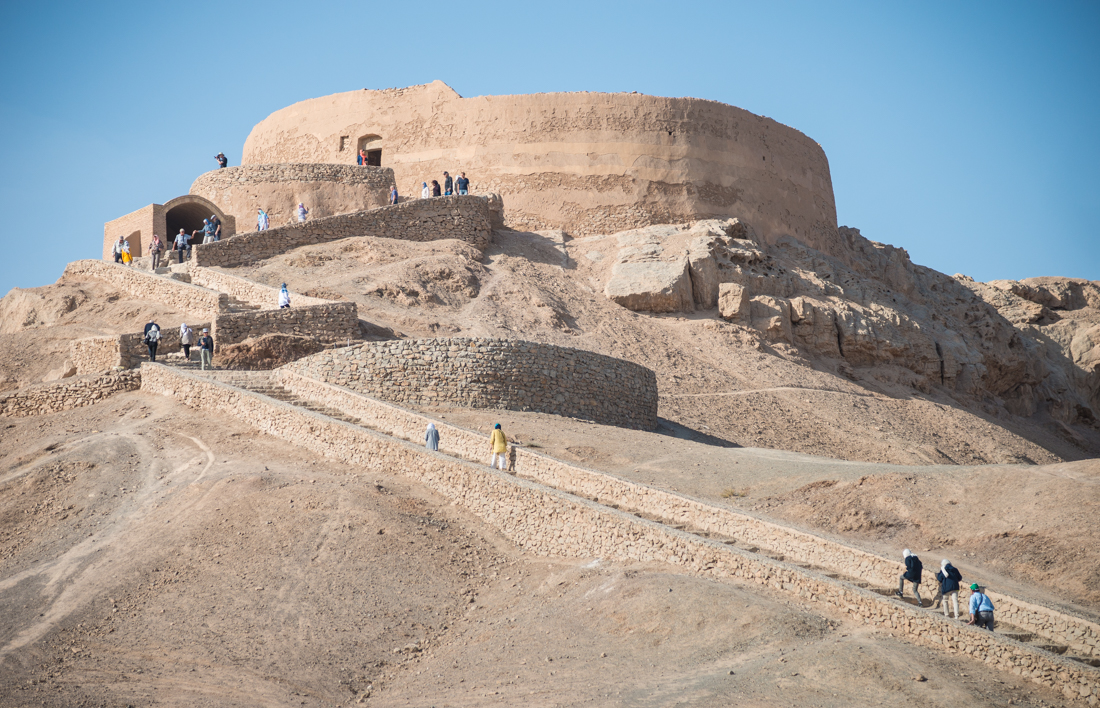
This Zoroastrian structure near Isfahan looks ancient, but it’s only a few hundred years old. It’s for ceremonial cremations — sort of.  Zoroastrianism is one of the recognized minority religions in Iran.

Imam Zadeh Saleh Shrine and Mosque in Tehran

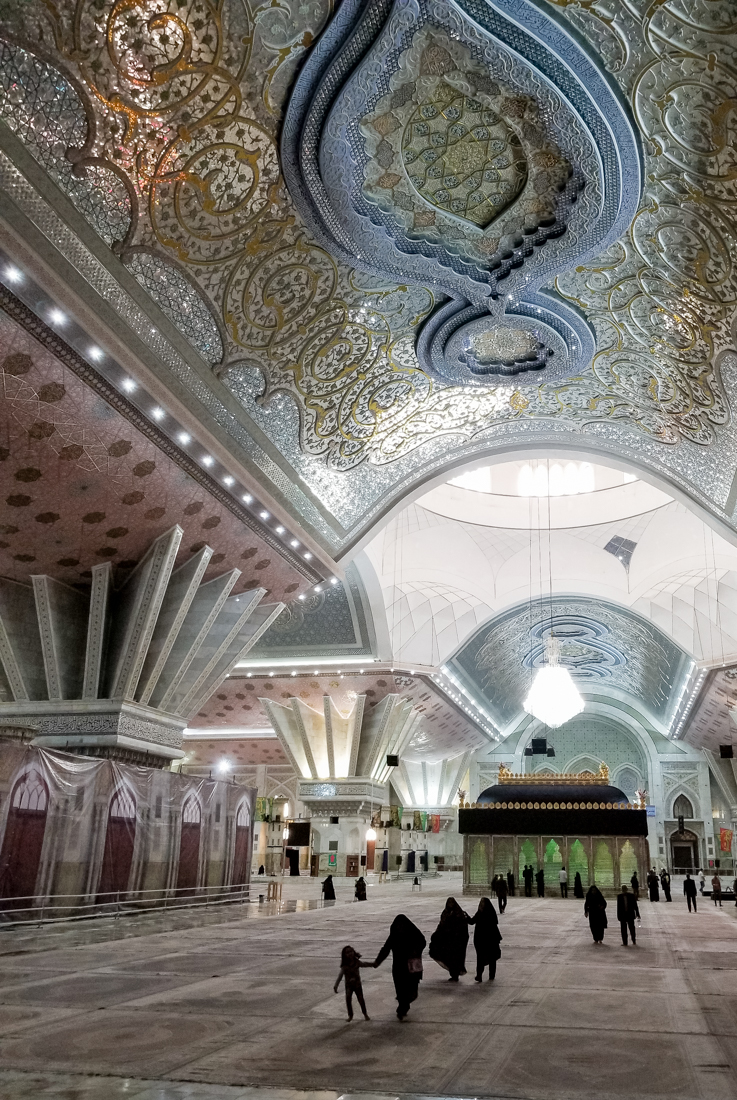
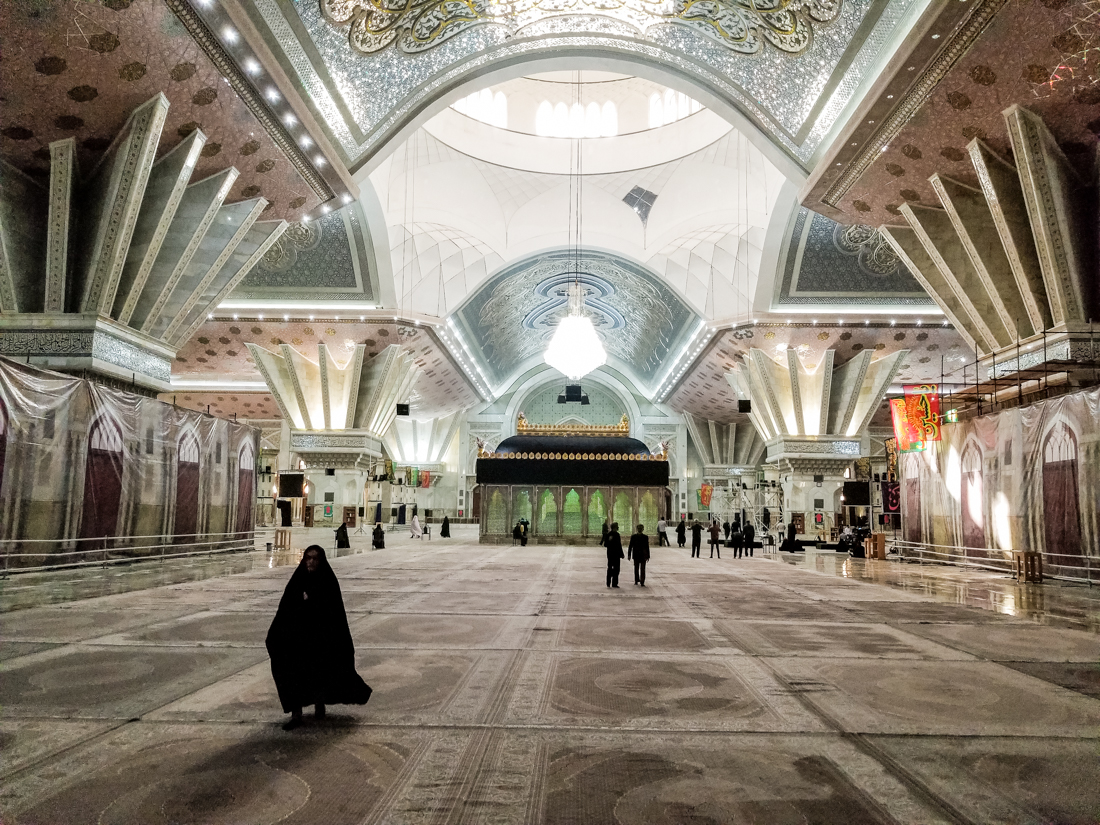
The shrine to the Ayatollah Khomeini, on the south end of Tehran. He’s been dead nearly 30 years, but it’s about half finished. It looks like a combination of 1/4 Vatican; 1/4 Galleria Shopping Mall; 1/4 Trump Taj Mahal; and 1/4 real Taj Mahal.

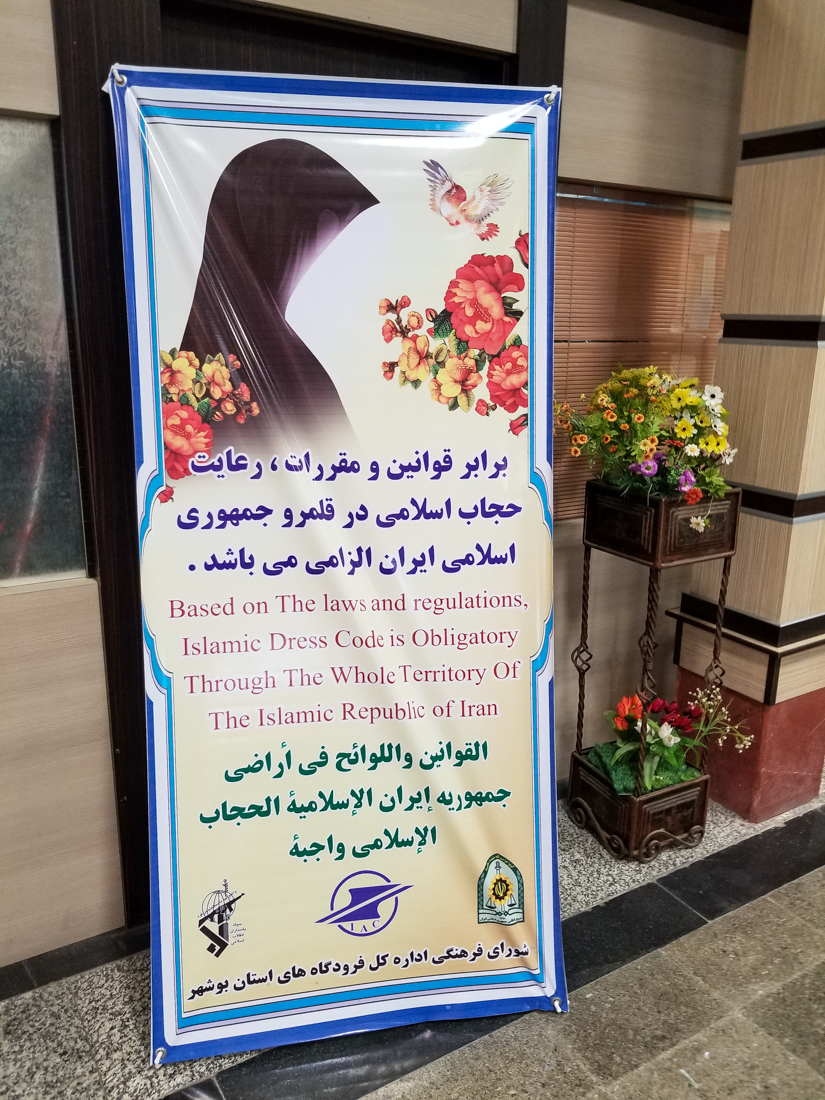
A notice in the airports warns women that the Islamic dress code is mandatory.

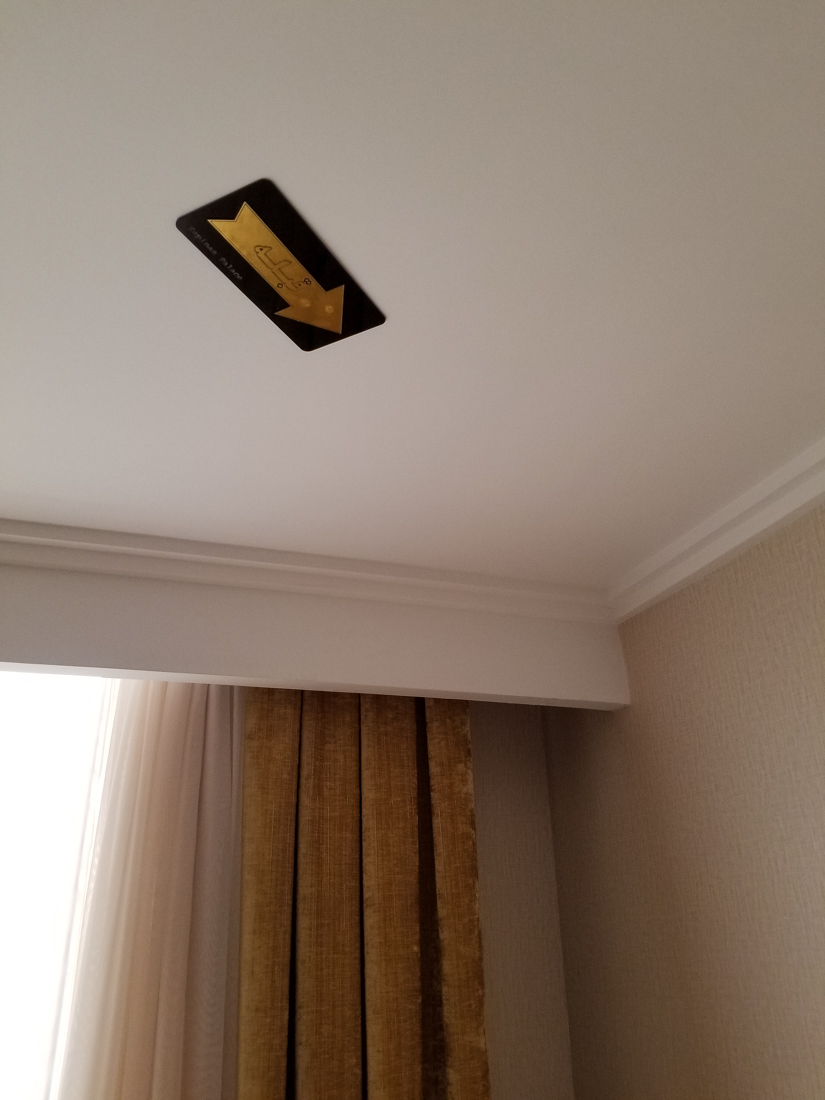
Many hotel rooms had arrows like this. They point toward Mecca so Muslims know which direction to face when saying their prayers.

A version of Leonardo da Vinci’s “Last Supper” on the wall of a diner-style restaurant in Shiraz.  [Muslims believe that Jesus existed and that he was a great prophet, perhaps second only to Muhammad. Though they don’t believe in a crucifixion and resurrection in exactly the same way Christians do, they do believe that Jesus ascended to heaven and that “it was made to appear” to the Romans that Jesus was being killed by crucifixion.  The Quran makes reference to an important meal that Jesus had with his disciples, though it’s not clear that the timing of that meal was necessarily on the eve of his death (as Christians believe about the “Last Supper”).  So Muslims might quibble about whether Leonardo’s painting was necessarily the “Last” supper, but they’d otherwise believe and agree with its general content.  That doesn’t fully explain why it’s the sole religious image on this diner wall in Shiraz, but remember that images of Muhammad are generally prohibited.] 

Elaborate paintings of the Christian Nativity in the 400-year-old Armenian Holy Savior Cathedral in Isfahan.

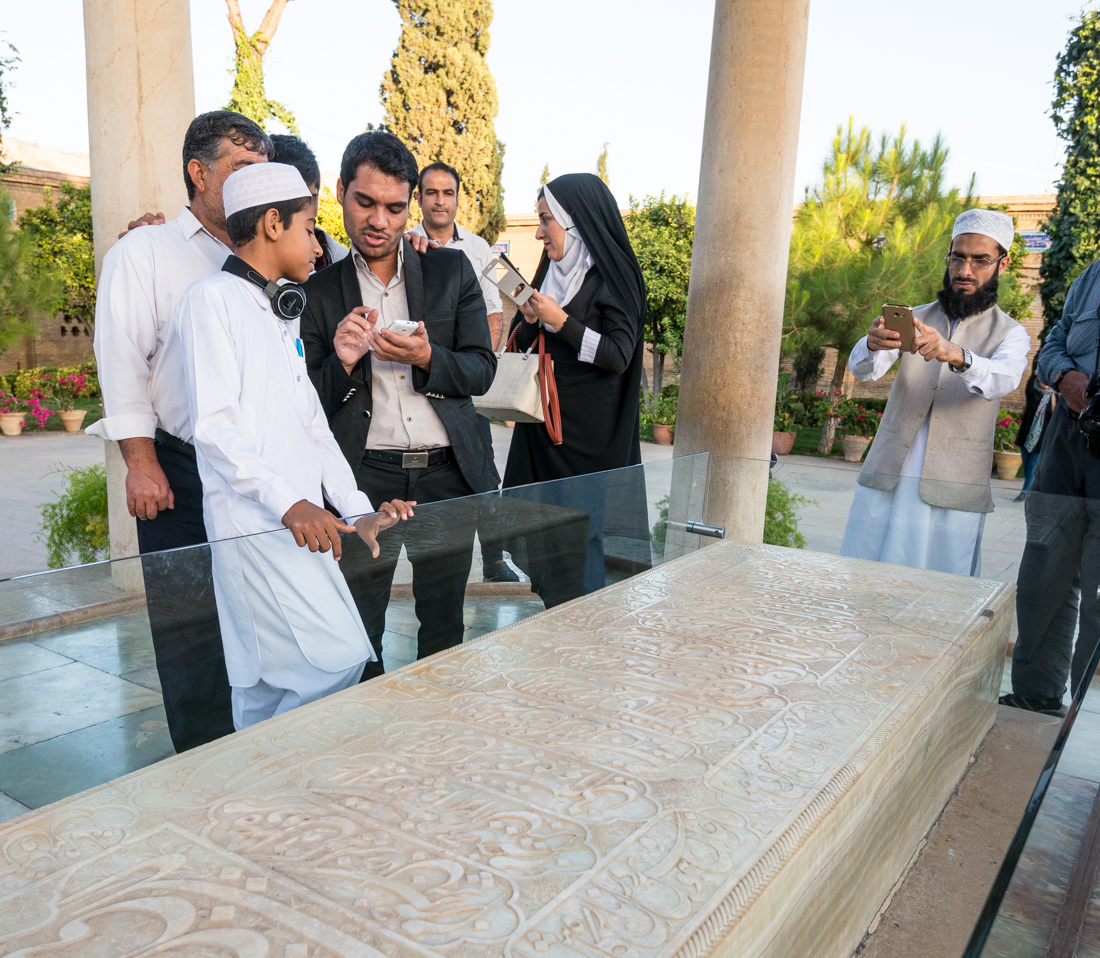
Smartphones at the tomb of the 14th Century Shirazi poet Hafez.

The Khomeini Shrine


These graphics were on each of the dozens of trash cans outside the Museum of the Islamic Revolution and Holy Defense in Tehran. Somehow the Jewish/Israeli Star of David deconstructs into bombs, which then drop into a trash can. I wasn’t able to get a real explanation.


Iran: Deserts, Shepherds, and the Power of a Swift Smack to the Shin


If you want to see the sights of Iran, you’ll spend a lot of time traveling through the desert.  But sometimes, the desert itself is the attraction — both for striking scenery and interesting folks.   I spent one night in a small town in the scrubby deserts, one in a mountain village, another at the edge of a vast sand-dune-and-rock-mesa desert, and another in a hillside tent with with a few dozen sheep and goats penned up 15 feet away.


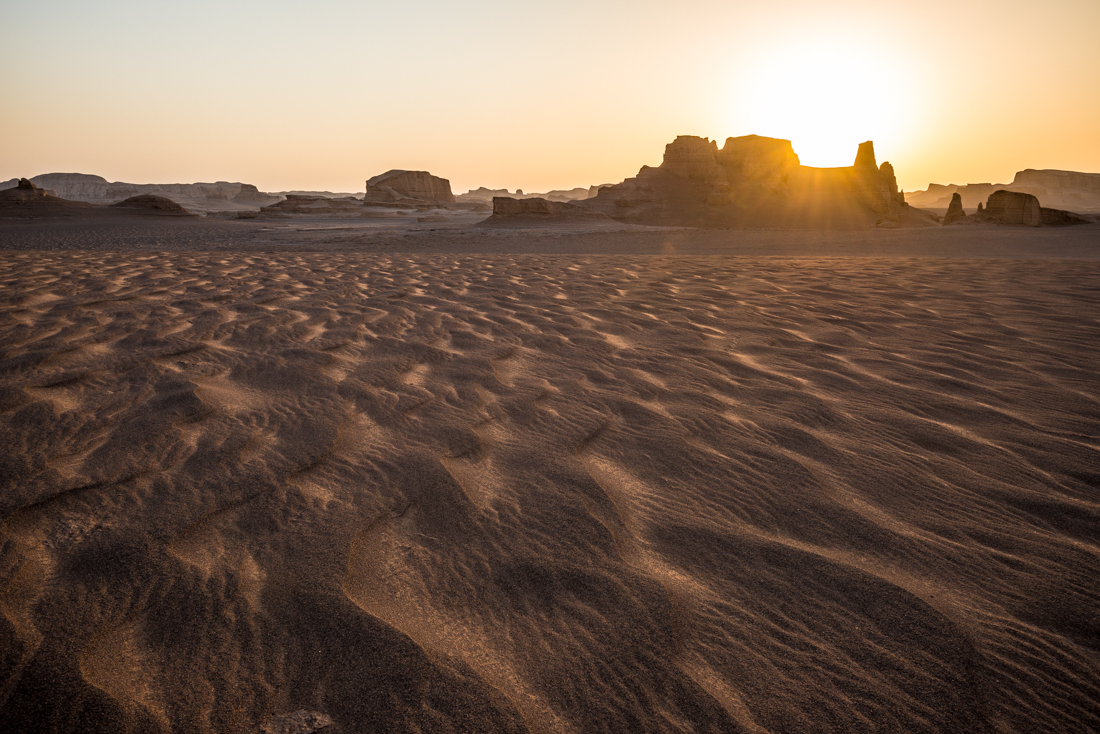
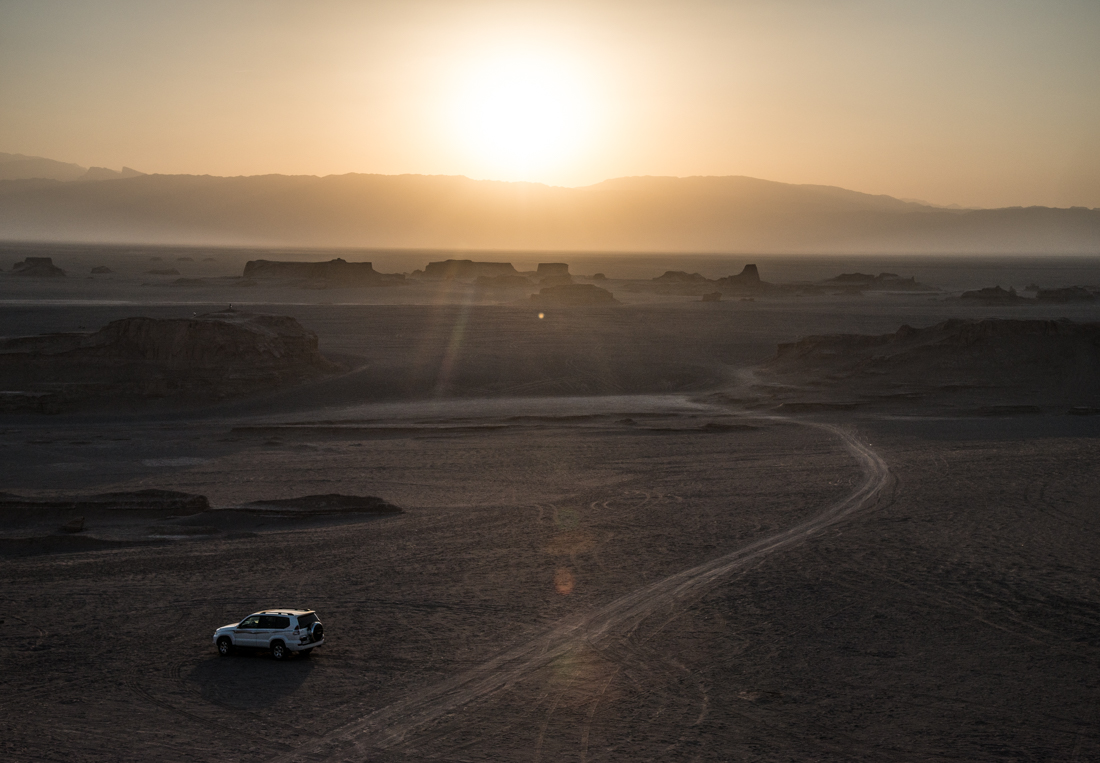
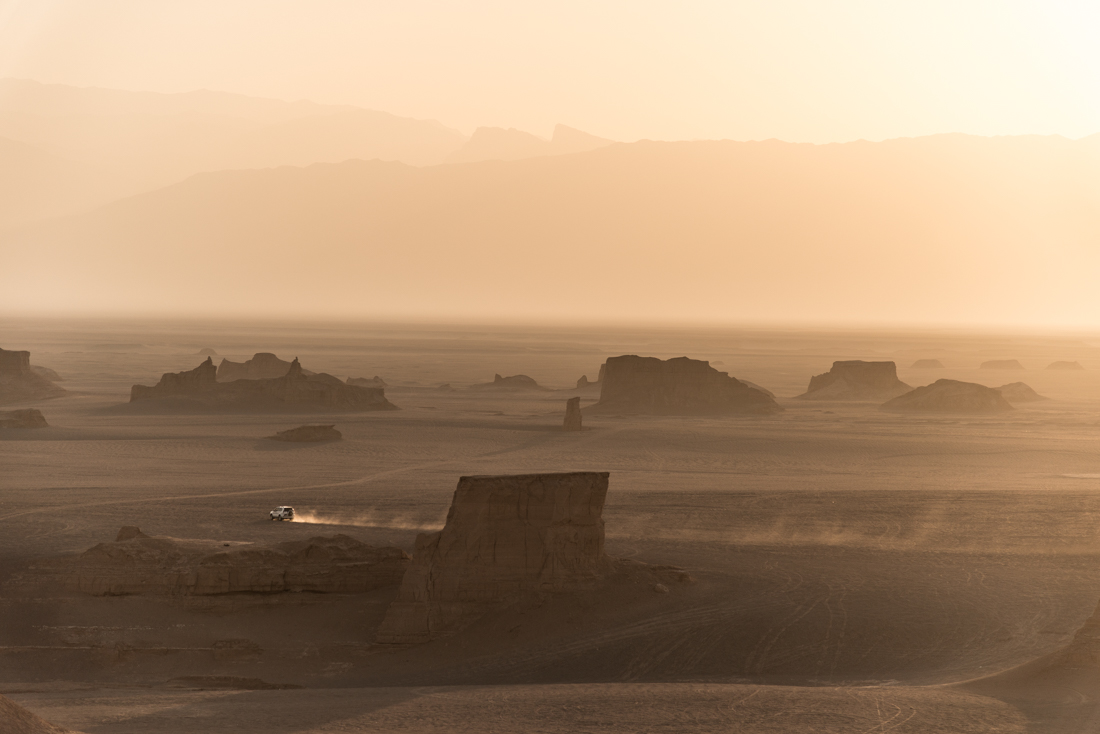
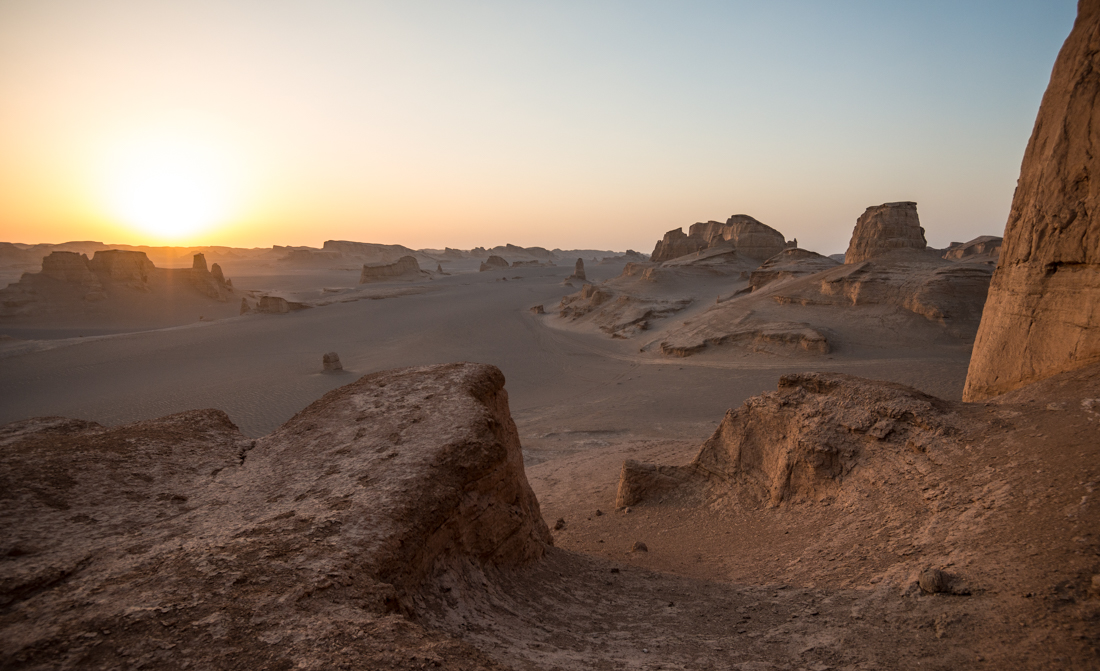
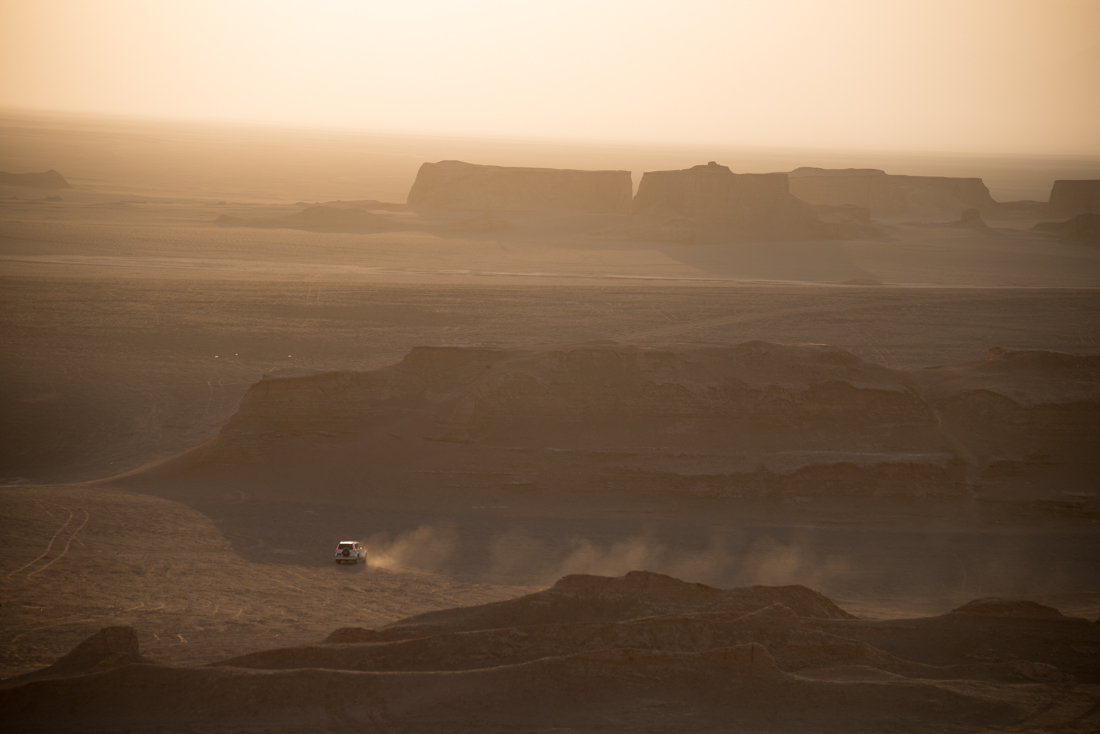
Sunrise in the Lut Desert. Its precise location is “a long damn ways from the major cities of Iran.” It goes on like this for a hundred miles or more. The things you see in the background are natural (not man-made), and most of them are less than 100 high and easy to climb.  In this area near the highway, it was tough to keep the dune buggy tracks out of the picture.
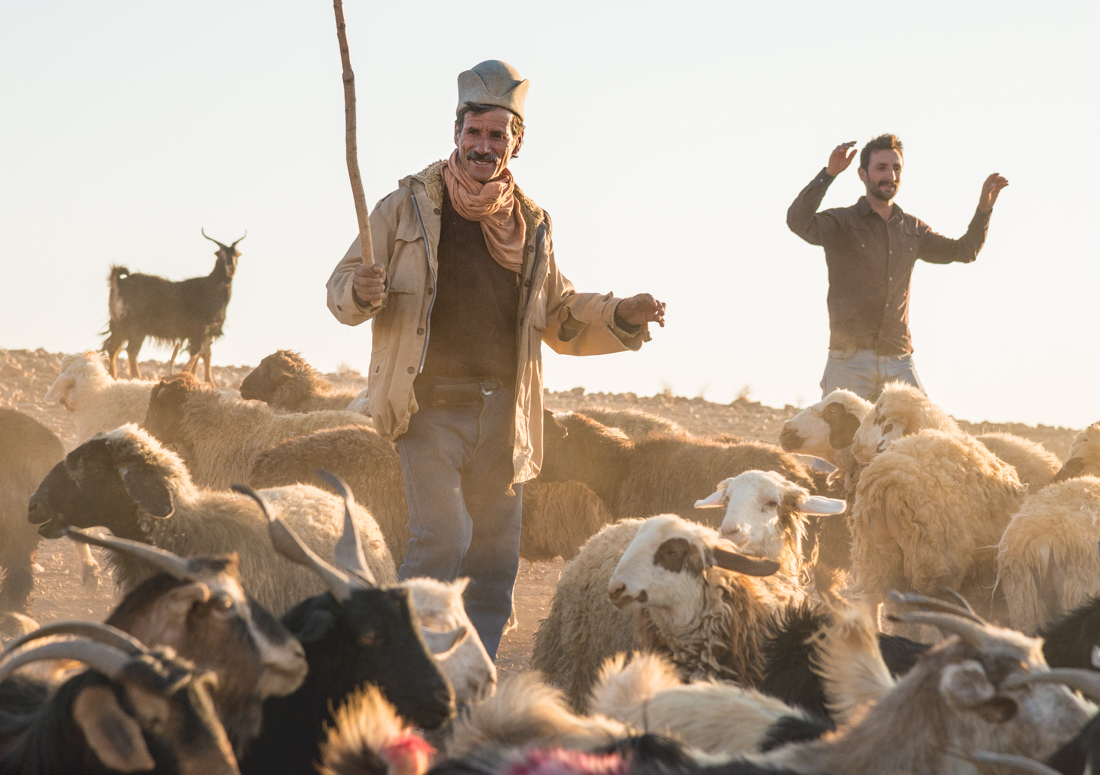
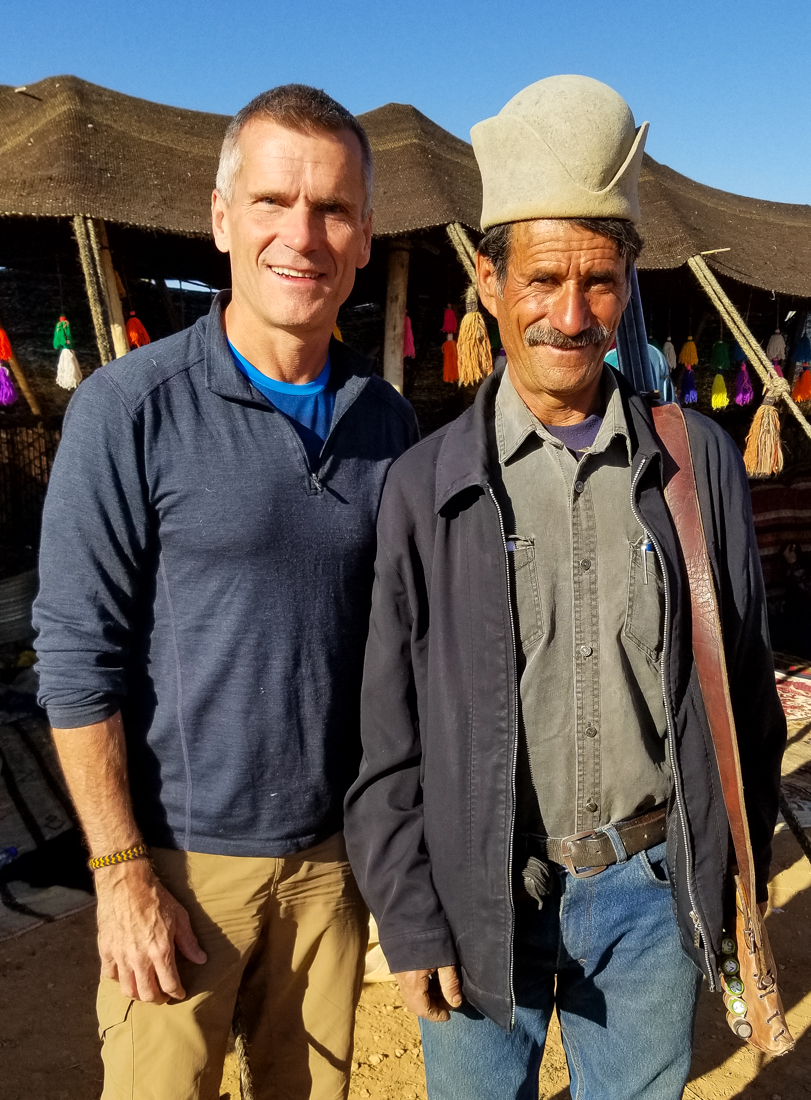
“Modern” nomadic shepherd/goatherd Ali Mardon-loo, left, with his son, Bahram.
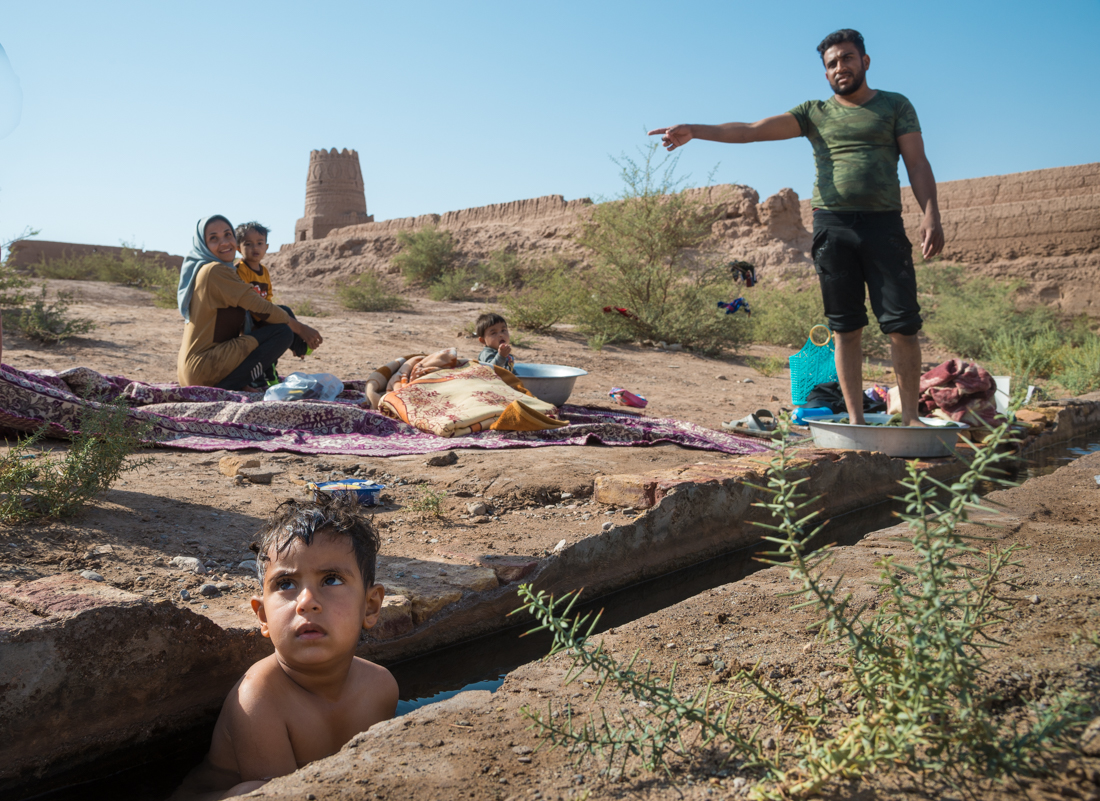
Kids bathe while dad stomps the laundry. A spring-fed canal through an old caravansarai in Shafiabad, near the Lut Desert.

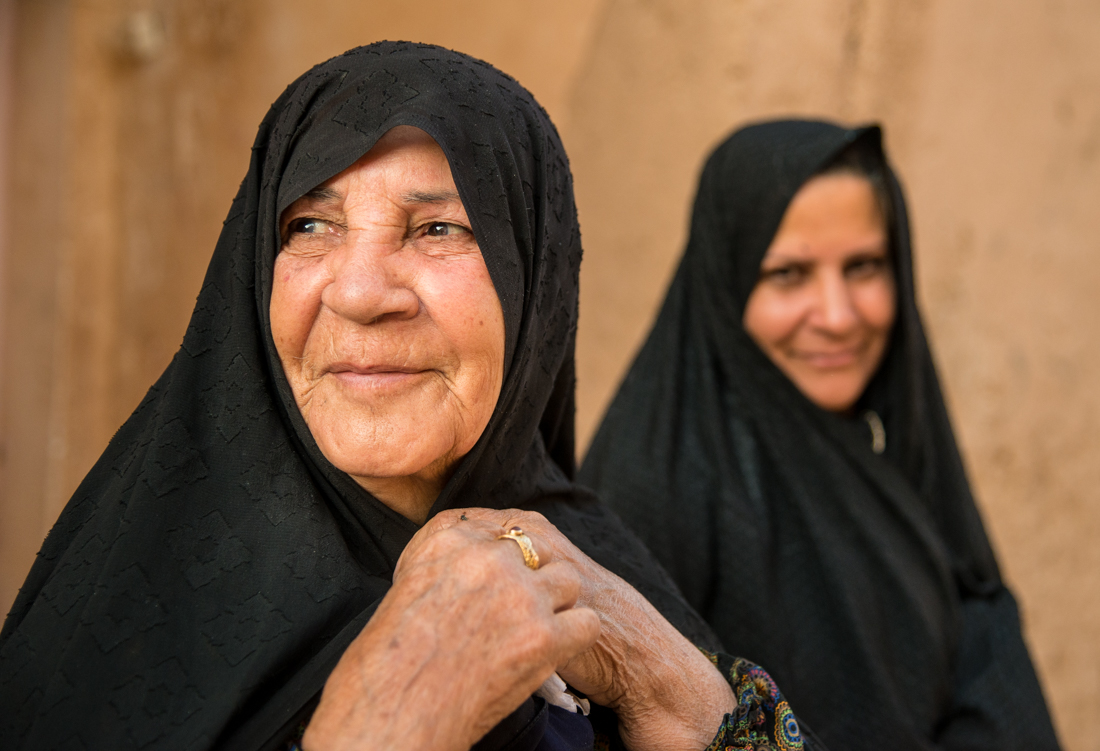
Mother and daughter, in the small town of Chupanan.

Vehicle tracks went everywhere in this part of the Lut Desert

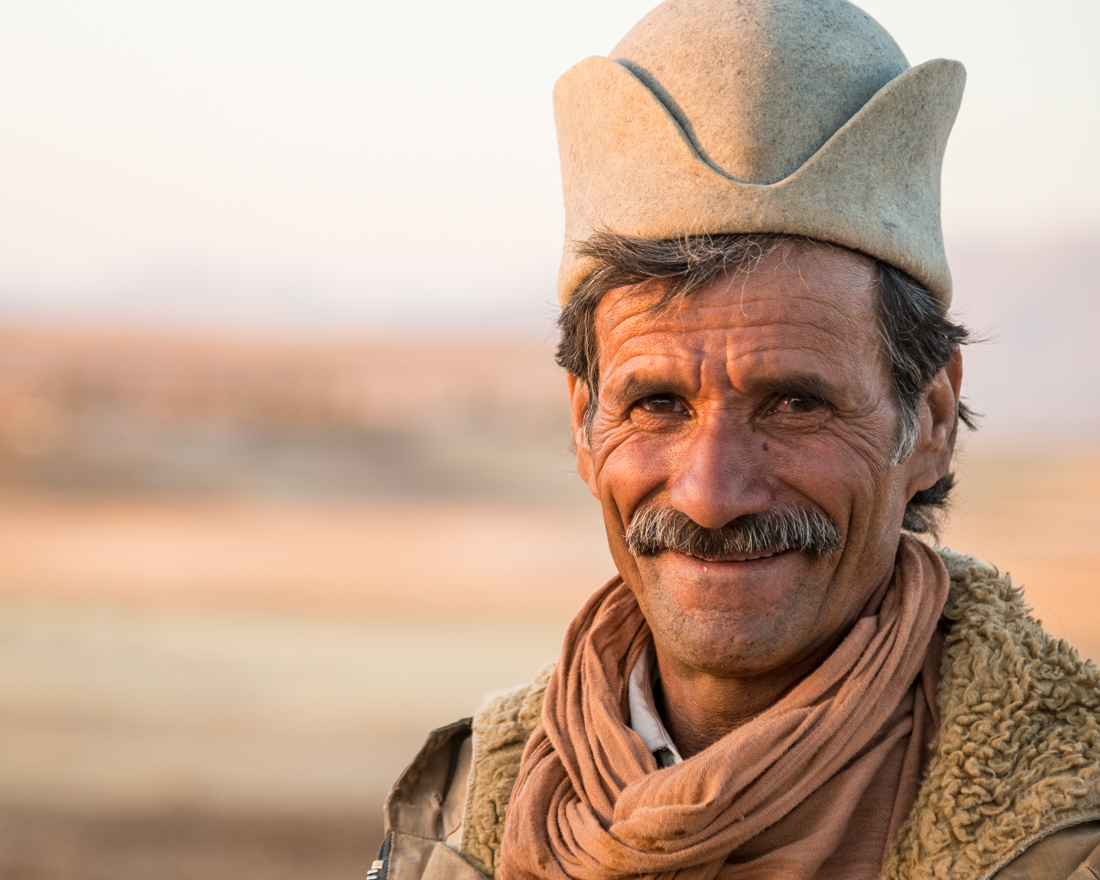
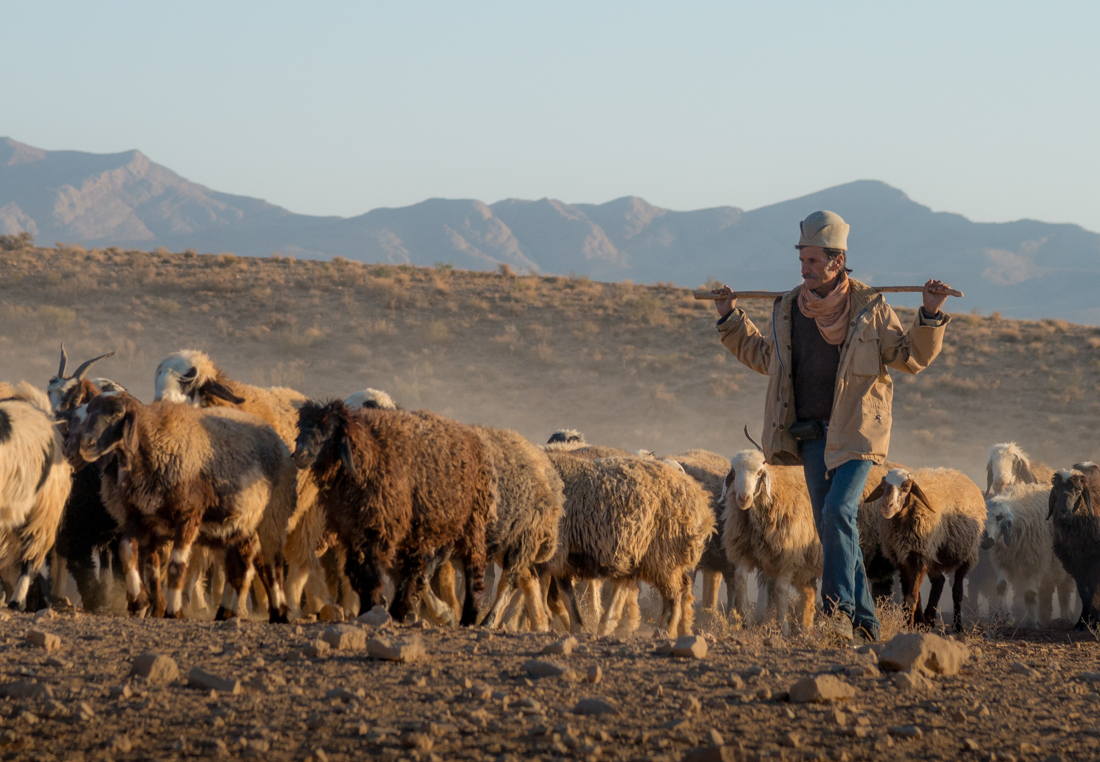
Ali Mardan-loo, my nomadic sparring partner turned friend-for-life. I get a B-minus for this portrait: his herd of sheep and goats are on the hillside behind him, but I didn’t have my lens set correctly (this is f4.5 at 120mm) so the distant flock is too blurry to be recognized. I fixed it in other versions of this picture, but Ali’s facial expression wasn’t as good.

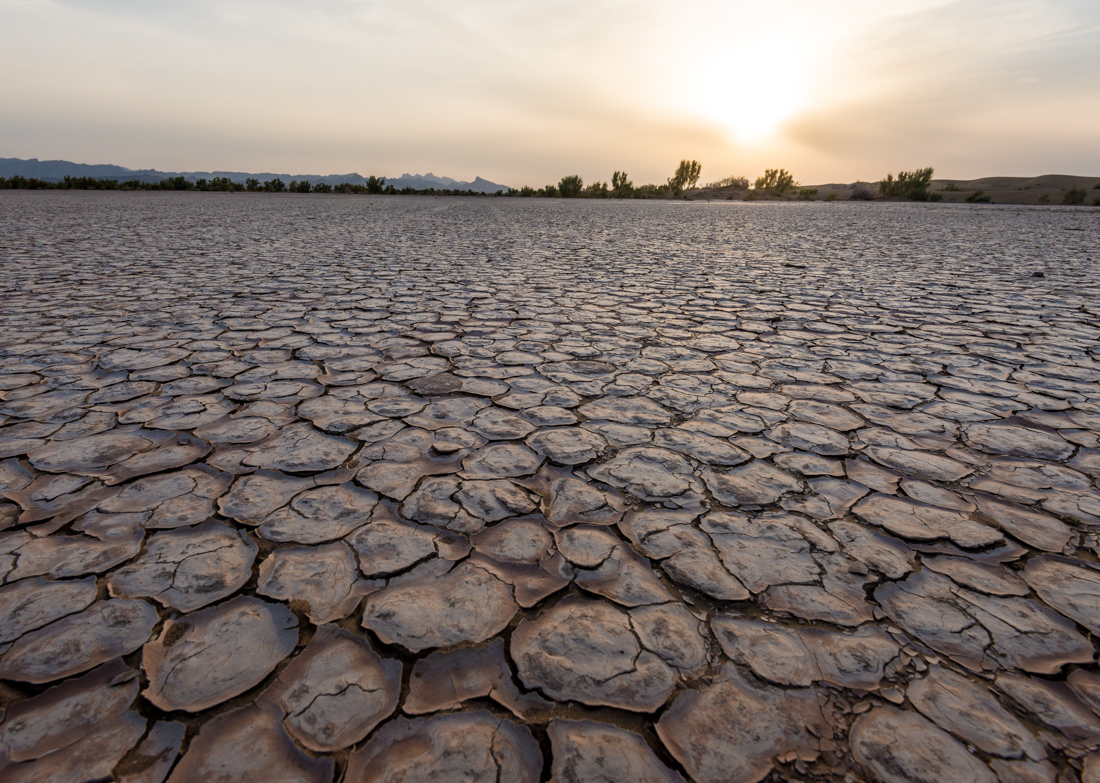
A dry lakebed near Chupanan.


A high point of my trip through the desert was a stay with a family of traditional nomadic shepherds.  I guess they’re “modern traditional” shepherds, because they actually owned a small car, but their primary lifestyle was one of sheep and goats and tents and meals cooked on campfires as they moved their herds cross country for seasonal grazing.  At night, nine of us slept side-by-side-by-side in an open-sided tent about 30 feet by 10 feet. 

The patriarch of the group was Ali Mardon-loo.  Ali was about my age; his two sons were helping out with the herds and with his American guests while his wife cooked a mountain of 18-inch round flatbreads over an outdoor campfire.  Ali spoke Turkic — not Farsi as most Iranians speak, and certainly no English.  One of his sons could translate from Turkic to Farsi, and our guide could translate Farsi to English.  His other son — who’d been sent off to boarding school at age twelve — spoke all three languages and could translate directly.

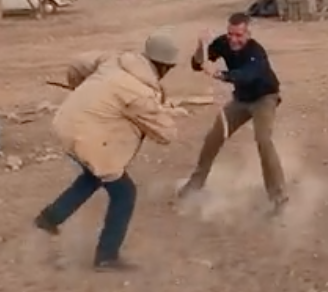
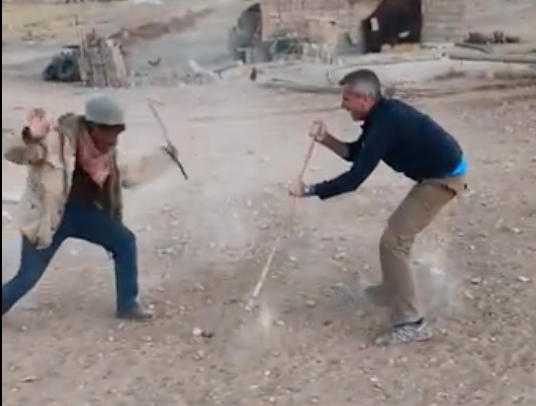
I saw Ali and another herder briefly playing a game using their shepherd staffs  — a lot like our sport of fencing, except that it’s all below the waist and the goal is just to whack your opponent in the shins.  He said something to his youngest, who looked at me and said “He’s looking for a challenger if you will play.”  Uh-oh.  I figured I was about to get whacked, but I had one shred of hope:  I took a semester of fencing when I was in college and it seemed like maybe some of the basic principles would translate to help me survive a round of Turkic Nomad stick fighting.

 
 For better or worse, within a minute or so, I delivered a smack to Ali’s shin.  I guess I’d “won,” but given my inexperience, I hadn’t gauged well how hard or fast to go.  It made an awkwardly loud noise.  I was mortified that I’d just whacked and maybe injured our gracious host, but after Ali hopped around and recovered for a minute, he smiled ear to ear and shook my hand.  For the rest of the evening, we were buddies (notwithstanding the zero overlap in our language capabilities).  At dinner, he sat across from me and declared to everyone that we were best friends.  He kept putting more and more food on my plate.  He gave me a bracelet his wife had hand made, and ceremoniously announced that he was giving me a lamb (apparently this is a high honor, but Happily a only symbolic one; I never had to take custody of any ovine.)  He dubbed me an honorary member of the Mardon-loo clan, much to the amusement — and exclusion — of his other five American visitors.  Never again will I underestimate the bonding potential of a good whack in the shins.  

Me and Ali. He’s posing with his rifle — a prized possession usually prohibited in Iran. As a shepherd, he’s allowed one gun to fend off wolves. I’m wearing the bracelet his wife made. Everyone kept suggesting that he and I looked alike??


Ali, moving the flock

Sunset in the Lut Desert

Sunrise in the Lut Desert


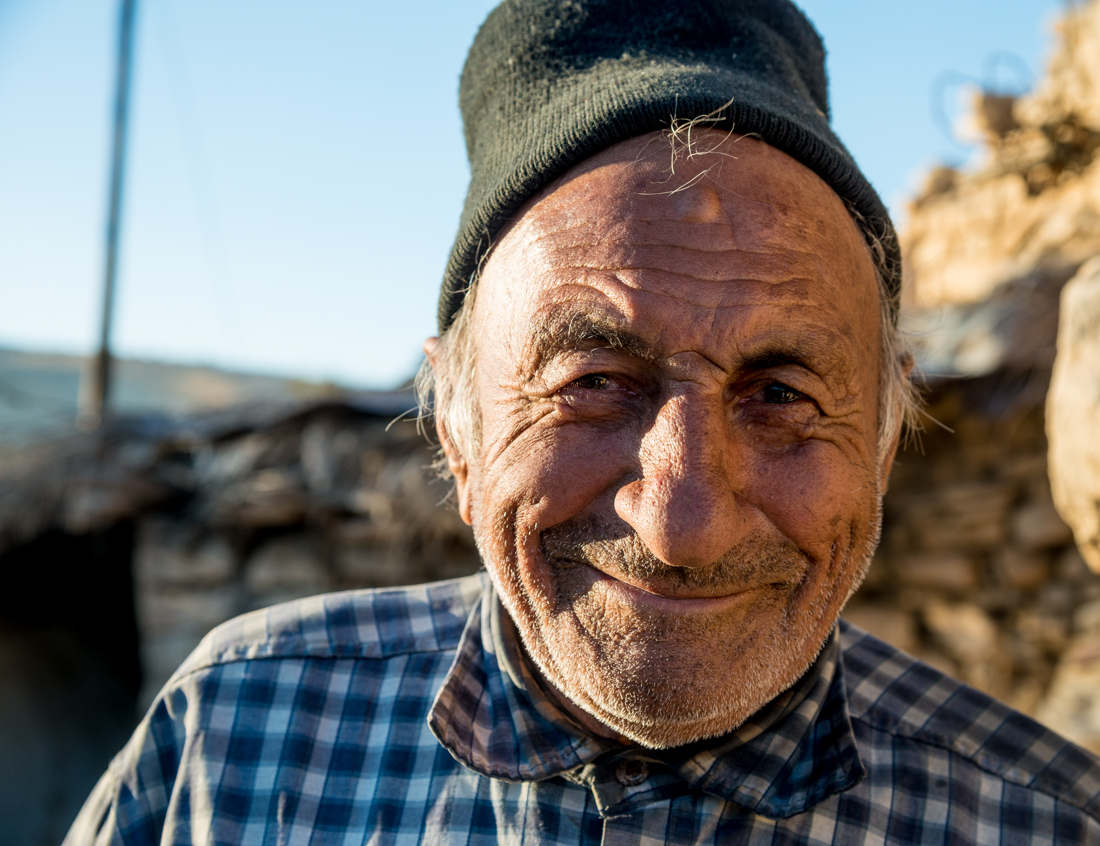
A friendly face in Pereshkaft village near Shiraz, Iran. This old guy was sitting with a buddy on the roof of a hillside house, watching the sunset.  They seemed like they were eager to share all kinds of stories with us, had we spoken a common language.  Women in this village were very reluctant to be photographed; one of them told us she’d like to but her husband wouldn’t approve.

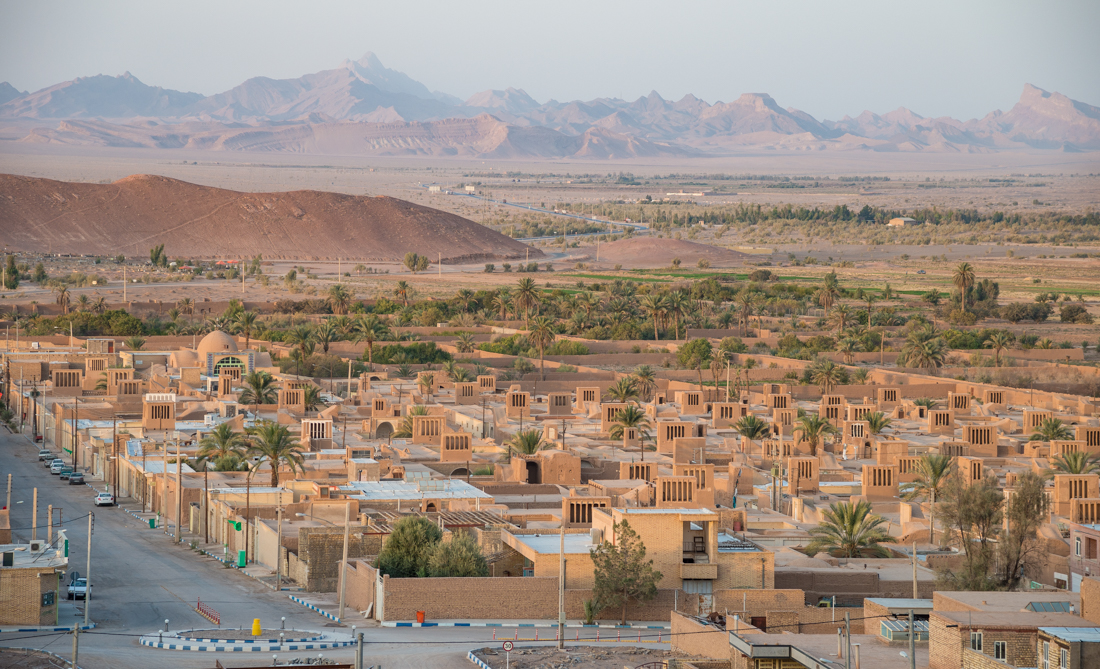
View from the hill overlooking Chupanan. Those things on the tops of most of the houses are “wind towers,” which channel some of the breeze into the house and vent out hot air.

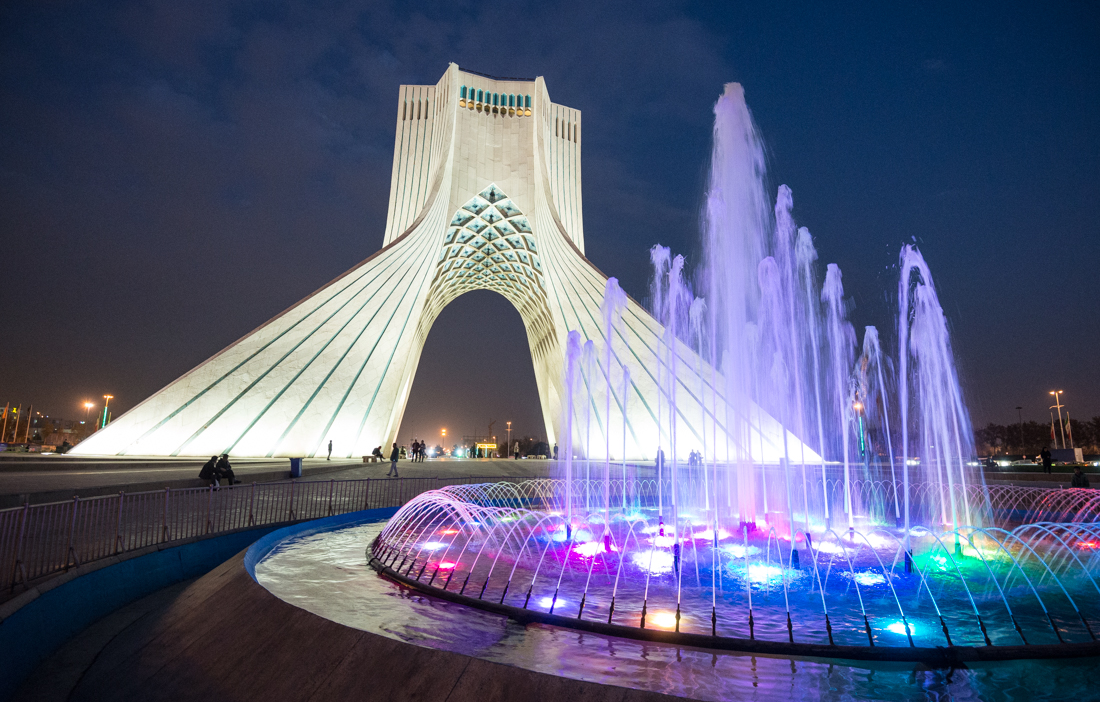
Iran: Azadi Tower at Night

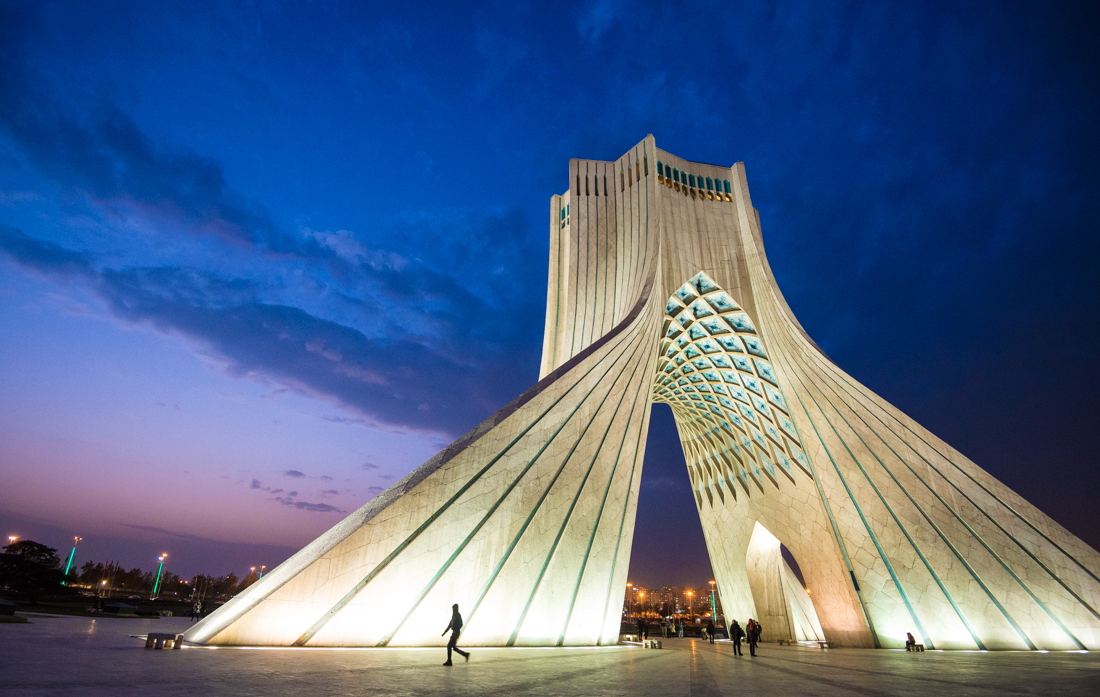
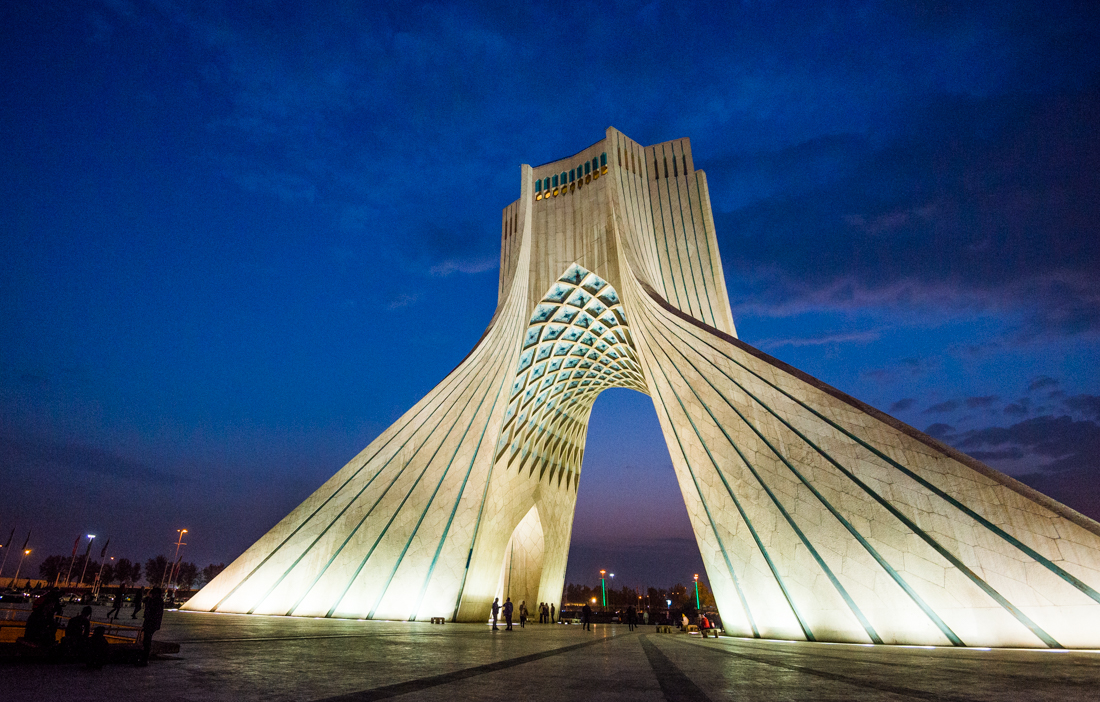
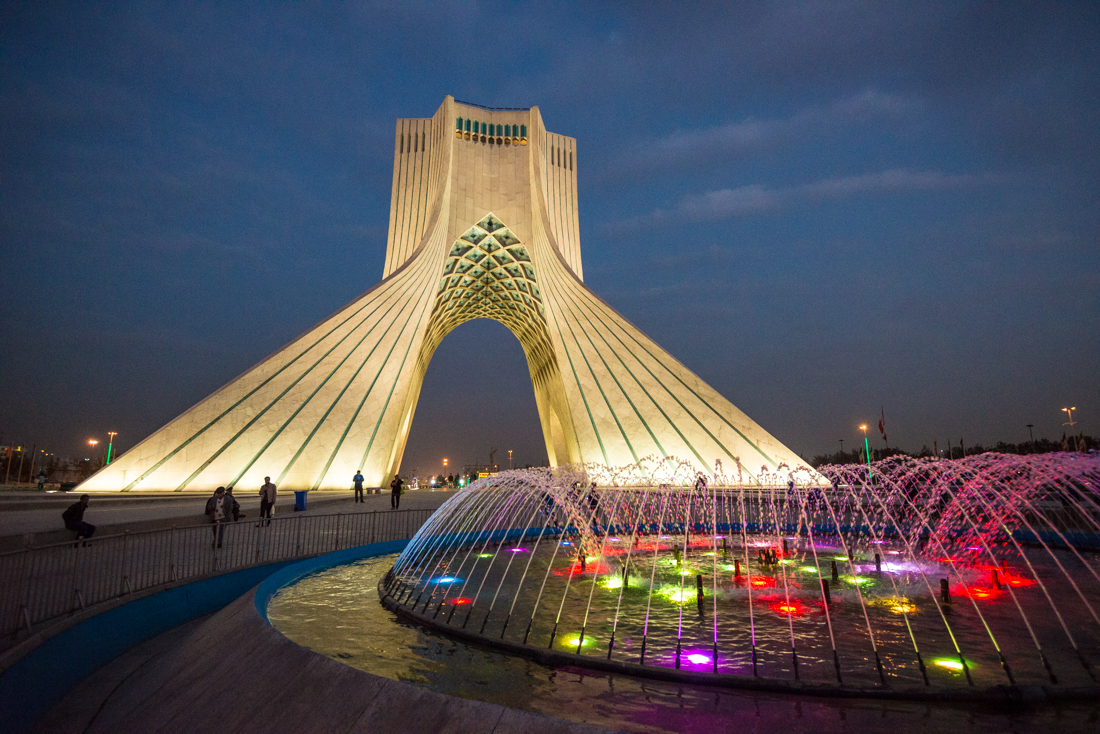
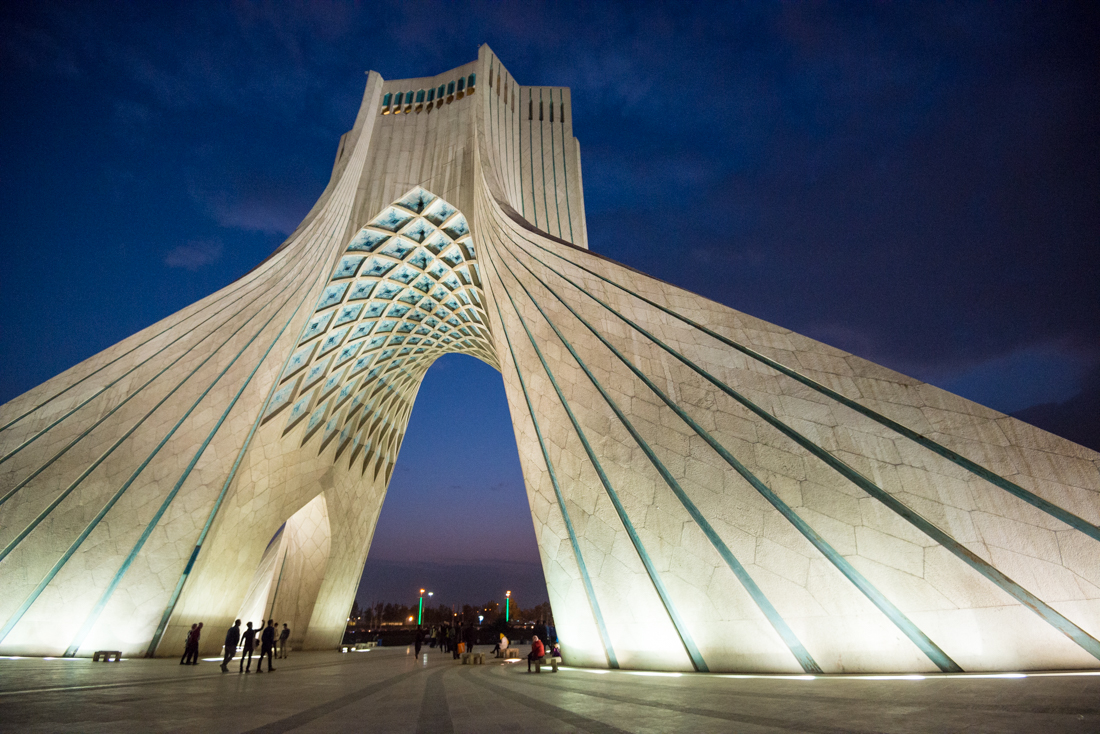
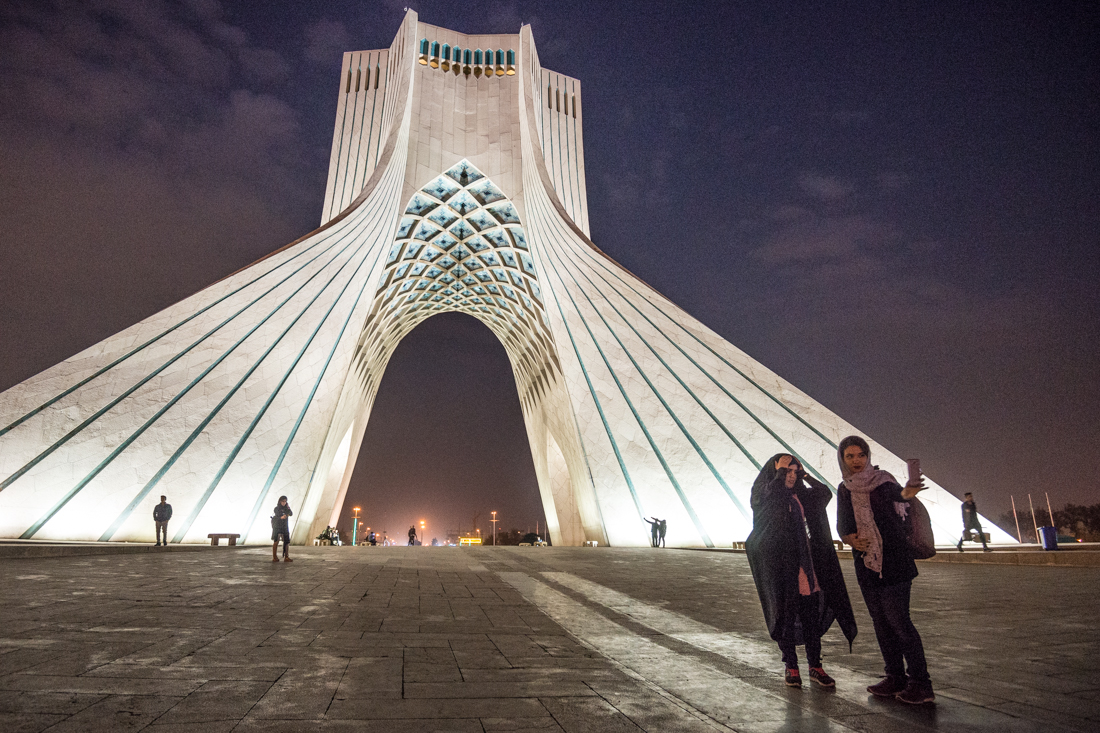
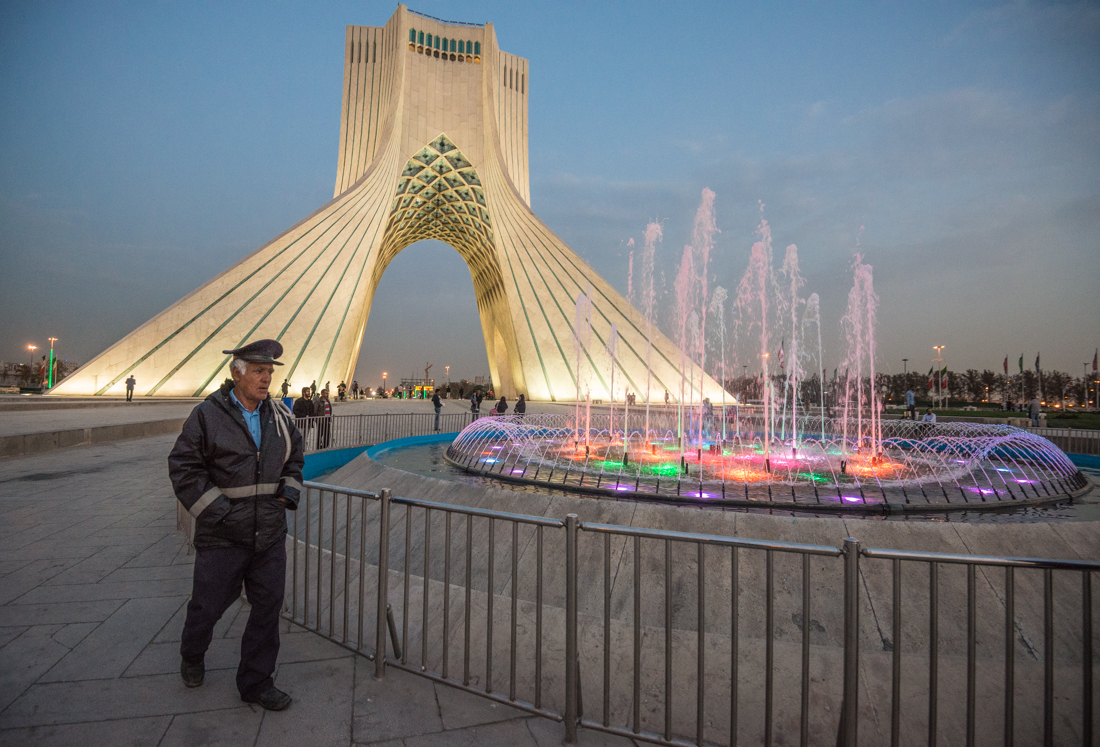
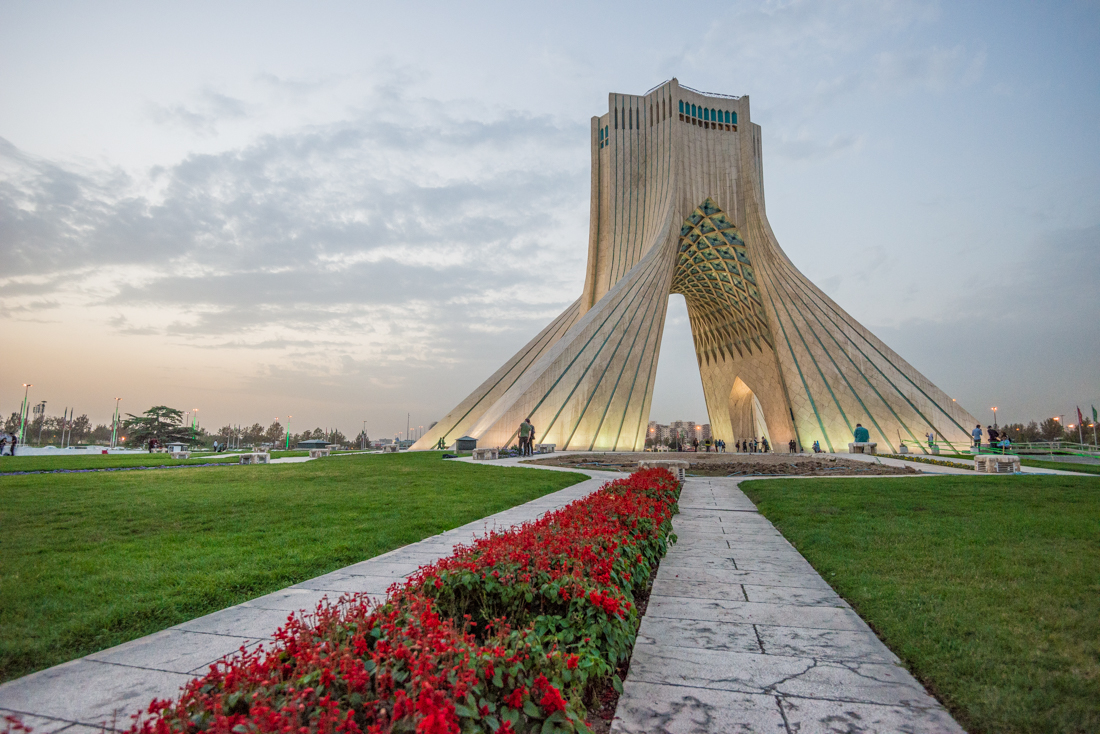
It was originally called Shahyad Tower — built in honor of the kingly “shahs” of Iran.  So now, since the Islamic Revolution that ousted the last Shah, it’s been renamed Azadi — “Freedom” — Tower.  Built in the 1970s, it doesn’ t have a lot of history, but its design is pretty spectacular.  Notice the blue tile rib vaults underneath the arch — a colorful nod to Persian architecture from earlier eras.


5:32 p.m.

5:35 — looking west toward where the sun had set 29 minutes earlier.

5:38 p.m.


5:23 p.m.

Here’s a photo lesson for big outdoor monuments or buildings that have a little lighting on them. There’s a point in time — about 20 or 30 minutes after sunset just before it really gets dark, when the sky turns a deep blue.  There’ll be a magic few moments when the light in the sky balances just right with the light on the structure. 

Sunset this night was at 5:06.  I put the exact times for each photo in the captions, so you can see how the sky progressed.  The prime time only lasts about 10 minutes, so it’s wise to arrive early and scout out your best locations and angles, then rush back to them to get the images you want when the light is perfect.  The exact timing and exposures depend on the brightness of the lights shining on your foreground structure, and on whether you’re facing the west (the setting sun) or not.   Shutter speeds will probably be rather slow, so remember to (a) get a firm footing, (b) brace your elbows against your body, and (c) hold the camera very still, and (d) take several shots in a row to give you a better chance of having one good, clear one.  One caveat: If you’re hoping for someone or something interesting to wander through your frame, you’ll just need to get lucky because the window is short. 

A warning:  After a pretty sunset and before this magic moment, there’ll be 20 minutes or so that are “blah” and gray.  Don’t give up.  Be patient.  

At this magic moment, everyone can be a master photographer.   Mediocre  locations turn lovely, and already lovely places turn stunning.  Examples are here and here and here and here

5:12 p.m. — about six minutes after sunset.  Notice that the monument is still mostly darker than the sky.


5:28 p.m.

5:35

5:46 p.m. , and the blue was turning quickly to black.


(There’s a similar opportunity about 30 minutes before sunrise, of course.  It often requires a little more dedication to be up and in position for that one, if it’s possible at all.  For better or worse, there probably won’t be many other people around.)


Iran: Blue Tiles of Isfahan

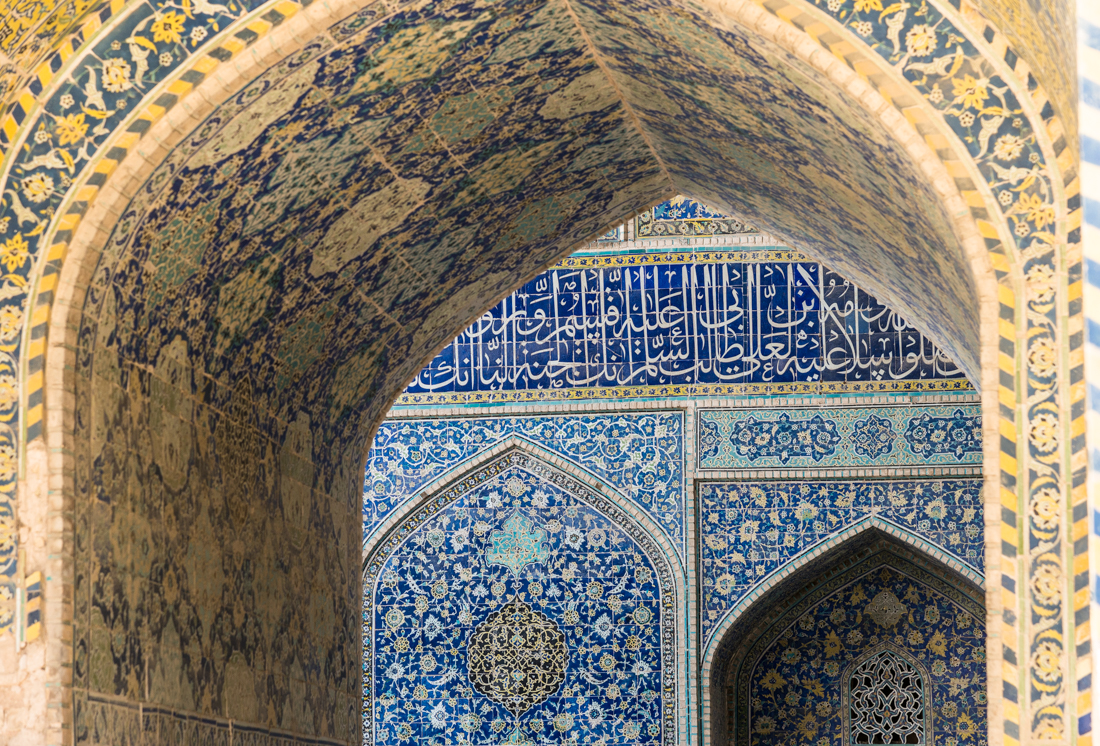
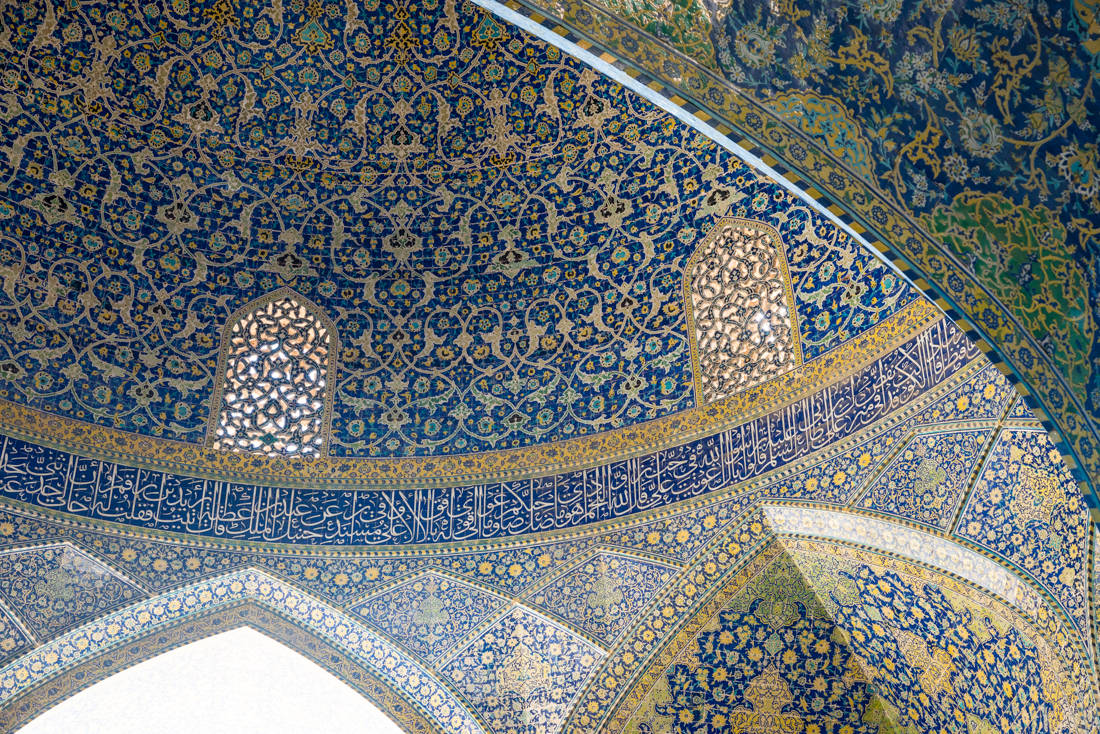
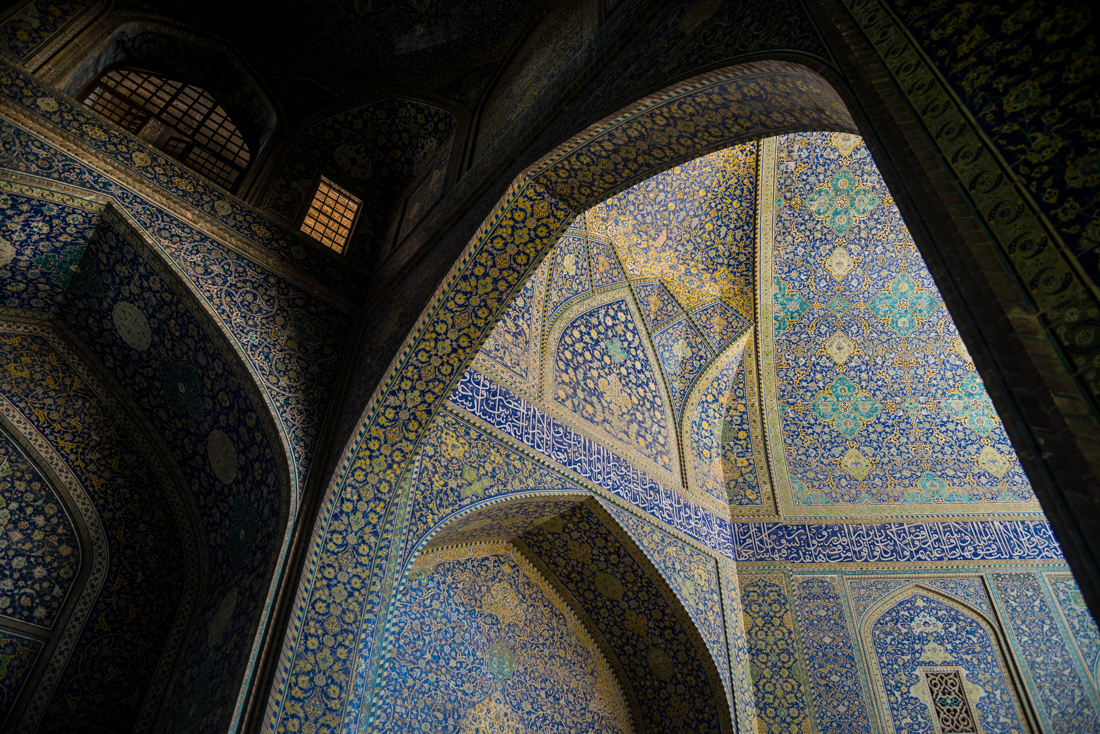
In the time period roughly between Christopher Columbus and George Washington, early-day Iranians were on the other side of the world doing some pretty impressive things with blue and yellow tile.  The city of Isfahan was the capital of Persia during the Safavid Dynasty in the early 16th to 18th Centuries.  Today it still shows off some of Iran’s greatest architecture.

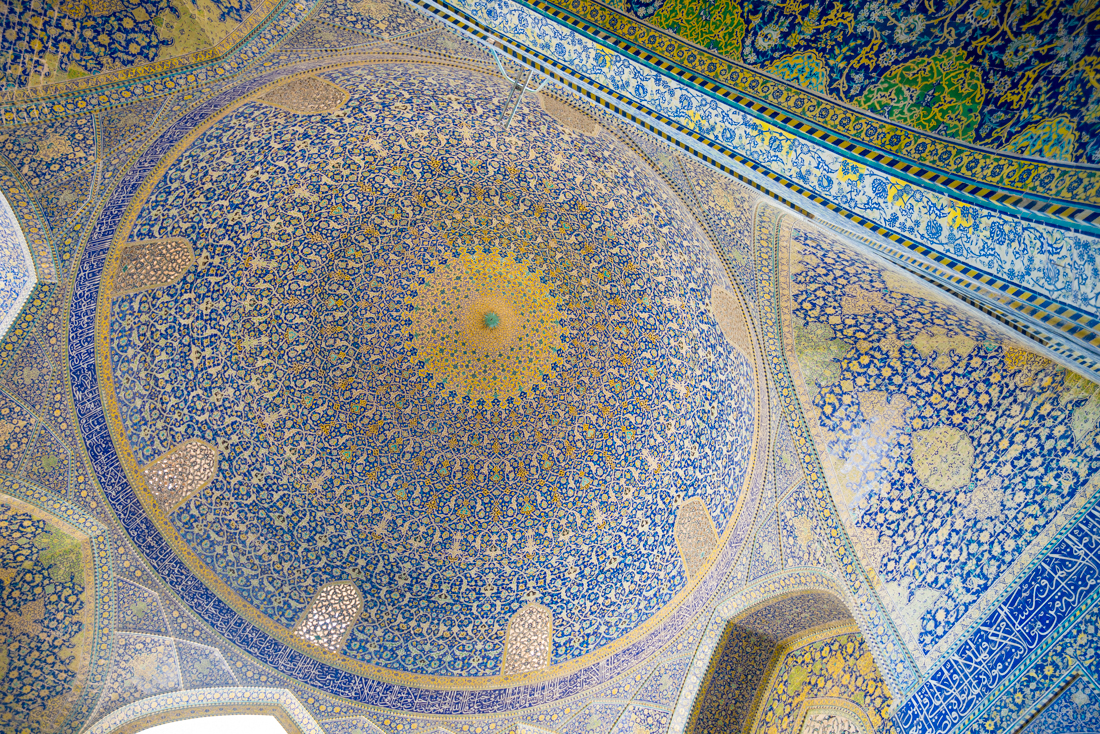
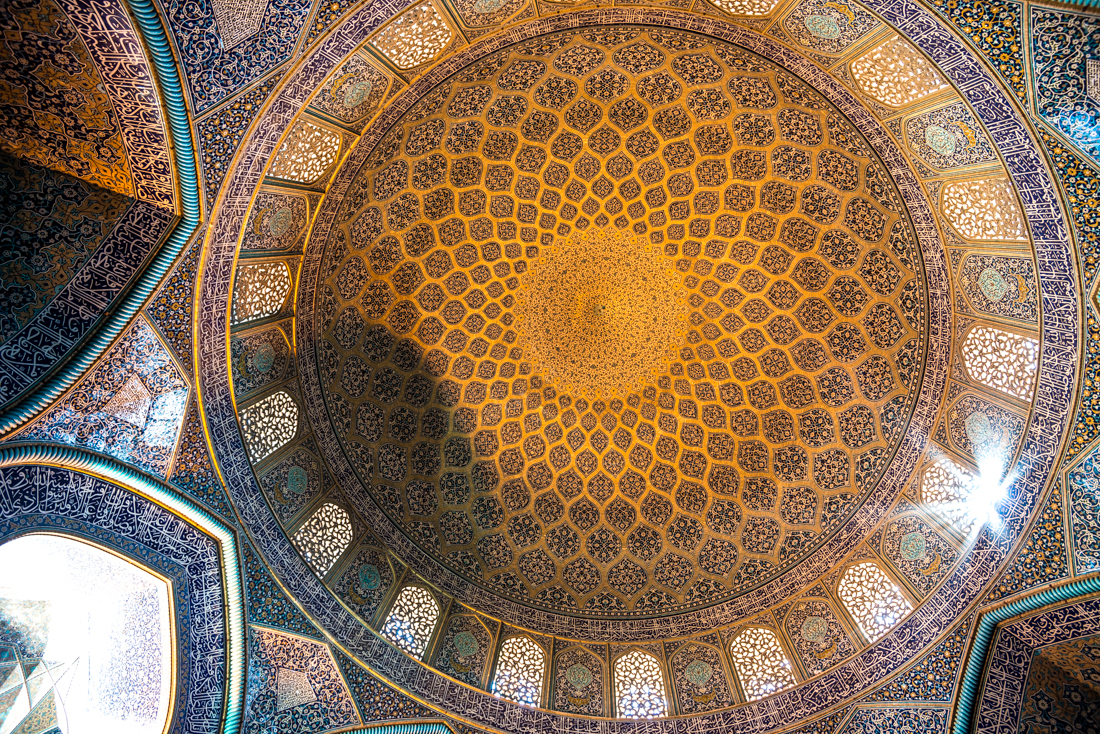
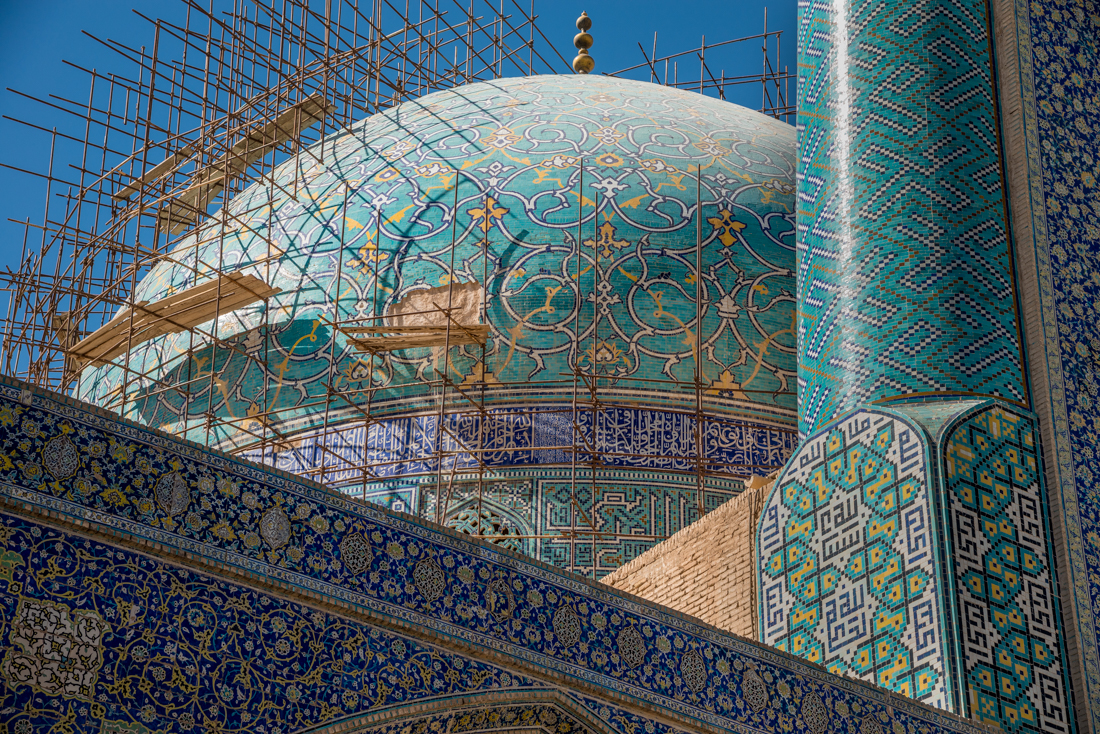
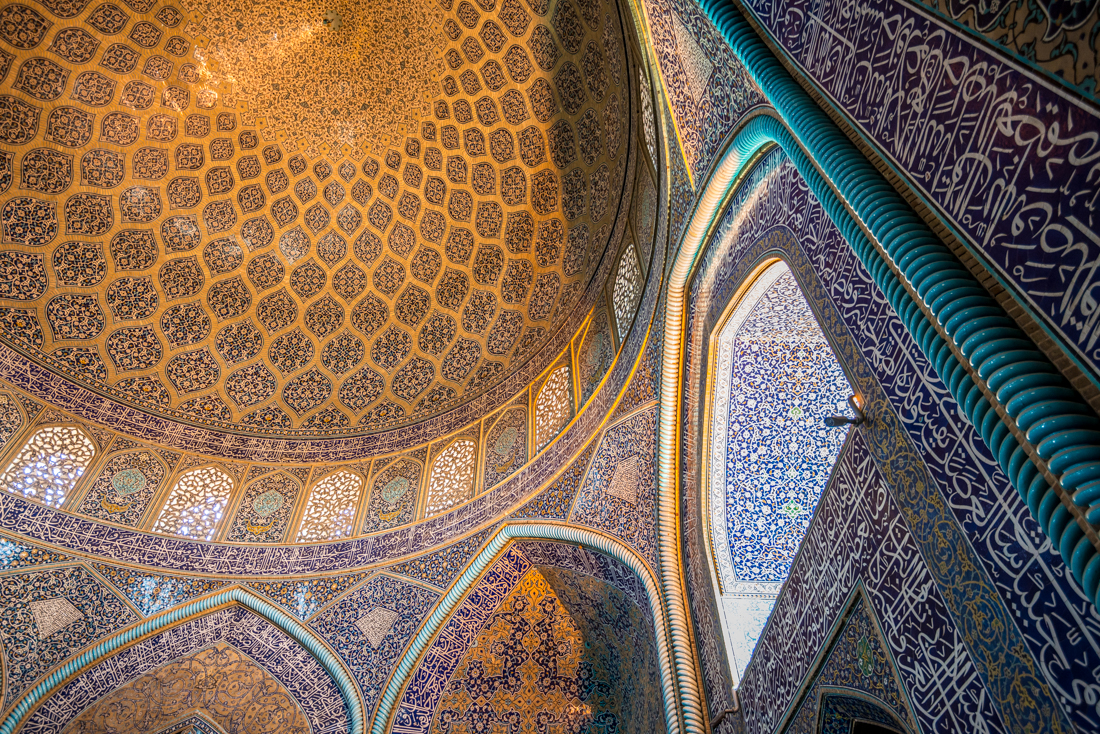
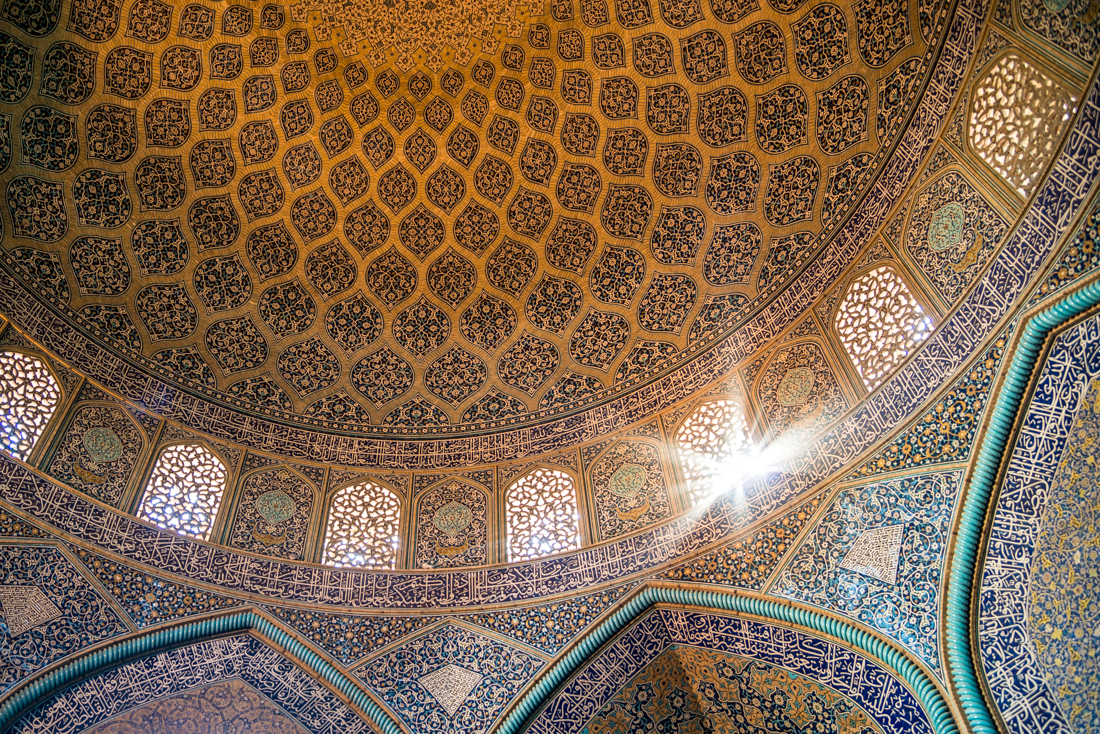
Domed ceilings of the Lotfallah Mosque (gold, below) and Shah Mosque (blue, above). The Shah Mosque’s blue dome is 150 feet high.

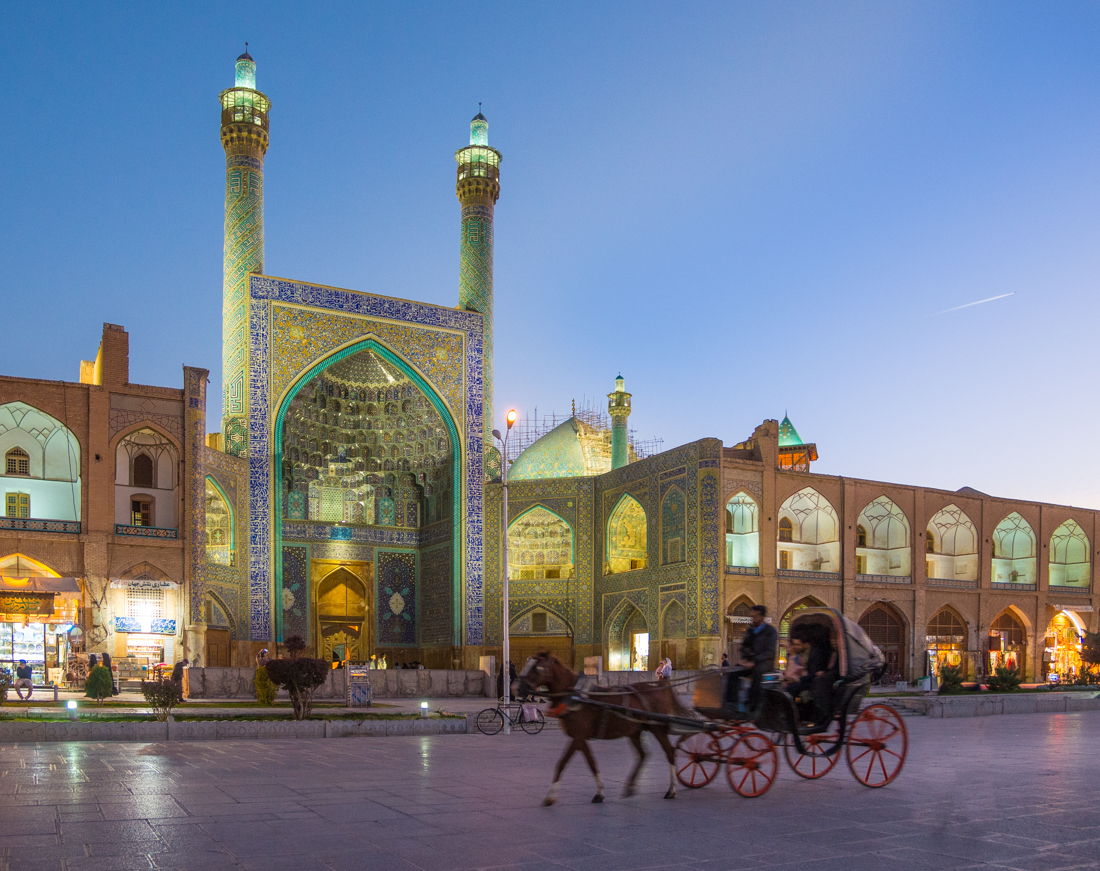
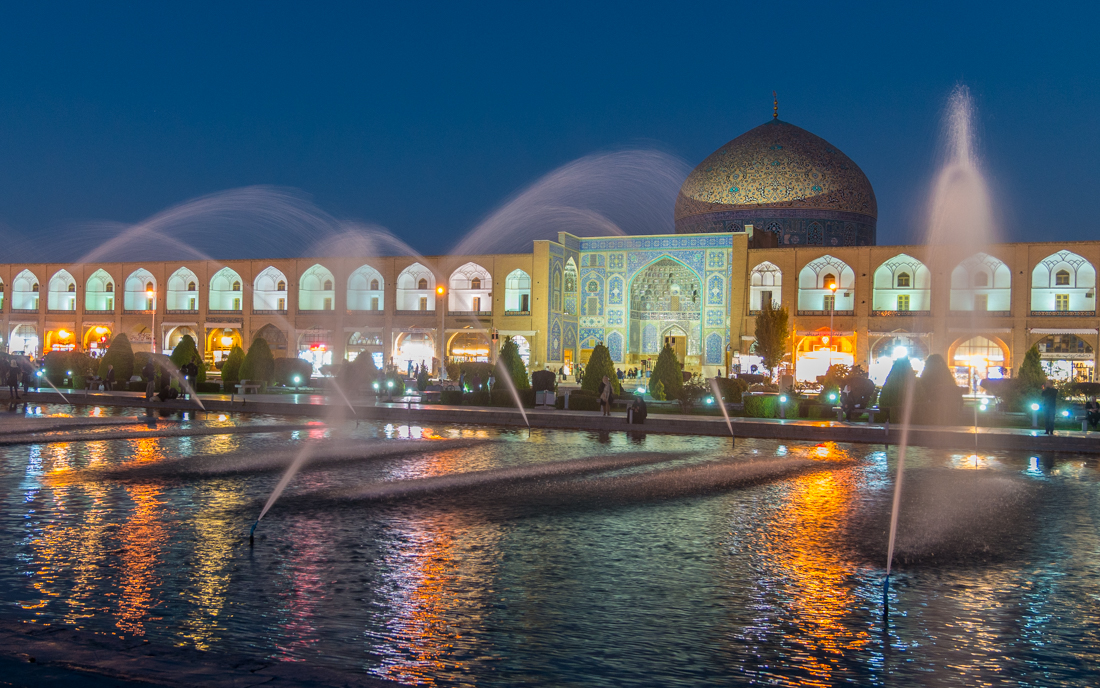
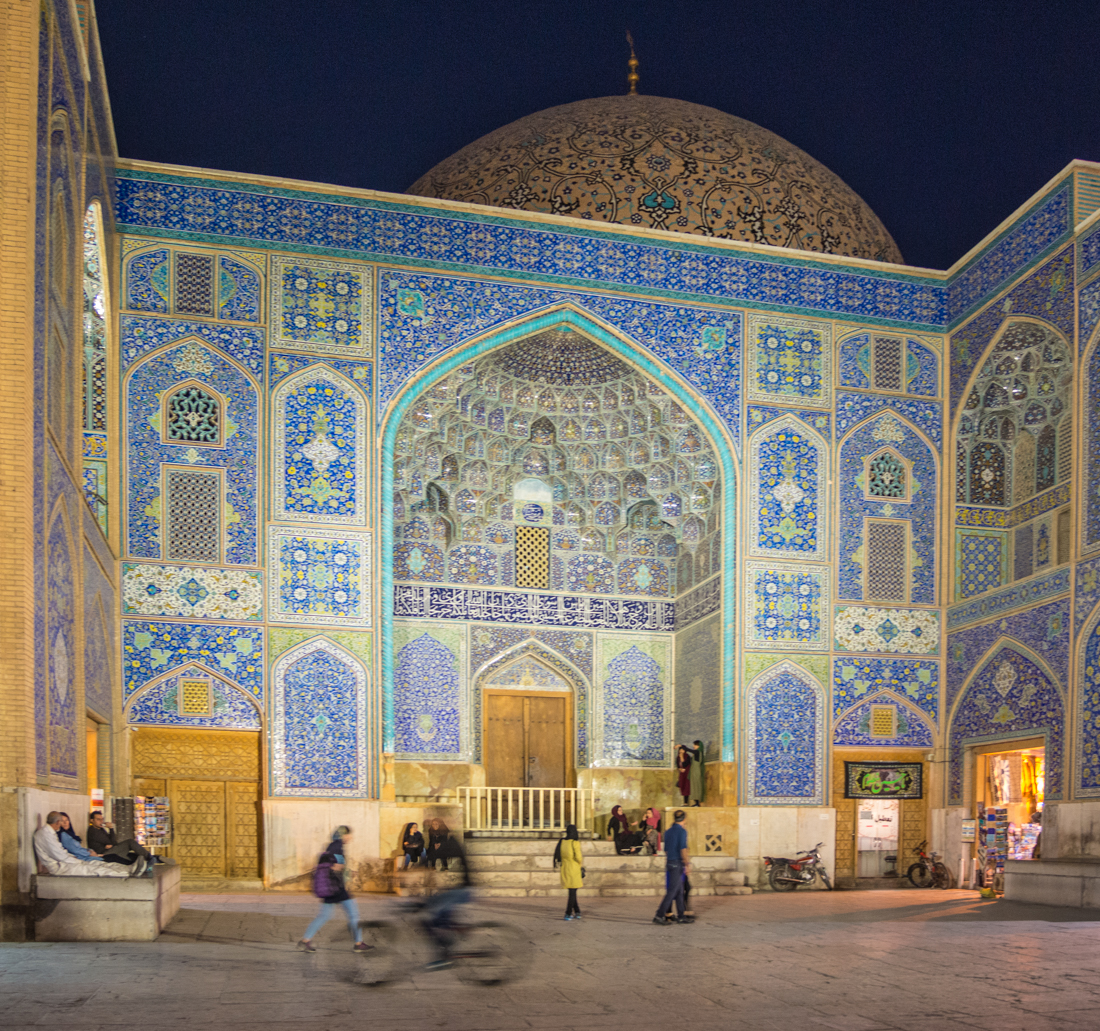
Four hundred years ago, the Lotfallah Mosque was reserved exclusively for the ladies of Shah Abbas’ harem. But today even gawking Americans can go inside and get some pictures of its amazing golden dome. Lotfallah anchors the east side of Naqsh-e Jahan Square (aka Imam Square) in Isfahan — the second largest public square in the world (behind Tienamen in China). Just as it did back then, the square also has a king’s palace on its west side, a grand public mosque on the south end, and the city’s Grand Bazaar to the north, though the 17th Century polo field has been replaced by sidewalks and fountains. The whole place is a UNESCO World Heritage site, and rightly so. The big Shah Mosque is all blue, and it’s arguably the most impressive piece of architecture in existence from that era.

Isfahan has a population of about 1.5 million.   In the 16th and 17th Centuries, it was the capital of Persia and headquarters of the Safavid Dynasty.   It’s been a center for rug making and trading and other elaborate artisans ever since. I bought a couple of smallish rugs myself and hauled them back to America.

 As you’ve probably noticed, a huge portion of the decorative tile in Iran is blue. “Why all the blue?” I asked.  I got three different answers, and I assume each one is partly true. #1: Because minerals were available in the area’s mines (cobalt and arsenic, for example) that were great pigments for making lovely blue and yellow ceramic tile. #2: Because blue is the color of heaven (Apparently they know this somehow). #3: Because water is blue, and when you live in the desert water is a very big obsession.

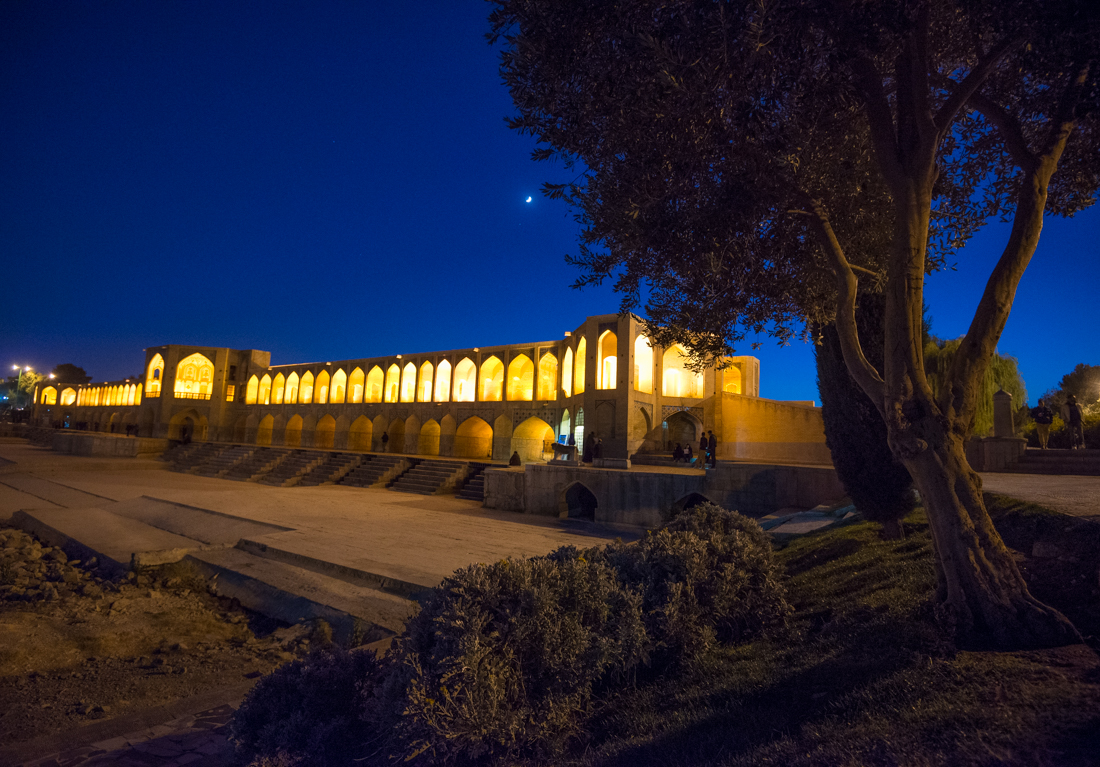
In that vein, there  were a couple of famous bridges in town I was looking forward to seeing. But it turns out that late October is part of the dry season in the deserts of Iran. The river had not a single drop of water, so the bridges looked a little odd.  Too bad they didn’t cover them with blue tiles.

You can take a carriage ride around Naqsh-e Jahan Square. (And no, that’s not a normal mode of transport in Iran; they seem to mostly just drive small white cars.)


Restoration work on the blue dome of the Shah Mosque.

Lotfallah Mosque at night. It’s unusual because it has no minarets for a “call to prayer.” They weren’t needed because the mosque was private — reserved for the Shah’s family and harem, apparently.


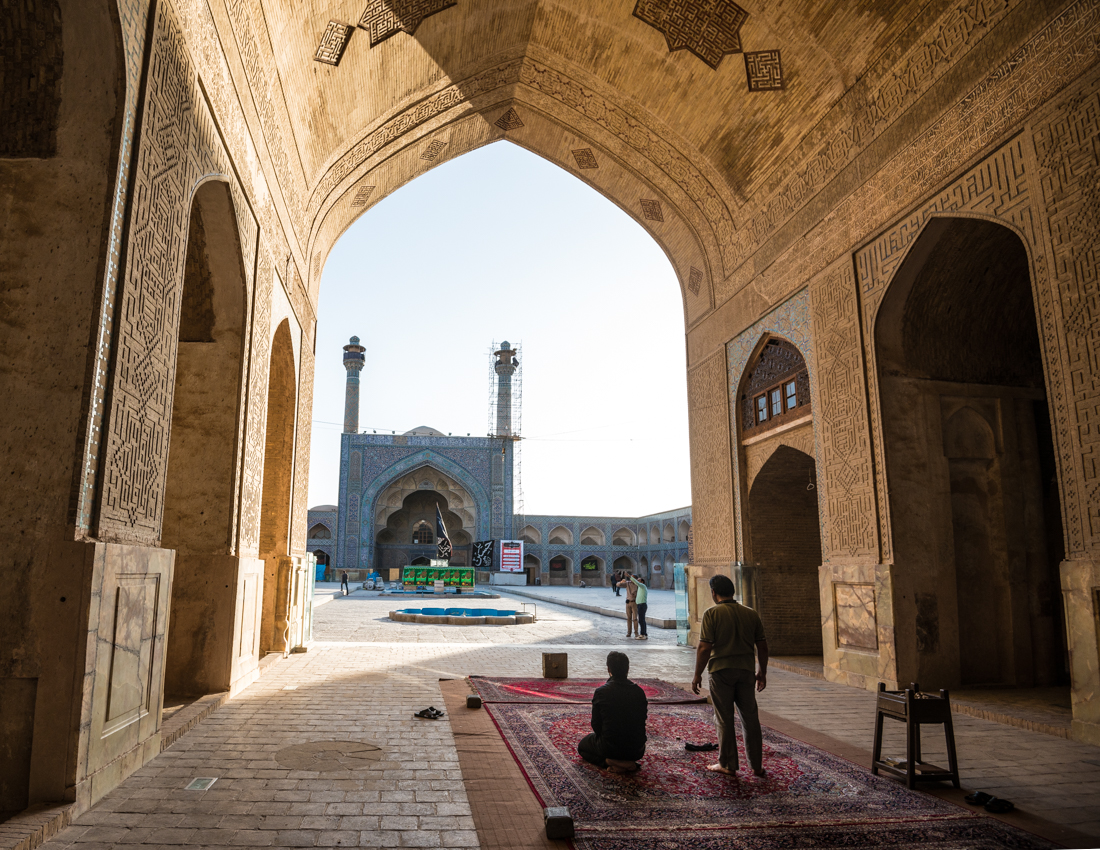
The Jameh Mosque of Isfahan, mostly hidden in the Grand Bazaar and overshadowed by the fancier mosques on the Square.  Jameh was built in bits and pieces over the course of 1200 years.


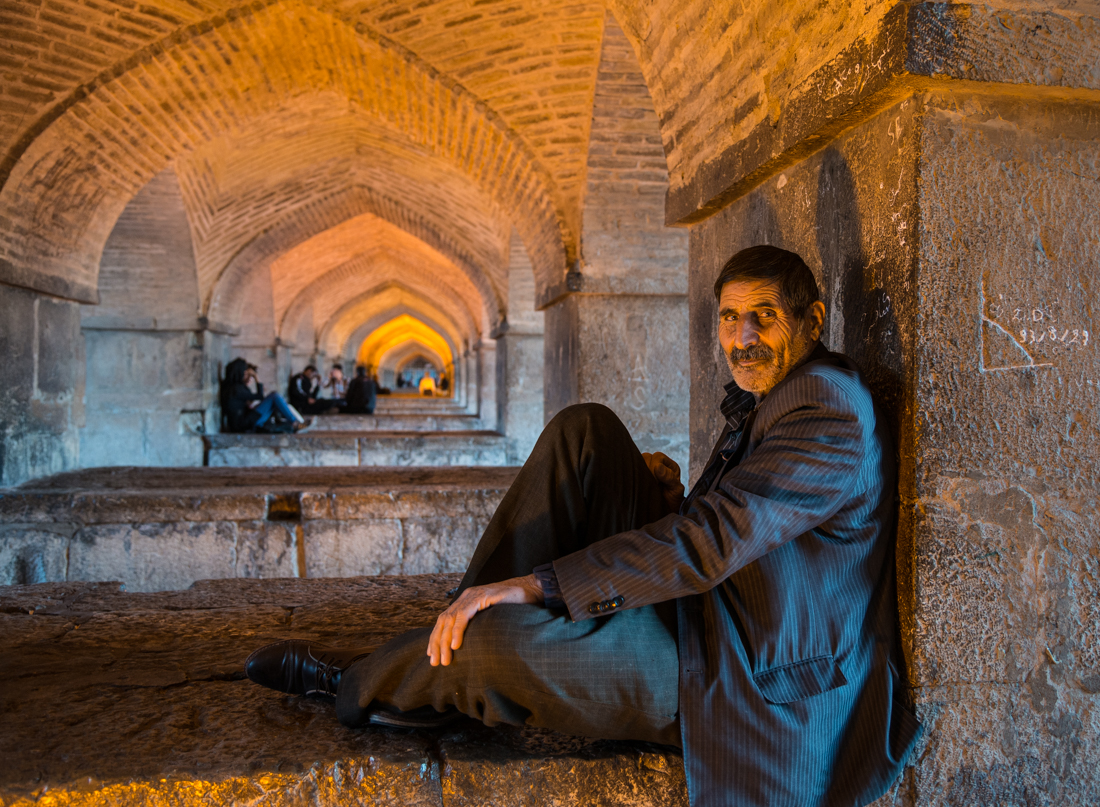
Allahverdi Khan Bridge (aka the Bridge of 33 Spans) was built in 1600. At other times of year, water flows through all those spans — which would surely make for a better picture!  The bridges are a popular hangout for old and young.  One group of young ladies insisted I join them for tea before I could take their pictures.  I wasn’t sure if the old guy below was responsible for that geometric figuring on the column he was leaning against.  But I doubt it.


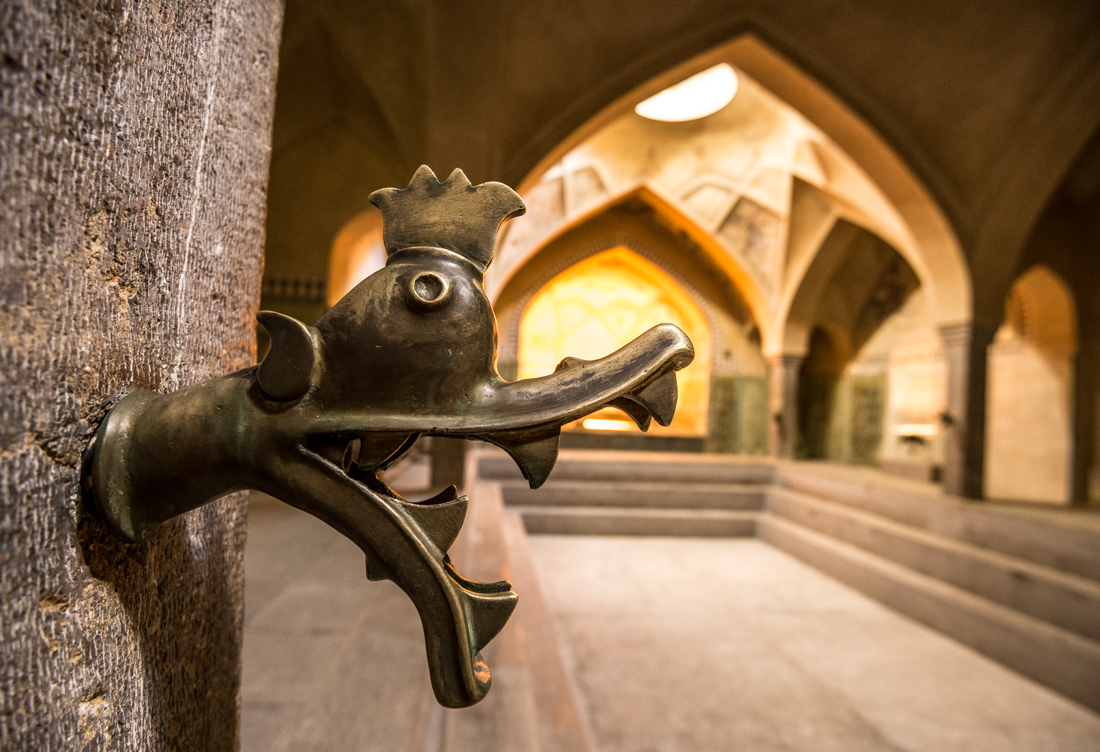
Water spigot at an old Isfahan public bath-house.

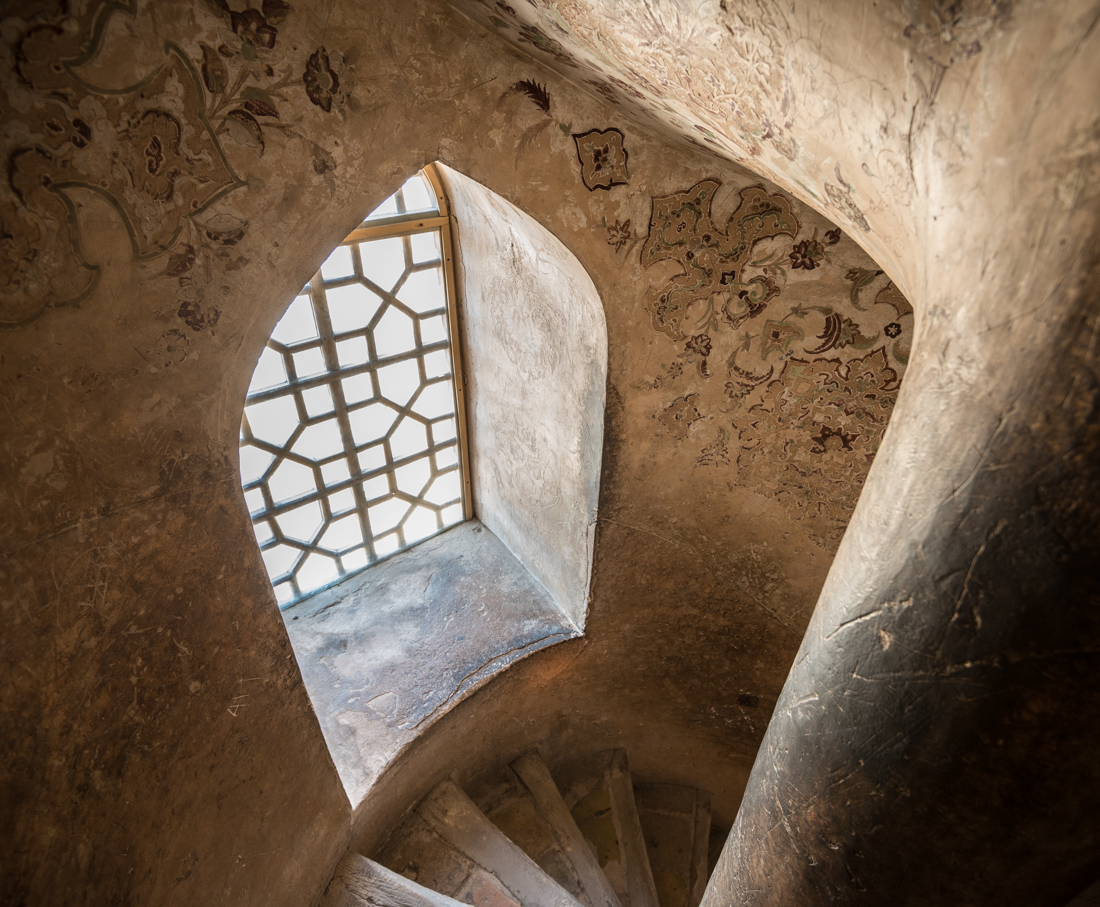
Spiral stairway in the Ali Qapu Palace on the big square in Isfahan.  Shahs and Sultans have been climbing these stairs (often for a better view of the polo games below) since the late 1500s.