Most Americans probably know Sarajevo for three things: 1. Hosting the Winter Olympics, back in the 1980s. 2. The city where Archduke Franz Ferdinand was assassinated to kick of World War I. 3. Somehow being in the middle of the terrible Yugoslav Wars of the 1990s. The scars of the 1990s are most obvious. Admittedly, Sarajevo might not be your first choice for “pretty” pictures, but it’s an interesting place to visit and learn.
__
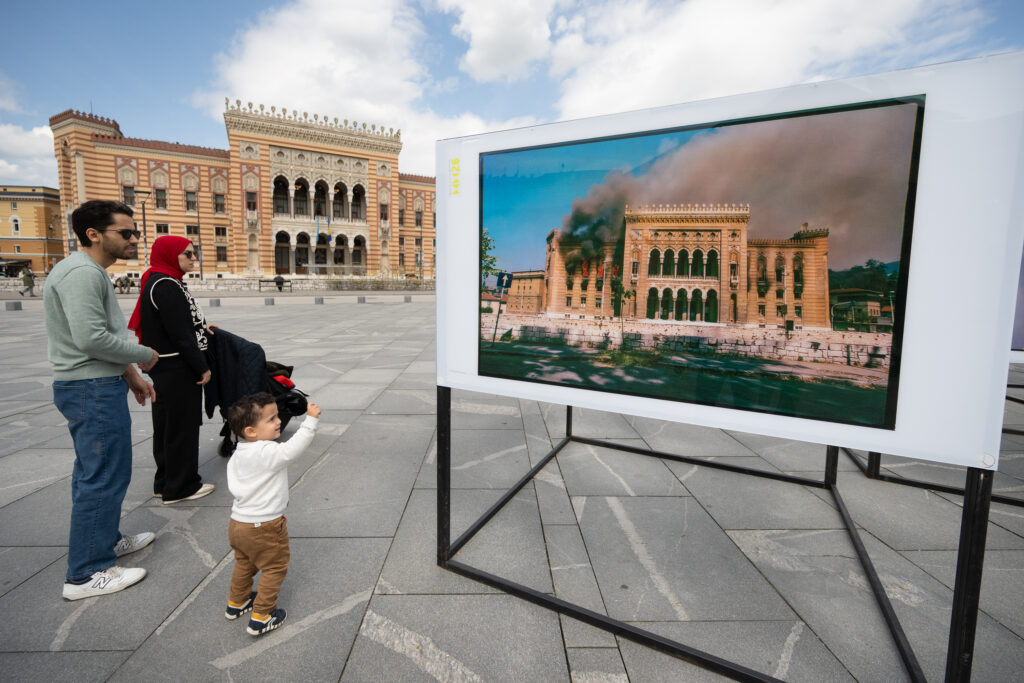
A Bosniak family walks past a photo exhibit on the sidewalks of Sarajevo. This is one of several exhibits, museums, and memorials reminding Sarajevans of the damage and deaths in the 1990s Yugoslav conflicts. Back then, Sarajevo was mostly home to (Muslim) Bosniaks. The (Orthodox) Serbs had a lot more military firepower and they were willing to use it, even in downtown Sarajevo against the Bosniaks. One symbolic attack bombed and burned the iconic City Hall building (pictured). The reminders of the war seemed unusually pervasive. I worried they just kept the anger and alive — and likely taught their children who they should grow up to hate.
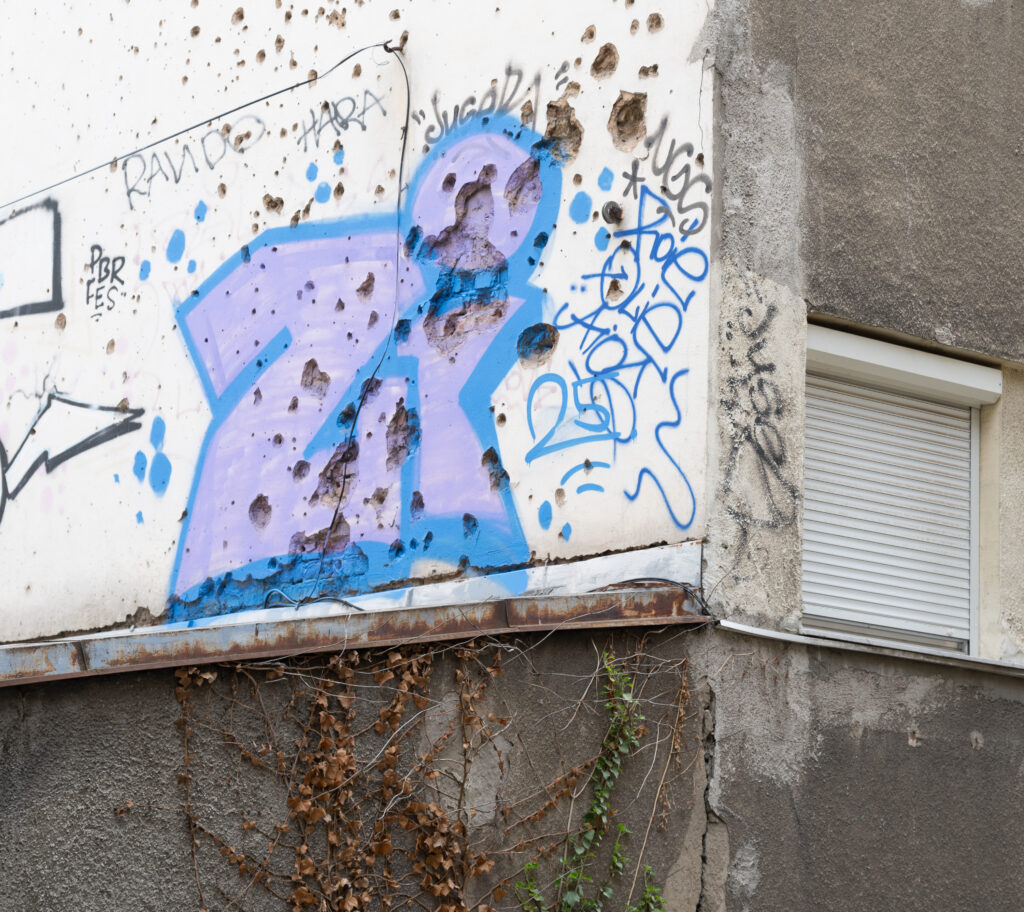
The pockmarks on this Sarajevo apartment building are from Serbian bombing in the 1990s.
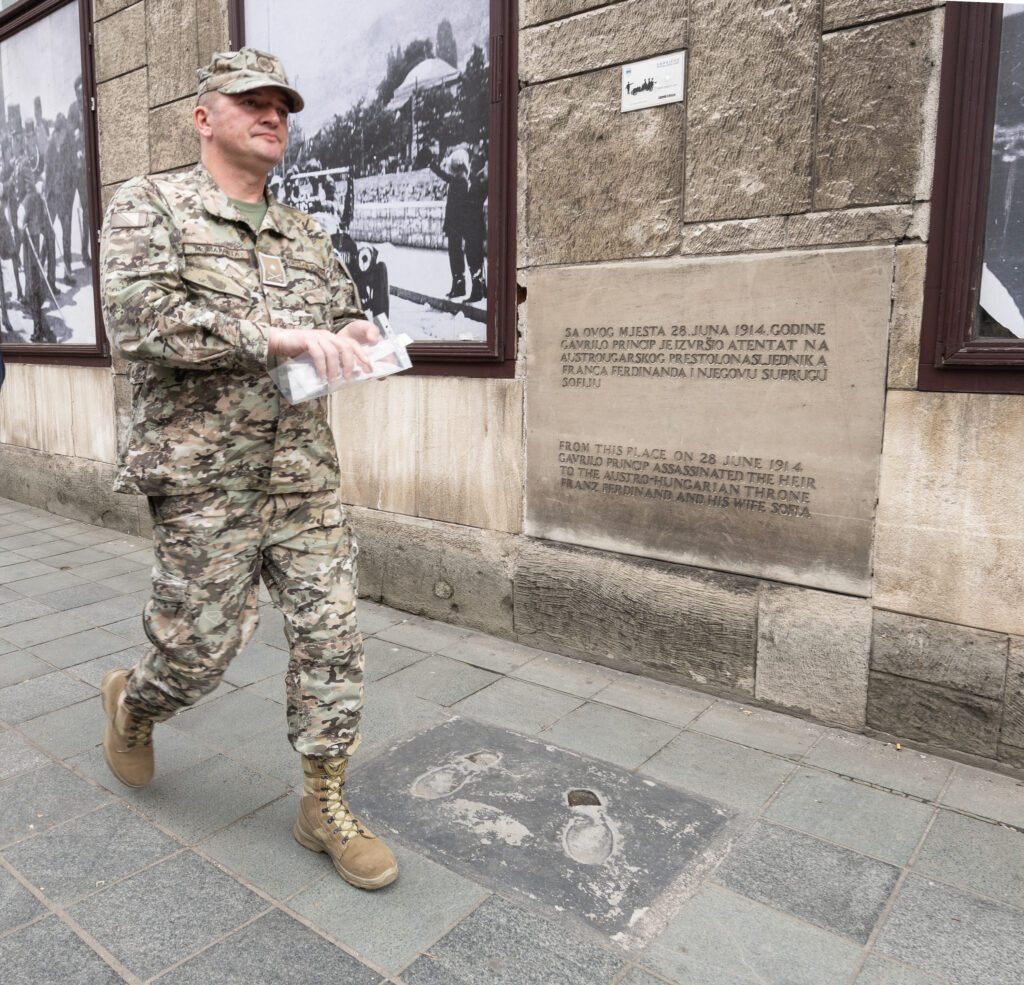
The assassin who shot Archduke Franz Ferdinand and sparked World War I in 1914 was standing on this exact spot (see the ‘footprints’ and the inscription). (A Bosnian soldier just happened to be strolling past as I was taking pictures). That 1914 assassin was a Serbian – Gavrilo Princip. It’s complicated, but the US ultimately came into WWI on the side of the assassin (Serbia/Russia/France/UK/US) — not on the side of the Austria-Hungarian Archduke. Nowadays, Sarajevo’s smallish Serbian population is segregated to a suburb called East Sarajevo. There are statues honoring Princip there.
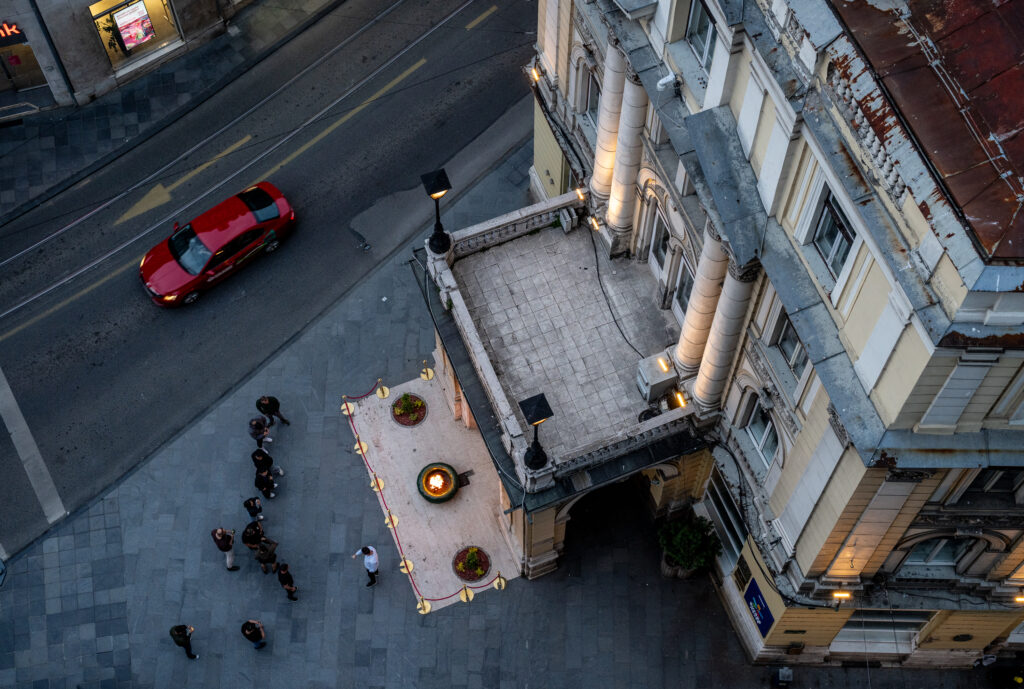
Looking down at a tour group visiting the Eternal Flame memorial in downtown Sarajevo. Lit in 1946 to celebrate liberation from Nazi occupation, it honors Yugoslavs killed in World War II.
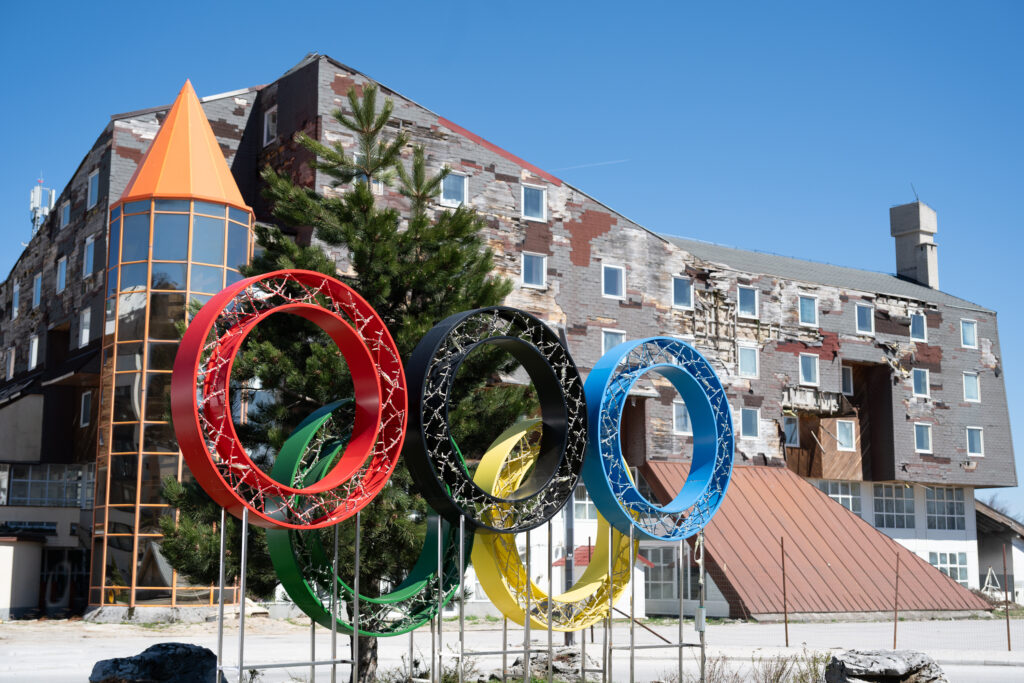
One of the area ski town that hosted the 1984 Olympics. Not everything was this dilapidated, but the area certainly was not the showcase the Yugoslavs wanted to to be in the 1980s.